0
0

• CKD imports surge to $1.47bn in 9MFY26
• Vendors slam low local parts use
KARACHI: New auto players appear reluctant to share the localisation in their vehicle assembly operations, while local vendors continue to complain about the negligible localisation by the new entrants.
As the current auto policy is expiring on June 30, vendors claim that the new entrants have not given any clear signal about future local assembly of parts, while some big vendors might have inked deals with them to assemble a few parts. Some assemblers already have parts-making factories, utilise their parts for their own vehicles, and sell parts to other assemblers.
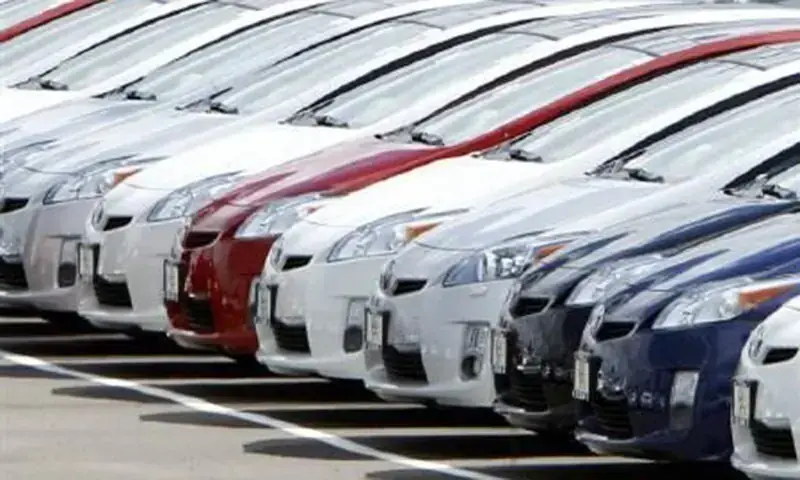
According to official data, imports of semi- and completely knocked-down (SKD/CKD) components by assemblers have surged by 116 per cent to $1.47bn in 9MFY26 year on year (YoY), while the import bill for auto accessories from FY22 to 9MFY26 has crossed $6bn, suggesting lukewarm efforts towards higher localisation.
As new entrants did not respond to the request of sharing localisation in their vehicles, an executive in Lucky Motor Corporation (LMC), however, said the company has localised wiring harness, seats, bumpers, grills, mufflers, battery, carpets, instrument panel reinforcement, AV Panels, HVAC Assy, Door trims, Rims and so many other parts which are feasible.
“Kia Sportage’s localisation is up to 35pc, and we are slowly targeting 40pc plus, while localisation in Picanto stands at 40pc,” he said.
Many vendors quote higher prices than those for imported parts, while some vendors ask assemblers to invest in tooling, which is also not possible, the executive said.
On the rising import bill of CKD/SKD kits, he said that it seems that assemblers have been trying to bring the kits and accessories in larger volumes before the new budget, fearing any changes in case the Middle East war prolongs and pressure on foreign exchange increases, resulting in suspension of opening LCs to curb dollar outflow.
The LMC official said, “Localisation will only be possible if we have volumes, and without them, it’s not feasible.”
One of the reasons for higher SKD/CKD bills is the launching of new models at limited localisation under the incentives in the auto policy, low localisation in new models introduced by old players and higher sales of cars, SUVs and pickups.
Localisation of parts in Japanese assembled cars ranges between 50-70pc but vendors believe that local parts in new models are less than 50pc.
Auto sector expert, Mashood Ali Khan, claimed that vendors are not getting the required orders from the new entrants for parts making.
The auto sector, instead of evolving into a localised manufacturing base, is increasingly shifting toward an assembly-driven model.
Rising consumer demand for hybrid electric vehicles (HEVs), plug-in hybrids (PHEVs), and battery electric vehicles (BEVs) — estimated at 35,000 to 40,000 units annually — is largely being met through imported CKD/SKD kits, restricting the growth potential of Pakistan’s industrial ecosystem, particularly SMEs.
“Pakistan’s experience over the past decade has been marked by stagnant localisation levels. New entrants, despite policy commitments, have largely relied on CKD/SKD imports, benefiting from concessional tariffs without meaningful investment in local supply chains,” he said, adding that in many cases, parts are imported under multiple HS codes to minimise duties, effectively bypassing the spirit of localisation policies.
As a result, SMEs are now facing declining demand, reduced production, and limited technological advancement, he said.
Pakistan’s current IMF-supported economic framework is gradually steering the country toward an import-led auto industry, raising serious concerns about its long-term sustainability. While such policies may provide short-term macroeconomic stability, they risk undermining local manufacturing, technological development, and job creation, he said.
Policy inconsistency, weak enforcement, and continued incentives without accountability have contributed to the current imbalance. As a new auto policy is under consideration, it is essential to evaluate past outcomes rather than repeat past mistakes, he said.
Key reforms in the new auto policy must include a clear definition and strict monitoring of CKD/SKD structures, enforcement of time-bound localisation targets, linking incentives to actual technology transfer and local investment and protection and support for domestic auto parts manufacturers.
Chinese automotive success is not based on frequent model launches, but on deep localisation, scale production, and strong state-backed industrial policy, Mashood said.
Published in Dawn, April 26th, 2026