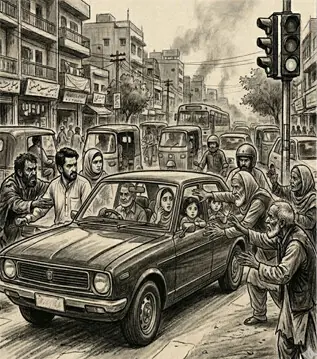
THE rapidly growing number of beggars in Pakistan is no longer a minor social concern; it has become a defining symptom of deeper economic distress. From crowded urban intersections to international reports of Pakistanis detained abroad for street solicitation in places like Saudi Arabia, the issue has escalated into both a domestic challenge and a source of national embarrassment. Yet, beyond questions of image lies a far more serious problem: the steady normalisation of street dependence as a livelihood.
Begging today operates on a scale that suggests it is not merely incidental poverty at work. In many cities, street solicitation generates earnings that can compete with, or even surpass, the wages of unskilled labour. When an individual can make in a few hours what a labourer earns after a full day of physically demanding work, the economic incentive becomes difficult to ignore. For some, begging is no longer a desperate last resort, but a calculated choice shaped by distorted incentives.
This distortion exposes structural weaknesses in the economy. Chronic inflation has eroded purchasing power, and real household incomes have steadily declined. Job creation has failed to keep pace with population growth, leaving millions underemployed or unemployed. For families already living on the margins, a sudden illness, job loss, or rent increase can push them into visible destitution.
In such circumstances, the street becomes a survival mechanism rather than a preference. However, allowing begging to expand unchecked carries serious long-term consequences. It under-mines the dignity of labour and weakens the social contract. When young people observe that street solicitation can provide quicker returns than education or hard work, it risks fostering a culture of dependence. Organised networks that exploit vulnerable indivi-duals, particularly women and children, further complicate the crisis, turning human misery into a business model.
The real solution lies in economic and social reform. Sustainable growth must be paired with labour-intensive development strategies that absorb low-skilled workers into productive sectors. Expanding vocat-ional training, microfinance opportunities, and small-business support can help trans-form idle hands into skilled contributors.
At the same time, social safety nets must become more efficient and trans-parent, ensuring that assistance reaches the genuinely vulnerable households before they simply fall into street survival.
Sanaullah Mirani
Daharki
Published in Dawn, April 25th, 2026