
JUST a few weeks ago, my colleagues at work were complaining about the challenge of managing their children at home — again — as some children returned to school following their long winter break in parts of the country. On March 9, Prime Minister Shehbaz Sharif had announced a two-week break for schools and a shift to online classes for all higher education institutions. Along with many others, these measures were taken to manage the skyrocketing fuel prices triggered by the US-Israel war on Iran.
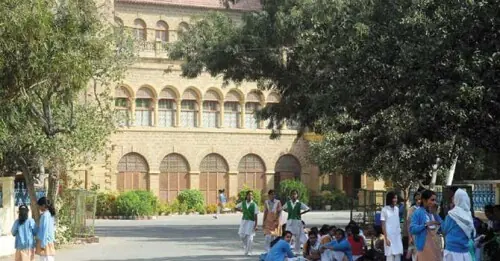
This is not the only instance in which the government decided to shut down schools. If one reviews the news archives, one can find reports of repeated closures of educational institutions for reasons ranging from security risks to the Covid-19 pandemic, crises driven by climate change and smog. The school closure announcement was just one instance in a recurring pattern. Despite schools having reopened, there is no guarantee that it will not happen again.
But what about the implications of this persistent cycle? For a country where, according to the latest report released by the Pakistan Institute of Education, 77 per cent of 10-year-olds are not able to read and comprehend a simple text, the education system is already mired in a deep learning crisis. When children who struggle with basic literacy keep on missing school, it compounds the learning crisis and further widens the existing gaps.
In 2023-24, a climate change-driven crisis resulted in the loss of 97 school days for students in Pakistan, which works out to around 54pc of the normal academic year. When the Covid-19 pandemic forced countries to shut down schools, Pakistan was among the first countries in the world to do so. According to a World Bank estimate, school closures due to the pandemic in the country resulted in an estimated loss of between 0.3 to 0.8 years of learning for the average student. Over 26 million students dropped out of schools in Pakistan during the first wave of the pandemic, with only 50pc returning. Most of the students who dropped out were girls.
The impact of school closures goes beyond learning outcomes.
If we look deeper, the impact of school closures goes beyond learning outcomes; it also has a gendered aspect, with particularly heavy consequences for girls, especially in underprivileged settings. For many students, schools provide a safe space against child marriage and child labour. When schools close, that safe space is taken away, thereby increasing the risk of school dropouts and early marriages among young girls. Moreover, while boys often spend their time playing outdoor sports, girls are mostly occupied with household chores, leaving them at heightened risk of mental distress and social isolation.
One may argue that remote learning can be presented as an alternative in such scenarios; however, this method of learning is not accessible to all students across the country. Factors such as household distractions that hinder a child’s cognitive engagement, lack of familial support in understanding instructional content, limited understanding of the language used for classroom instructions, and lack of access to the internet and modern gadgets are among the key barriers to remote learning. One of my colleagues stated that schools had instructed parents to teach topics at home and once the students returned to school, those lessons would not be covered by the teacher. One might ask, who was going to teach those children not fortunate enough to have literate family members at home? Another colleague said she and her husband were in office all day, which left their son unattended at home, where he played video games all day and did not take any interest in virtual learning.
An already strained education system should not be further tested through this shutdown practice. However, if such measures are deemed necessary and unavoidable, the education system must be seriously supported to protect student learning.
Collective efforts are required at all levels of the education ecosystem — from top offices to classrooms. This includes the development of contextualised policies, provision of equitable access to remote learning, and support for teachers to foster immediate catch-up of the learning losses, with each effort tailored to the diverse educational needs of the country.
Such measures are important not only for improving educational outcomes but also for preventing the widening of gender disparities in a country that is already grappling with severe gender inequality.
This writer is a development practitioner.
Published in Dawn, April 22nd, 2026