• Minister says Rs173bn taken from PSDP to finance fuel subsidies
• Fears lower-than-targeted GDP growth for current, next fiscal
• CPEC coordination committee to meet next month
ISLAMABAD: The government has said that Pakistan’s economic growth will remain under pressure during the current and next fiscal years, owing to not only an almost 20 per cent cut in the development budget for the sake of fuel subsidies, but also the lagged inflationary impacts of global supply chain disruptions following US-Israel war on Iran.
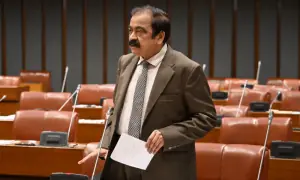
“This [cut in development budget] will have a negative impact and, coupled with international oil prices and inflation, will result in an economic slowdown and affect our growth target of 4.2pc” for the current year, Planning and Development Minister Ahsan Iqbal said at a news conference on Monday.
This is the first official confirmation of lower-than-targeted economic growth, although international lenders have been projecting Pakistan’s growth rate between 3.2pc and 3.5pc. He was responding to a question after announcing that the Public Sector Development Programme (PSDP) for the current year had been slashed by Rs173 billion; from the Rs1.01 trillion target set in the budget to around Rs837bn.
The minister said the PSDP was cut to finance the Prime Minister’s Austerity Fund created to subsidise fuel prices, particularly diesel, during the harvest season. He expressed cautious optimism about the success of the second round of US-Iran talks being facilitated by Pakistan, saying such deep-rooted disputes were difficult to resolve overnight.
He said both parties would have to show flexibility to end global tensions and threats to the global economy, but added that the two countries sitting together for the first time after decades of estrangement would hopefully pave the way for lasting peace and help avert a global inflationary storm and looming economic stagflation.
The minister said the negative impact on the growth outlook would be lower this year as the Middle East crisis emerged when three quarters of the fiscal year had already passed, but would be greater in the first six months of the next fiscal year even if the war ends immediately. He said global supply chains and markets normally take six to nine months to return to normal.
He said the entire government would make its best efforts to “catch up” the economic losses through “budget proposals for exports, exports and exports”, as that was the only way to bridge the gap between foreign exchange outflows and inflows.
Mr Iqbal said Pakistan’s GDP growth rate improved to 3.8pc in the first two quarters (July-Dec) of the current fiscal year, compared to 1.9pc in the corresponding period last year, before the external shock in the form of the Middle East crisis hit not only Pakistan but all 193 economies. He said oil prices and their smooth supply worked like oxygen for global economies, and higher prices increased export costs for all.
Proactive decisions
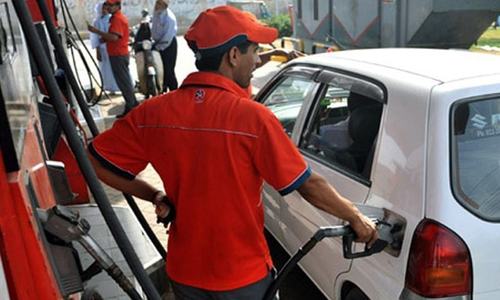
The minister said that, unlike many other countries, Pakistan took proactive decisions and did not allow disruption in oil supplies. However, it was necessary to control consumption through price adjustments instead of allowing domestic and external deficits to get out of control, he added. Under this strategy, he said, the government initially increased diesel and petrol prices by Rs55 per litre and then kept them frozen for the following two weeks, with a Rs129bn subsidy financed through a Rs100bn cut in development spending.
As the shutdown of the Strait of Hormuz prolonged, the government had to increase petrol and diesel prices by Rs137 and Rs184 per litre, respectively. However, the prime minister reduced the diesel price by Rs135 per litre to minimise cost-push inflation and shield farmers from additional burden during the crop harvest. He hinted that a Rs80 per litre cut in diesel prices under this effort led to a further Rs73bn reduction in the development budget.
At the same time, he said, the country’s leadership stepped up global diplomacy to contain the Iran war, as its prolongation would be disastrous not only for Pakistan but for all world economies, including the US, due to the spiralling impact of oil prices and other commodities. Such a scenario would also affect petrochemicals and fertilisers.
Mr Iqbal said the government had turned monthly meetings of the National Price Monitoring Committee into weekly sessions and, in consultation with provincial governments, ensured price controls and reductions in transport fares in line with the prime minister’s decision to cut diesel prices.
He said a meeting of the Joint Coordination Committee of China-Pakistan Economic Corridor, whose minutes had already been approved by the two sides, would be held next month on the occasion of the 75th anniversary of bilateral relations to expedite CPEC Phase-II. He said the upcoming visit of President Asif Ali Zardari to China would also give impetus to CPEC, whose priorities have now shifted to business-to-business cooperation, agriculture, technological development and human resource development from the initial focus on infrastructure.
Published in Dawn, April 21st, 2026