• Dealers’ body terms new system ‘unacceptable’, meets today for decision on boycott
• Owners’ association urges govt to review daily pricing, increase commission; chairman claims decision was taken without prior consultation
• Govt insists talks with dealers association were successful, petroleum division assured of ‘full support’
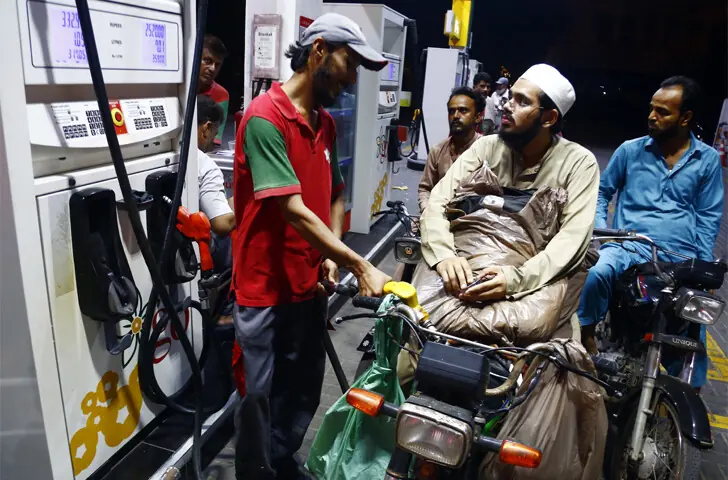
ISLAMABAD: As many as 15,000 petrol pumps across the country will go on an “indefinite” strike at the stroke of midnight, after the talks between their owners and the federal government over the daily price mechanism failed.
The strike call will apply to privately owned pumps, while company owned and operated outlets are expected to operate as usual.
The All Pakistan Petrol Pumps Owners Association (APPPOA) held talks with a government delegation led by Petroleum Minister Ali Pervaiz Malik, but they failed to reach an agreement to break the deadlock.
Speaking to journalists after the meeting with the minister, the APPPOA office-bearers said that after the failure of talks, they had no option but to announce the indefinite strike because it was an existential issue for them, terming the new system ‘unacceptable’.
APPPOA Vice Chairman Nauman Ali Butt said the government’s plan to revise petroleum prices daily was not workable. He said their main demand was that fuel prices be determined monthly, while their longstanding demand for an increase in the dealer commission was also pending, as their commission had been frozen for three years.
APPPOA Chairman Humayun Khan said petrol pump owners were already facing financial challenges due to pressures from the Oil and Gas Regulatory Authority (Ogra) and the Oil Marketing Companies (OMCs), in addition to the government policies.
He said the daily pricing mechanism created confusion and would destroy their businesses already running on thin margins, adding that the daily mechanism favoured the OMCs, which could potentially delay deliveries to the pumps in case of declining prices and book upliftment with advance billing.
Mr Khan said it was ironic that the government had taken a major decision without consulting key stakeholders, adding that this showed the exclusion of small private businesses in policymaking and a disregard for ground realities. He said at least 15,000 petrol pumps would close their businesses on Thursday, while asking the government to reconsider the new mechanism, increase dealers’ commission, and include petrol pump owners in policy consultations.
Interestingly, a statement issued by the petroleum division said its talks with PPDA had been successful. However, Malik Khuda Bukhsh said that the petroleum minister had asked them to meet the Ogra leadership and explain their viewpoint.
‘Daily pricing unacceptable’
Separately, the Pakistan Petroleum Dealers Association (PPDA) also hinted at a strike against the new system. Its executive body will meet on Wednesday for a final decision in this regard. Senior Adviser Malik Khuda Bukhsh told Dawn that daily fuel pricing was “not possible and unacceptable”.
He said the PPDA team informed Ogra about their challenges, adding that the Ogra team confirmed that the daily pricing decision was taken in haste and sought dealers’ input.
He said the dealers’ demands were explained in detail to the regulatory authority, which sought a seven-day period to explain those issues to the government and get back to the PPDA while asking for patience instead of a strike.
Mr Bukhsh said the PPDA team told Ogra that its executive committee would meet on Wednesday to decide about the strike as the delegation was not empowered to take such decisions.
The petroleum division’s statement, however, claimed that the PPDA delegation appreciated the government’s effective management of petroleum product supplies during the challenges arising from the Strait of Hormuz crisis and “assured the minister of the association’s full support for the government’s policy”.
The minister briefed the delegation on Monday about the transition from weekly to daily petroleum price announcements, explaining that the new mechanism would be based on a seven-day rolling average of international prices. He emphasised that the previous weekly pricing mechanism was also based on a seven-day average price, and that the new system simply updates prices on a daily basis to enhance transparency, reduce market distortions, and better reflect international price movements. “The PPDA expressed its support for the proposed mechanism,” the statement claimed.
The dealers’ association, however, published an appeal in Tuesday newspapers calling upon the government to “review” the 24-hour price adjustment mechanism.
Published in Dawn, July 22nd, 2026