Middle East conflict spiralling into wider regional war, warns UN chief


 0
0
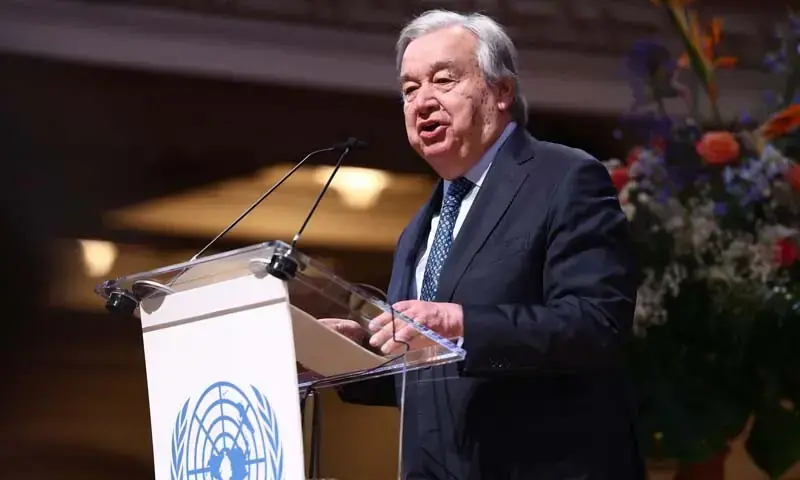

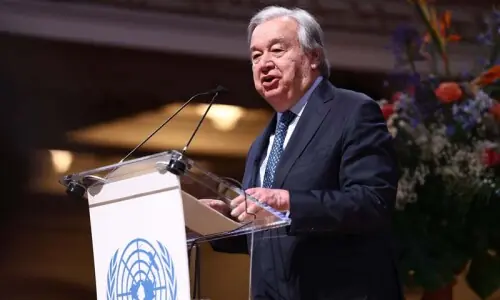
WASHINGTON: UN Secretary General António Guterres warned on Thursday that the Middle East crisis was spiralling into a wider regional war, urging the United States and Israel to halt hostilities and calling on Iran to stop attacks on its neighbours.
Addressing reporters at UN Headquarters, Guterres said the conflict had “lurched into its second month,” with human suffering deepening by the day. “Every day this war continues, human suffering grows. The scale of devastation grows. Indiscriminate attacks grow. The targeting of civilians and civilian infrastructure grows. And the perils to our world grow,” he said.
“We are on the edge of a wider war that would engulf the whole Middle East with dramatic impacts around the globe.”
The secretary-general cautioned that the fallout was already being felt far beyond the region, pointing in particular to threats to maritime security.
“Look no further than the impact of the denial of freedom of navigation. When the Strait of Hormuz is strangled, the world’s poorest and most vulnerable cannot breathe,” he said, linking disruptions to rising food and energy costs affecting countries from the Philippines to Sri Lanka and Mozambique.
He stressed that while many aspects of the conflict remained uncertain, the consequences of escalation were not. “If the drums of war keep beating, escalation will only make all of this worse. The spiral of death and destruction must stop.”
Guterres said diplomatic efforts were underway and deserved “the space and support to succeed — anchored firmly in international law, including the UN Charter”.
“Disputes must be settled peacefully. The sovereignty and territorial integrity of all member states must be respected. Civilians and civilian infrastructure, including nuclear installations, must be respected and protected. And freedom of navigation must be upheld,” he added.
Published in Dawn, April 3rd, 2026