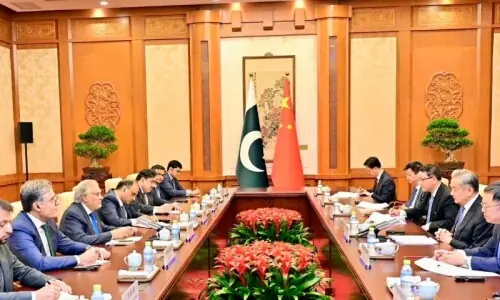
FOREIGN Minister Ishaq Dar’s brief visit to Beijing on Tuesday has yielded a five-point plan endorsed by China that is being described as a “structured diplomatic template” to end the brutal US-Israeli war on Iran.
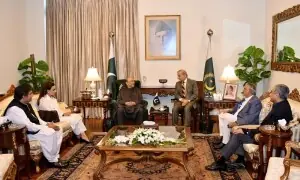
The trip follows consultations in Islamabad last week which brought together the foreign ministers of Egypt, Turkiye and Saudi Arabia to find a peaceful end to this misadventure. The plan calls for the immediate cessation of hostilities, US-Iran talks and security for the Strait of Hormuz, while also demanding that all parties refrain from the use or threat of use of force as diplomatic efforts continue.
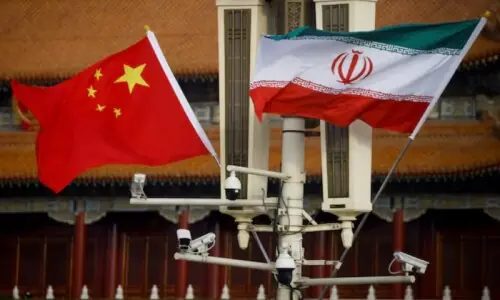
China’s backing for peace talks brings the weight of a global player to the efforts of Pakistan and other regional states to help end the conflict. It is a fact that the war has closed off one of the key trade routes Beijing depends on for its commercial activities, which may explain China’s interest in helping end hostilities quickly. It should be remembered that Beijing quietly played a role in bringing the Saudis and Iranians together in 2023 to bury the hatchet and restore diplomatic ties.
China is also seen as a more impartial actor, particularly in Iran, when compared to the US, which is an aggressor in this case, and the EU, which has strained ties with Tehran. Because of its economic heft and growing geopolitical profile, what China says should have an impact in Tehran, Riyadh and other regional capitals. However, it is difficult to say if Chinese calls for restraint will have any takers in Tel Aviv and Washington.
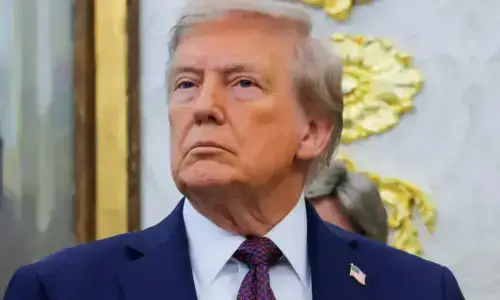
At the time of writing on Wednesday, US President Donald Trump claimed Iran had asked for a ceasefire; the Iranian foreign minister said his country had done no such thing. As the five-point plan noted, “dialogue and diplomacy are the only viable path forward”. But the question is: are those running the show in Washington and Tel Aviv willing to pursue this path in good faith?
If any peace plan is to work, it requires an immediate cessation of hostilities. The mixed messages coming from the US have only muddied the waters further, and the Iranians remain very sceptical — with good reason — of American claims that the US wants a deal.
The US must halt the aggression against Iran immediately, and a long-term framework for peace can be worked out with the help of regional states, as well as China.
Of course, there are high levels of mistrust on both sides, and this will take time to overcome. Importantly, Israel must be reined in. The destructive war it has unleashed on Lebanon means that even if the Iranian front simmers down, things in the Middle East will remain extremely volatile unless there is calm across the entire region.
Published in Dawn, April 2nd, 2026