AFTER a temporary pause during Eidul Fitr, Pakistan says that Operation Ghazab lil-Haq, which began in late February, striking terrorist sites in Afghanistan as well as Afghan Taliban positions, has resumed. Earlier, the Foreign Office had said that a temporary truce had been initiated “in deference to” Eid, and on “requests from our brotherly Islamic countries”.
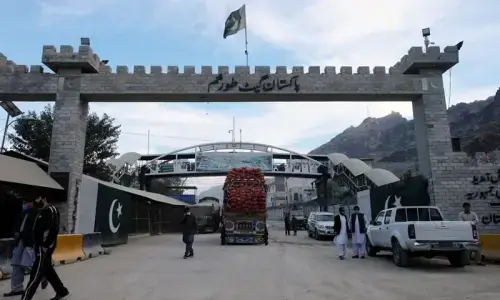
Not long after the truce expired, there were reports last Thursday of cross-border fire from the Afghan side at Torkham, in which a Pakistani official was injured. The truce had largely held over the Eid holidays, and it would be in the interest of both states to see how a longer-term cessation of hostilities can be worked out, while keeping in mind Pakistan’s legitimate demand that cross-border terrorism from Afghanistan be halted permanently.
Many of Pakistan’s friends are interested in seeing a long-term truce take effect between Islamabad and Kabul. Afghan Taliban officials had said the Eid truce had been achieved due to the efforts of Saudi Arabia, Turkiye and Qatar. Moreover, China, which is an ally of Pakistan, and which also maintains open channels with Afghanistan, has also suggested that the path of dialogue be pursued in order to resolve differences.
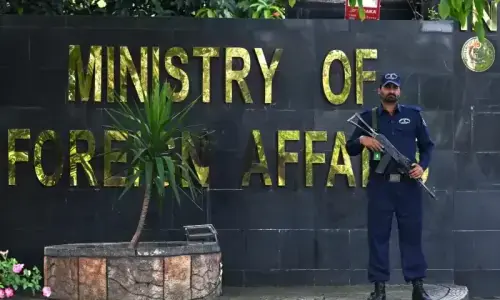
Commenting on the Eid truce, the Chinese foreign ministry’s spokesperson said that “China hopes that both countries will … resume peace talks promptly” and “resolve differences through dialogue”. The spokesperson added that Beijing was “playing a constructive role” in mediating the conflict. Meanwhile, the FO has said the operation will continue “until the objectives are achieved” and Kabul reviews its support for terrorism.
Pakistan’s hand was forced by the Afghan Taliban as they had stubbornly refused to act against terrorist groups such as the banned TTP, which has been waging a bloody campaign inside this country, resulting in the loss of many lives. However, now that deterrence has been established, and hopefully the message understood in Kabul, it would be wise to find an off-ramp, and get guarantees from Afghanistan at the negotiating table. The flames of war are consuming the wider region, and it would be in Pakistan’s interest for calm to be established along the Afghan border.
Clerics from both Afghanistan and Pakistan had recently called for extending the Eidul Fitr ceasefire to Eidul Azha — which falls at the end of May. This could be a worthwhile proposal to pursue; common Muslim friends, as well as China, can be approached to see if a longer truce can be worked out. Pakistan’s concerns about terrorist groups in Afghanistan are genuine, and the interlocutors must make clear to the Afghan Taliban that if they are interested in permanent peace, they must act against violent groups seeking to harm Pakistan.
Published in Dawn, March 30th, 2026