0
0

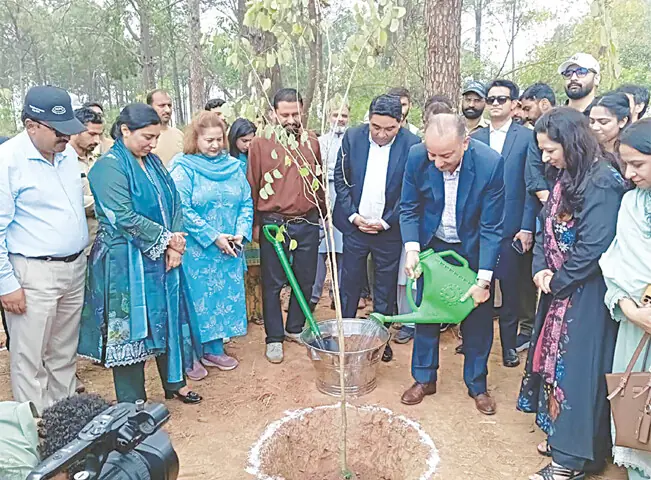
ISLAMABAD: Federal Minister for Climate Change and Environmental Coordination Dr Musadik Masood Malik on Thursday announced that weekly tree plantation drives would be launched across Islamabad after March 31.
A plantation event was organised by Pak-EPA Islamabad in collaboration with Zong Telecom on Thursday.
Addressing a ceremony at Shakarparian, the minister said the campaign would continue for at least one to two months, covering multiple locations across the city. The initiative is part of the government’s broader strategy to expand green cover and mitigate the impacts of climate change.
In a statement issued here, the minister reiterated the government’s commitment to plant ten trees for every one cut in Islamabad, adding that implementation of the pledge had now begun in practical terms.
He invited the media and the public to observe plantation activities and independently assess progress on the government’s commitments.
Linking afforestation efforts with broader climate challenges, Dr Malik said rising temperatures, increasing carbon emissions and greenhouse gases were intensifying extreme weather conditions, including floods and accelerated glacier melt.
“Trees are essential for maintaining ecological balance as they absorb carbon dioxide and release oxygen,” he said.
The minister emphasised that forests play a critical role in slowing climate change by acting as natural carbon sinks, while also helping mitigate its adverse environmental, social and economic impacts. Trees, he noted, reduce flood intensity by enhancing water absorption, stabilise soil, prevent land erosion and lessen the damaging effects of strong winds during storms.
He said increasing tree cover also contributes to improving the livability of cities by lowering urban temperatures, reducing air pollution and creating healthier environments for residents. “Urban forestry is not just an environmental priority but a public health and quality-of-life imperative,” he added.
The minister noted that trees planted in earlier drives were being protected and had shown healthy growth, terming it a positive indicator of continuity and seriousness in government efforts.
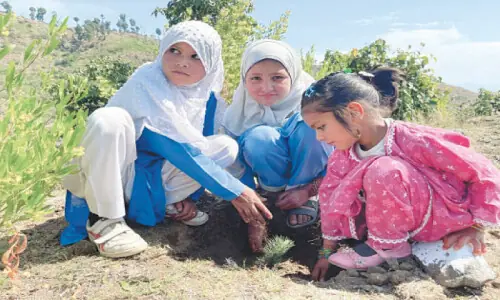
Emphasising public participation, he stressed that awareness and community engagement, particularly among young people, were critical for building a culture of environmental responsibility. He appreciated schoolchildren for actively taking part in plantation activities, calling their involvement “encouraging and vital for the future.”
Recognising the role of the media, the minister said it had played a key role in sensitising the public about the importance of forests and their protection. He urged media organisations to further step up awareness efforts, particularly on tree plantation and fuel-saving practices.
Dr Malik also highlighted that fuel conservation under the government’s austerity policy would help reduce carbon dioxide emissions, underscoring the link between economic discipline and environmental benefits.
Calling for a whole-of-society approach, the minister underscored the importance of active participation by communities, educational institutions, civil society organisations and the corporate sector in plantation campaigns, as well as in the protection and conservation of forest resources.
He said such collective efforts were essential to support the government’s drive to increase national tree cover, reaffirming the government’s commitment to environmental sustainability, biodiversity conservation and climate resilience.
The announcement signals a continued policy focus on nature-based solutions as Pakistan grapples with increasing climate vulnerabilities, the minister said.
Meanwhile, Azad Jammu and Kashmir Prime Minister Raja Faisal Mumtaz Rathore on Thursday said tree plantation was the most effective and sustainable means to mitigate the adverse effects of climate change, urging citizens to treat it as a “religious obligation” and a collective national responsibility.
He expressed these views while inaugurating the spring tree plantation campaign by planting a sapling at the Prime Minister’s House.
Minister for Forests Sardar Javed Ayoub and senior forest department officials were also present on the occasion and briefed the prime minister on the ongoing drive, its targets and progress.
Mr Rathore stressed that afforestation was indispensable for environmental protection and the sustainable use of natural resources, underlining the need to raise public awareness and promote collective efforts to address growing environmental challenges.
Published in Dawn, March 27th, 2026