Educational reforms stressed to counter violent extremism in Sindh


 0
0

• Two-day workshop focusing on tackling radicalisation concludes
• Experts urge engagement and dialogue with youth
KARACHI: Law enforcers, security experts and other officials on Thursday highlighted educational reforms and “serious reflection” on the evolving geopolitical situation as the key steps needed to counter violent extremism in Sindh.
They were addressing the concluding day of a two-day workshop aimed at formulating a “comprehensive and concrete strategy” to eliminate violent extremism in the province.
The workshop was organised by the Sindh Centre for Excellence on Countering Violent Extremism in collaboration with the United Nations Office on Drugs and Crime (UNODC) and other stakeholders at a local hotel.
Speaking on the occasion, Sindh Home Minister Ziaul Hasan Lanjar called for educational reforms and “serious reflection on the evolving geopolitical situation” to counter extremism. He said that some recent terrorism incidents in Karachi had links to the situation in Balochistan, as they involved university students. And this, he added, underscored the urgent need for reforms in the education sector.
He also emphasised the importance of critically examining regional geopolitical developments and said that “our problems are linked with our neighbours”.
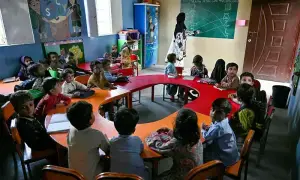
Sindh Education Minister Sardar Shah shared that the provincial government had removed “hate material” from school curricula. He also stressed that the promotion of skills-based education was essential in countering extremism.
Additional IGP Karachi Azad Khan said that while armed forces and law enforcement agencies were working to eliminate terrorism through “kinetic means”, more effort was required to prevent violent extremism through “non-kinetic approaches.”
Author and political analyst Dr Huma Baqai also spoke on the occasion. Referring to a past terror incident, she said she was “shaken” upon learning that her former student, Saad Aziz, had been involved in the Safoora bus attack, in which 45 members of the Ismaili community were killed.
She recalled that he had been a seemingly “normal” student during his time at the Institute of Business Administration and actively participated in extracurricular activities. However, he later distanced himself from his peers and began attending external gatherings where he was allegedly indoctrinated, and became increasingly withdrawn.
Dr Baqai noted that Aziz came from a privileged background, which shows that extremism is not solely rooted in poverty or deprivation.
She also expressed shock at the involvement of a female university student in a suicide bombing targeting Chinese nationals at the University of Karachi. This, she said, further illustrated that individuals with access to opportunities and a comfortable life could still be drawn towards extremism.
She observed that many young people no longer consume traditional media. They rely instead on WhatsApp groups, TikTok and other social media platforms for information. “We need to reconnect with young people and involve them in such discussions,” she suggested.
Journalist Amir Zia said that dissenting voices against state narratives now exist in media systems worldwide. He added that social media had attracted greater attention and audiences because the authorities in Pakistan had “undermined the credibility of mainstream media”. He claimed that “apart from Dawn, the credibility of most other media organisations had been eroded” and alleged that the government was now “constraining Dawn by imposing a ban on advertisements.”
He said restoring the credibility of mainstream outlets was essential to counter the “pernicious influence of social media on young people.”
He also urged the rulers to exercise caution in their choice of language and said that terms such as “Fitnatul Khawarij” could create the impression internationally that extremism within Muslim societies is primarily the result of internal conflict, given the historical connotations of the term.
He added that the state should remain measured rather than emotional in its counterterrorism approach, firm in action when necessary but careful in its rhetoric.
He argued that extremism in Balochistan has partly grown due to the weakening of mainstream political opposition. Similarly, the state was fighting against the TTP in KP but it had also banned the Pashtun Tahaffuz Movement and adopted hostile actions against the PTI, a representative party there, which helped fuel anger among people.
Dr Moonis Ahmar of the University of Karachi said that while the Sindh government had established a centre to counter violent extremism, its effectiveness depended on sustained engagement by multiple stakeholders, as well as coordination between federal and provincial authorities.
He stressed that addressing anger, which is often the root cause of extremism, must be a priority.
Dr Ahmar also pointed out that laws against hate speech and the misuse of loudspeakers exist but are poorly enforced. He further emphasised the need to eliminate hate content from educational curricula across Pakistan.
Published in Dawn, March 27th, 2026