KARACHI: Senior government functionaries, top law enforcement officials and members of civil society on Wednesday discussed ways and means to eliminate violent extremism in Sindh.
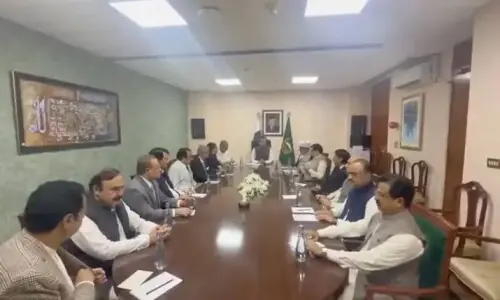
Their discussion was part of a two-day workshop organised by the Sindh Centre for Excellence on Countering Violent Extremism that began at a local hotel in collaboration with the United Nations Office on Drugs and Crime (UNODC) and other stakeholders.
Speaking on the occasion, Additional Chief Secretary (Home) Mohammed Iqbal Memon said that the provincial government was working on a “strategic plan” to counter violent extremism in the province.
He explained that the workshop aimed to formulate a “comprehensive and concrete strategy” to eliminate violent extremism in Sindh.
Promotion of ‘jihadi culture’ contributed to radicalisation of society, IGP tells workshop
Speaking on the occasion, Inspector General of Sindh Police (IGP) Javed Alam Odho said that violence had long persisted in Sindh, though recent actions by law enforcement agencies had helped reduce its intensity.
The provincial police chief observed that “we ourselves promoted a jihadi culture”, which contributed to the rise in extremism.
The IGP also expressed concern over the prevailing “culture of arms”. He stressed that lasting peace could only be achieved when society was freed from the unchecked proliferation of weapons.
“Those accompanied by larger numbers of security guards are perceived as more powerful,” he said, adding: “We must curb this culture and cleanse society of weapons.”
Counter-Terrorism Department chief Additional IGP Zulfiqar Larik highlighted the range of threats facing Sindh, including those posed by outlawed sub-nationalist and religious groups.
He said banned outfits such as the militant Islamic State (IS) group, the Tehreek-i-Taliban Pakistan (TTP), and certain sub-nationalist organisations remained active in the province, some of which are now referred to as Fitna-al-Hindustan and Fitna-al-Khawarij
Recalling past incidents, he said a group named Ansarul Sharia had previously emerged in Karachi and targeted police personnel, particularly traffic policemen. He noted that many of its members were university students.
He also referred to the Safoora Goth attack, in which 45 members of the Ismaili community were killed, and said individuals with academic backgrounds in medicine and engineering were involved.
“We need to examine who is radicalising these young men,” Mr Larik said and called for improved regulation of digital and social media platforms.
He added that the CTD had also taken action against hate literature and registered cases in this regard.
Academic perspective
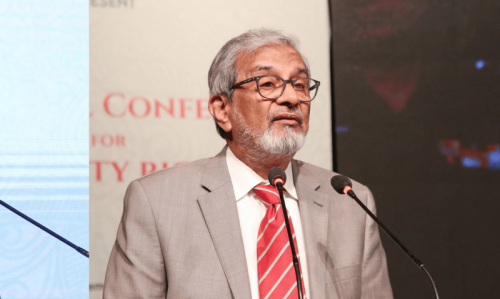
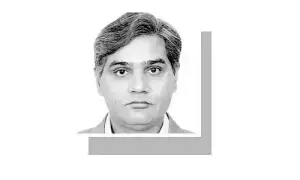
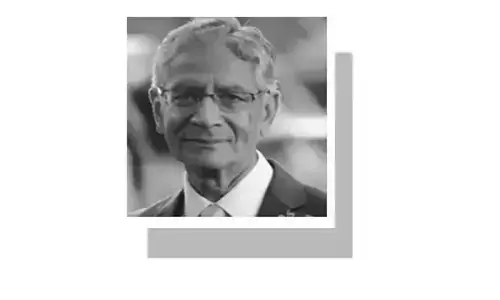
Writer and scholar Dr Syed Jaffar Ahmed, speaking on the causes of extremism in the country, said that the propagation of rigid religious interpretations, promotion of extremist ideologies, strengthening of religious groups for geopolitical purposes and the militarisation of society were among the key historical factors.
He also pointed to the erosion of dialogue and obstacles to democratic institutionalisation as contributing elements.
Dr Ahmed explained that there were broadly two models for addressing security challenges. One was the “national security state”, where all issues are viewed through a security lens, often subsuming democratic institutions. The other was the democratic model, where security concerns are addressed within a constitutional and democratic framework.
“Weaker and established democracies alike have addressed security challenges under a constitutional umbrella with minimal human rights violations,” he observed.
In Pakistan’s case, however, he noted that security issues had largely been approached through the security apparatus.
Referring to measures such as the National Action Plan of 2014 and the 21st and 23rd constitutional amendments, he said these had “only partially succeeded”.
He emphasised that extremism and security challenges should be addressed within the framework of democratic governance.
Dr Ahmed also suggested that centres working on countering violent extremism across the country should not be centrally controlled but should operate through coordination among federating units.
He proposed that such centres should function as think tanks, focusing on training and education of administrators, academics, teachers, students, lawyers, members of the judiciary and religious scholars.
“These centres should promote a culture of humanism and maintain linkages with institutions worldwide,” he added.
Officials, academics, religious scholars and media personnel attended the workshop.
Published in Dawn, March 26th, 2026