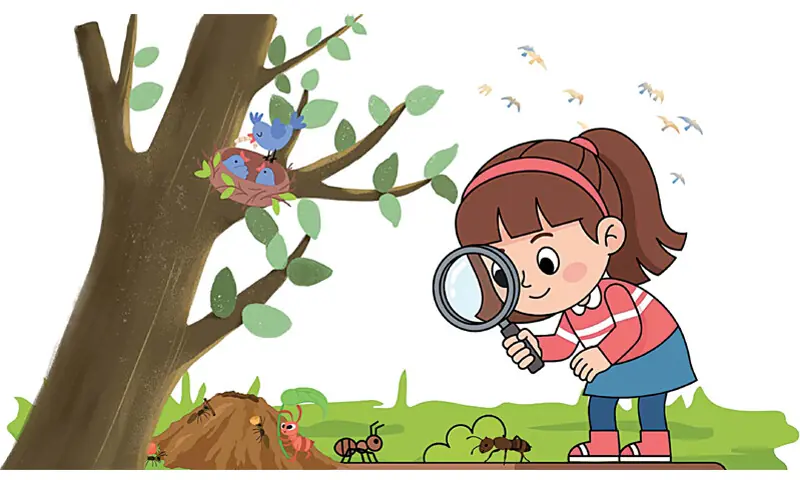
The good news is that urban insect populations respond really well to simple things. This is one of the few areas where ordinary people in ordinary places can actually make a difference.
Planting makes a difference
Planting is the simplest and most amazing practice we can all participate in; for instance, native plants like neem, shisham, peepal, amaltas, kikar, bottle brush and jasmine can be grown in our soil. They are local and have been grown in this soil for hundreds of years and local insects feed and breed on them.
Even if you buy non-native plants, they are still beneficial. The key to remember is to have flowers with accessible pollen and nectar, and plants that bloom at different times of the year, so there is food available across the whole season, not just in one short season.
Reduce pesticide use
You cannot stop the use of pesticides completely, but you can at least cut back. The lizard on your wall is eating mosquitoes and flies every night. The spider was catching the mosquitoes and flies in its web. The wasps in your garden are hunting the caterpillars, destroying the vegetables. The moment you spray to kill these insects bothering you, you also kill the food source of every predator, keeping things in balance, and once those predators are gone, nothing is left to do their job. So use it only when there is a high need. Other than that, just shoo them away.
Leave some things alone
Leaf litter in autumn, dried dead stems, a patch of uncut grass. Many bees and insects make their homes inside hollow stems and leaf piles. Human instinct says tidy everything up, but that stuff lying around is actually habitat. Leave it alone for a while. So that these tiny inhabitants do their job efficiently.
The big picture of small things
We build big expensive cities, vast roads, tall buildings, all kinds of technology and we think we have figured everything out. But a lot of what keeps a city actually functioning is not the infrastructure we built. It is the tiny creatures we never think about and mostly want dead.
You do not have to like insects. Nobody is asking you to. But ignoring that they exist and that they are doing something important is the kind of mistake that is very easy to make and very hard to undo. Because cities like Karachi are already showing signs of what happens when urban insect life gets squeezed out. The birds are quieter in certain neighbourhoods. The trees in some areas are struggling. The soil in urban green spaces is not what it was.
This is not a future problem. It is a now problem and the longer it takes people to notice it, the harder it becomes to fix. — B. R.
Published in Dawn, Young World, March 28th, 2026