PAKISTAN was born out of a constitutional and legal struggle led by Quaid-i-Azam Mohammad Ali Jinnah. H.V Hudson in The Great Divide described Jinnah as a “steadfast, idealist as well as a man of scrupulous honour.” Lawrence Ziring in Pakistan in the Twentieth century rightly believed that for many Muslims, “Jinnah was the model of deportment, an articulator of dreams, and a promise of a better future.” The Muslim League under Jinnah’s leadership eventually came to the conclusion that the Hindu majority was determined to deny the due rights of Muslims and thus passed the Lahore Resolution demanding territorial sovereignty to secure a separate homeland for the Muslims of British India. An understanding of why this resolution was passed is crucial to tackle the complexities of South Asian politics today.
The poet-philosopher Allama Iqbal in his address in 1930 at Allahabad said: “I would like to see the Punjab, North-West Frontier Province, Sindh and Baluchistan amalgamated into a single state. Self-government within the British Empire, or the formation of a consolidated North-West Indian Muslim state, appears to me to be the final destiny of the Muslims at least of North-West India.”
The great Iqbal proposed that Muslim majority provinces should be the part of a new Muslim state to secure linguistic, racial, cultural, and religious values of the community. Dr Iqbal’s speech contained striking and impactful ideas which inspired Muslim nationalism and generated a huge awareness among Muslims in the Punjab about their historical and cultural importance, giving them confidence and new hope through his poetic and philosophical thoughts. These thoughts significantly contributed to the rise in calls for freedom.
Iqbal, who firmly believed in the leadership and political wisdom of the Quaid, wrote an insightful letter to Jinnah on June 21, 1937 and said that Mohammad Ali Jinnah was “the only Muslim in India today to whom the community has a right to look up to for safe guidance through the storm which is coming to North-West India, and perhaps to the whole of India.”
The Lahore Resolution was not merely an ideological triumph. It brought the Muslim community to the cusp of a new era of independence and clarified ideological and strategic goals in a conclusive manner, with little room for alternative political outcomes.
Jinnah could read the situation accurately. He knew that the manner in which the Congress exploited its rule, its withdrawal from provincial governments, and its non-cooperation with the British were serious mistakes. These, however, were immensely favourable for the Muslim League. And it found ample space to advance the Muslim cause.
The Lahore Resolution was not merely an ideological triumph; it offered a clear and ambitious future roadmap for Muslims that was free of compromises. The resolution brought the Muslim community to the cusp of a new era of independence and clarified its ideological and strategic goals in a conclusive manner, leaving little room for alternative political outcomes. However, numerous challenges, hurdles, and risks stood in the way of achieving these objectives. The Muslims’ efforts to defeat political subordination gained momentum, and its leaders emerged as the principal driving force of Muslim nationalism.
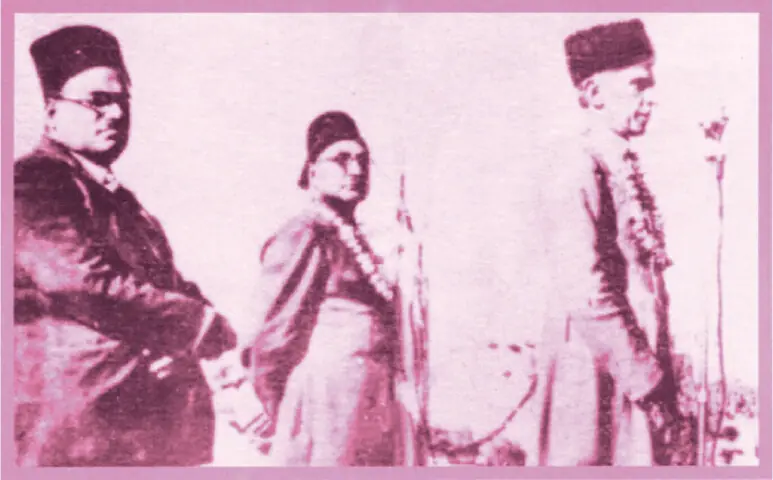
The Muslim League passed the resolution at its annual session in Lahore on March 23, 1940, and resolved that no constitutional plan would be workable or acceptable to the Muslims unless “geographically contiguous units are demarcated into regions, which should be so constituted, with such territorial readjustments as may be necessary, that the areas in which Muslims are numerically in majority as in the North Western and Eastern zones of India should be grouped to constitute Independent States in which the constituent units should be autonomous and sovereign.”
I.H Qureshi in his book The struggle for Pakistan believed that for the first time it became clear that Muslims would not accept any other option except a nation of their own.
Through this resolution the Muslim League was able to protect nationhood and create statehood by setting a new path for Muslims dreaming of a free, new life. The resolution denounced the propaganda of the Congress and right-wing Hindu organisations against the resolution. Quaid-i-Azam Mohammad Ali Jinnah remained optimistic as well as determined about achieving the goals set by the resolution. The Lahore resolution helped our leaders turn the ripples of resistance to Congress’ oppression of Muslims into a wave of change that swept across the subcontinent. The most significant achievement of Jinnah was the change he was able to effect in the attitudes of Muslims through this resolution.
During his presidential address at the Muslim League session in Lahore, Jinnah asserted that Muslims were not a minority but a nation. He justified Muslim nationhood based on the contemporary political definition of a nation state and its elements, such as territorial sovereignty, population, nationalism, and citizenship. Jinnah argued that their demand for a separate state was in accordance with the international norms of self-determination. Thus, the logical and realistic solution of the Indian problem was to divide India into two autonomous states.
The resolution was a watershed moment in the quest for a Muslim political identity. It provided a way to resolve the fundamental problem of political identity, which is imperative for future citizenship. It also created new opportunities to address longstanding ambiguities in the expression of Muslim identity and culture. The resolution also embodied a pro-autonomy demand and specified the geographical boundaries of the proposed Muslim state in the northwestern and northeastern regions of India, where Muslims constituted a majority.
Between 1942 and 1946 much had happened that weakened the British rule. The Congress and its leaders, including Jawaharlal Nehru and Mahatma Gandhi, openly opposed the resolution because they considered it a threat to India. However, the Congress’ rejection of Crips offers, and the Quit India Movement in 1942 provided an opportunity for the Muslim league to push its demand with force. H.V Hudson also acknowledges that the demand for Pakistan and the unity among the Muslims were driven by one man and that was Jinnah. In 1944, Gandhi met Jinnah at his residence to discuss the future of India. Gandhi insisted on keeping India united, but he failed to persuade Jinnah. The Wavell papers indicate that “the Gandhi-Jinnah talks made the position clearer; that neither of these leaders have abandoned any of their former ideas; Jinnah emphasised the two-nation theory and Pakistan more strongly than before, and clearly wanted this be decided before the British leave.”
As a consummate statesman and a sagacious leader, Jinnah had an exceptional gift for understanding scenarios and forecasting possible opportunities. Thus, he was able to detect the flaws of the Cabinet Mission Plan in 1946. But, more importantly, he was able to assess the possibility for what seemed impossible to many — the creation of a separate nation for the Muslims. Eventually, Lord Louis Mountbatten was appointed as the last viceroy of India with the task to organise the transfer of power on June 3, 1947. Mountbatten himself acknowledged that he was unable to convince Jinnah despite deploying the best of his persuasion skills. Nevertheless, Jinnah’s prowess in legal and constitutional matters helped him persuade the British that the partition of India was the only solution for Muslims.
After Pakistan came into being, few world leaders could anticipate that it would survive the difficult circumstances created by India. On the other hand, the people of Pakistan were certain that the Quaid-i-Azam’s vision and strong leadership as Governor General can overcome all kinds of turbulent times. The founding fathers laid the foundation of citizenship and put emphasis on establishing justice, domestic cohesion, promoting the welfare of the people and securing liberty and freedom. Cut to the present, and the track record of our political elite indicates that they failed to derive any inspiration or lessons from past events, such as the Lahore Resolution. Our rulers have violated all moral and constitutional principles, compromising Pakistan’s key national interests. The policies of successive governments also failed to win the trust of the people who were consistently betrayed by false promises.
Influential elements hailing from aristocratic, business, and bureaucratic classes have long sought to establish their own positions, caring solely for their personal gains and doing little for the education and progress of the people of this country. Elite capture and the ruthless domination of domestic politics for the protection of individual interests have become the main hindrances to our democratic development. The parasitic role of bureaucracy, mired in the colonial mindset as well as the culture of sycophancy, has prevented institutional development and progression, created power imbalance, and increased the gap between the state and its citizens, which must be restored. This is only possible if the system of government frees itself from its colonial hangover, and implements comprehensive checks and balances.
These political elites seem to show little regard for the Quaid’s message in 1947: “We must sink individualism and petty jealousies and make up our minds to serve the people with honesty and faithfulness.”
Pakistan’s uninspiring leaders have an opportunity to learn from history about resilience and adaptability in changing circumstances. The Quaid’s transformational leadership has lessons for present leaders: commitment, dedication, and respect for the ideals of freedom, equality, justice, democracy, and rule of law. Pakistan today needs capable leaders who can reclaim Jinnah’s political heirship, move away from traditional thinking, and work for the cause of the common man. At present, leadership matters even more given the enormity and complexity of the challenges we face as a nation.
An effective and competent leadership is required to utilise the immense human capital and wealth in the country, which has so far been squandered. The country is rich in natural and human resources; it has a huge treasure of raw materials and minerals that can bring about an economic transformation. Building transport infrastructure and a network of trade routes can significantly increase the domestic and international business. Pakistan’s industrialisation can also be incentivised through fair and transparent policies for the sustainable growth of investment to improve the economy. An education system that is accessible for all, and free of gender, ethnic, linguistic, and parochial biases can make a society flourish as well as set it on a progressive and inclusive path, creating mutual understanding and respect that is so essential for peace and prosperity.
Only equitable social and economic justice can enable us to curb growing extremism, political intolerance, and disruptive tendencies in society. Moreover, our youth is the greatest strength we have. There is an abundance of talent, ideas and positive energy which can fuel the economic engine. There is also a need to create space, opportunities, direction, motivation, and policies to absorb the skills, knowledge, and intelligence of the young in the interest of Pakistan. For instance, our young can play a vital role in promoting Pakistan’s peace narrative through the digital space by encouraging young digital leadership, which is vital for sustainable progress. After all, information technology is the future. However, the youth must remember the Quaid’s guiding principles — unity, faith, discipline. In his speech at Islamia College in Peshawar, Jinnah said that the contribution of the youth towards bringing about harmony and unity was crucial. He advised that the youth should “think and act with sobriety and in all humility as selfless and true soldiers of the people, and with absolute loyalty to Pakistan.”
The writer is Director, Pakistan Study Centre, University of Sindh, Jamshoro.