THE Lahore Resolution, also known as the Pakistan Resolution, can be considered the first social contract among the Muslim community of the subcontinent, fostering political consciousness and ultimately leading to the creation of a homeland, Pakistan, on August 14, 1947. The enduring legacy of the resolution is the promotion of the autonomy and sovereignty of the Muslims in the subcontinent, which not only galvanised collective action towards creating a new nation but also helped shape Pakistan’s future. The essence of the resolution is enshrined in the constitutions and respective constitutional amendments since the inception of Pakistan. Hence, the Pakistan Resolution was a landmark triumph in the history of the Pakistan Movement, serving as a compass for the establishment of the state and its development.
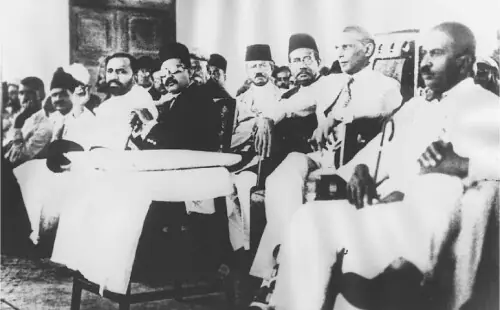
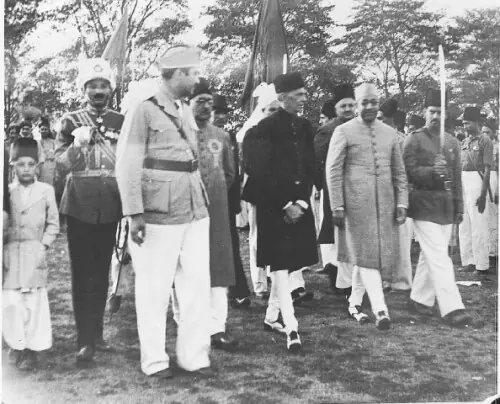
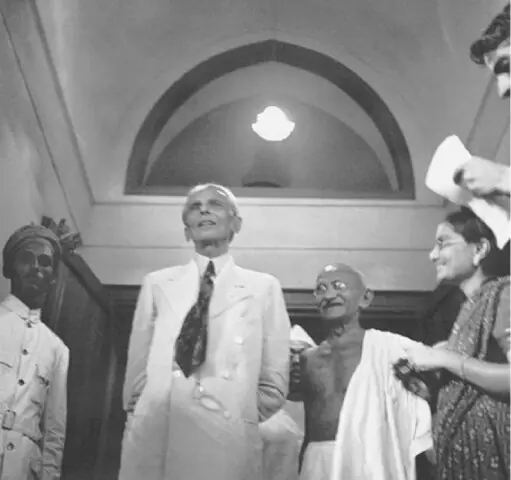
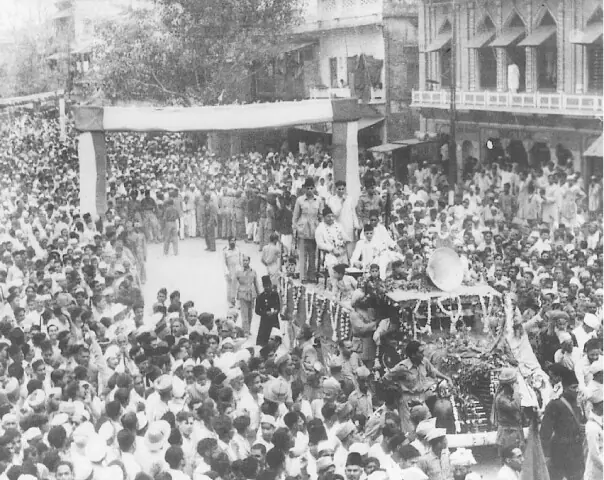
Resolutions bind people together, and turn ideals into a realities. Significantly, the Pakistan Movement, led not by individuals but by a political party, All India Muslim League, under the enigmatic leadership of Quaid-i-Azam Mohammad Ali Jinnah, presented, debated and passed a resolution at Minto Park in Lahore (later known as the Greater Iqbal Park). In the three-day annual session held between March 22 to 24, 1940, our leaders put forward the demand for an autonomous and sovereign state to secure the rights of Muslims in the subcontinent.
The creation of Pakistan, as an intended result of the Pakistan resolution, was a singular moment. However, the abiding legacy of the Pakistan Resolution still requires a consistent collective commitment to the creation of an autonomous, sovereign, and democratic state. Despite myriad testing challenges over the past eight decades, Pakistan has the potential to flourish. There exists a rich human potential, but it needs a conducive political environment in which people can transform their potential into a powerful productive force that makes the country undefeatable. Thus, all citizens of Pakistan, regardless of their religions, sects, ethnicities, cultures, languages, castes, or political affiliations, have a moral and political obligation to play a constructive role to ensure that Pakistan is seen as a democratic republic for the welfare of our present and future generations.
After almost eight decades, some people continue to question the partition of India and the creation of Pakistan. Pakistan was a dire need of the time because the rights of the Muslims in British India were in peril. Considering the socio-political predicaments in British India, our ancestors made a political demand by passing a resolution for a separate homeland to protect the economic, legal, and political rights of Muslims in the subcontinent. Now, there is no reason to doubt Jinnah’s monumental achievement — Pakistan. This nation’s birth changed the map of the world. There is no other way to fortify our land other than respecting and upholding democratic values, improving the economic conditions, empowering state institutions, and enhancing human development through quality and accessible education together with progressive political decision-making so that Pakistanis can live anywhere in the world with dignity.
This day should inspire us to define a new direction — one that focuses on economic stability, institutional reforms, education for all, and technological innovation and expansion.
The resolution called for the autonomy and sovereignty of the people, which can have two meanings: first, Pakistan shall be an autonomous and sovereign state in which the people have the democratic right to make their own sociopolitical and economic decisions without coercion. Second, no internal or external forces shall dictate to the nation of Pakistan. Pakistan’s autonomy and sovereignty means that no power can prevent it from improving the welfare of its people. Like any progressive country, this too should be a state with a far higher level of human development, real democracy, a clean environment, a vibrant public sphere, a high literacy rate, efficient and competent public health services, good governance, and corruption-free institutions. In short, an ideal state with law and order, and peaceful coexistence.
Lessons from the Resolution
A senior member of the All India Muslim League, A. K. Fazlul Huq, presented the Pakistan Resolution in the session, which primarily rejected the idea of United India as envisaged in the federal structure of the Government of India Act 1935. Moreover, it demands the independent states in the Muslim dominated areas in the North Western and Eastern zones of British India. The independent states will be autonomous and sovereign, which shall safeguard the rights of the people. The resolution’s text was short and general.
In the book The Making of the Pakistan Resolution, Muhammad Aslam Malik argues that some scholars and critics have claimed that the resolution’s content is general and unclear. While the resolution’s content is general, it did play a historic role in shaping the path to Pakistan’s creation. The Pakistan resolution made a central claim that partition was the only alternative for the Muslims.
Can a general resolution be valuable? In his paper titled Incompletely Theorized Agreements, Cass R. Sunstein stated that, mostly in law and society, people rarely understand any subject completely. They often reach incomplete theorised agreements on a general principle, which does not mean that they may also agree on its particular cases. If they agree on a general principle, they may disagree on its particular cases and vice versa. For instance, people agree that murder is wrong, but they may disagree that abortion is murder. In light of Sunstein’s argument, even though the content of the Pakistan Resolution is general, people had developed an agreement that they wanted a separate, autonomous, and sovereign homeland where they could live in peace.
Making a republic and republic-making are two distinct incidents. The creation of Pakistan as a republic, on August 14, 1947, is a single political event. Yet, the development of Pakistan as a republic, in terms of drafting and passing the constitutions, building institutions, creating economic opportunities, implementing human rights, formulating educational and health policies, and cultivating democratic values, is a continuous process that needs collective resolve and action. Both processes are equally significant.
Undoubtedly, the leaders of the Pakistan Movement achieved a momentous victory, which is independence. The next goal was to build the republic under successive leaderships, and that is an ongoing process. At every stage of building the republic, new social contracts are required. Several interruptions in the democratic process weakened the development of state institutions. In Pakistan: The State in Crisis, Khaled Ahmed investigates whether Pakistan is a failed state or not. He argues that “the most obvious sign of failure is the breakdown of the state institutions”. Sadly, these institutions continue to decline.
Therefore, present decision-makers must act collectively to build state institutions for a strong country. There exists rich potential in Pakistan that requires political will to materialise. As a nation, it is our moral and political obligation to ensure that all citizens are able to participate in strengthening Pakistan.
Free minds
The institution of education is the cornerstone of a state’s development. It is education, not indoctrination, that is vital for independent minds in society. Brazilian philosopher Paulo Freire’s classic work, Pedagogy of the Oppressed, explains how authoritarian regimes use force to control people’s minds for their own interests. This approach is detrimental to the promotion of liberated and rational minds in the country. The strategy Freire mentions should not be applied to developing countries, including Pakistan. Education in Pakistan should nurture human potential so that people can develop critical and analytical minds to create new possibilities in life. So, critical thinking, not rote learning, is necessary for Pakistan’s bright future.
In Pakistan, about 60 per cent of the population is under 30 years old, which is an enormous asset for the country, and they need empowerment through genuine education. No government has earnestly provided proper education to Pakistanis. Every society has to make various disciplines, including science and technology, arts and humanities, languages, business studies, public health, and social sciences, available to citizens. To amplify technological power, we also need to promote natural sciences. For a nuclear state, in this conflict-ridden world, this is not a matter of choice but necessity. In the age of science and technology, and in the midst of advanced technological warfare, Pakistan needs to pursue science to protect itself.
To combat violence and terrorism, philosophy, history, literature, and liberal arts are essential subjects that not only enlighten minds but also promote critical thinking. In philosophy, logic and ethics are vital. Logic provides rational solutions to meet life’s challenges. In Groundwork for the Metaphysics of Morals, Immanuel Kant argues that only the rational mind has autonomy. According to Kant, an autonomous person has freedom. If one lacks freedom, one is not autonomous but heteronomous. Kant states that a rational person with freedom can create laws. For better legislation in Pakistan, people should hold on to rationality.
Ethics, on the other hand, distinguishes between right and wrong. Different forms of applied ethics, including ethics for AI, the environment, politics, health services, business and administration, media and research, are imperative. AI ethics, in particular, are being introduced worldwide to formulate a moral framework to apply the values of fairness, transparency, data privacy, digital security, and accountability in an increasingly AI dependent world. Moreover, modernising education in madressahs with science is pivotal to battle rising sectarianism. The value of science and technology cannot be underestimated. These fields contribute to medicine, automobiles, electronics, and strategic defence.
Back to democracy
The democratic process is political in nature and can resolve conflict through dialogue rather than war. Any category of conflict, domestic or global, can be solved through mediation if all parties are willing to engage. Since its independence, Pakistan has not been able to sustain a democratic process in governance, in parliament, or in other essential institutions. It was suspended many times in the past, which has created an undemocratic attitude in society. Politicians, economists, educationists, and decision-makers still need to learn the significance of a thriving democracy. It plays a central role in policymaking.
At present, Pakistan is facing a severe financial crisis, terrorism, a law and order situation, brain drain, as well as hostilities from neighbouring countries. The solution to these problems is also embedded in a robust political process.
A democracy can only function when people are able to develop informed and progressive minds. This system of governance respects all voices; not just the elected leaders but also the people are involved in making important decisions that impact social life. In Leadership for the New Millennium, Khaled Ahmed states that “the erosion of democratic institutions affects the quality of leaders in Pakistan.” Democratic institutions produce visionary leaders. He correctly argues that Pakistan’s survival depends upon the restoration of democratic institutions.
As Pakistan is a product of an extraordinary freedom struggle, it should strengthen institutions that promote public reasoning in society. A democratic society fosters diverse associations, clubs, and unions where people can debate and discuss national issues, and perhaps, even come up with solutions. These diverse fora can be in the shape of book clubs, sports associations, arts, humanities, and science societies where people engage in shared activities. Such platforms go a long way in building harmony and goodwill. People voice varied opinions, share knowledge, and present answers for social, political, or economic glitches.
The pursuit of growth
Sustainable progress depends on human development. The legacy of the Pakistan Resolution is autonomy, which essentially means the ability to think individualistically and impartially. The most valuable capital of a nation is its human capital. A country with a higher level of human development offers countless opportunities to explore new possibilities in knowledge, business, governance, and economics. There are certain essential conditions, such as freedom, integrity, justice, peace, art, culture, entertainment, political and economic stability, sports, and basic human rights, that can channel the massive potential of our youth.
The level of human development in Pakistan is far from satisfactory. Despite a large youth population, the prospects of sustainable growth are hardly encouraging. Policymakers, particularly in education and economics, should seriously consider the essential indicators of human development in the country. Due to a lower level of human development, the country has failed in producing creative and independent minds, which could have offered alternative ways to meet the many emerging challenges.
Despite two great Pakistani intellectuals insisting on human development, Pakistan did not embrace the concept of individual growth. Allama Iqbal’s idea of selfhood in the first quarter of the 20th century, particularly its aspect of evolution of the self, primarily refers to boosting people’s capabilities. Iqbal’s concept of personal refinement means fostering creativity to redefine realities. In the last quarter of the 20th century, Mahbub ul Haq framed an interpretation of a human development programme that tends to open up people’s choices. Mahbub ul Haq shifted the direction from the economy of nations to the economy of people’s lives. Thus, Iqbal and Mahbub ul Haq promote self-advancement for a creative and productive life.
Political, economic, and public policymakers in Pakistan should consider the centrality of human beings in their respective decision-making for better standards of living. Like advanced countries, where a productive and creative populace ensures that their countries are and remain progressive.
In the end, Pakistan is still a work in progress. The Pakistan Resolution’s lasting message lies in the fact that it lives on as an egalitarian social pact that should inspire us to bridge the many gaps that put our nation at risk. The creation of Pakistan is the intended consequence of the All-India Muslim League’s Lahore Resolution, which was a democratic decision.
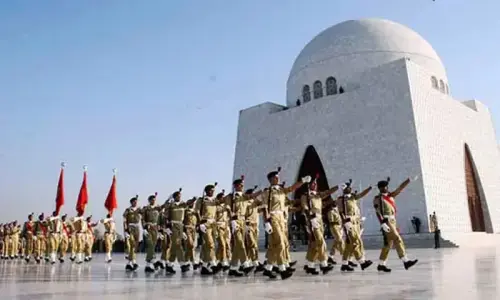
It should compel us to revisit the founding values of Jinnah and his comrades — democratic spirit and even-handed social justice. A prosperous future depends upon the restoration of the political process, fortified state institutions, and pluralism. As we celebrate March 23, it is crucial to define a new direction — one that focuses on economic stability, institutional reforms, education for all and technological innovation and expansion. This nation must honour the dreams of its founding fathers for the benefit of the generations to come.
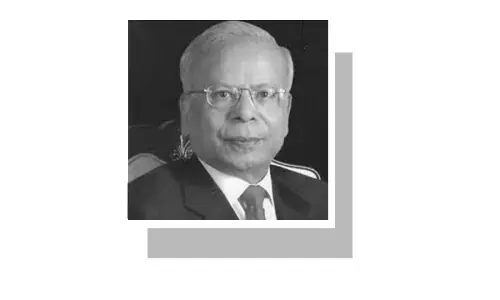
The writer holds a PhD from the University of Canterbury, New Zealand, and teaches Philosophy at the University of the Punjab, Lahore.