Upper Bara people face water shortage


 0
0
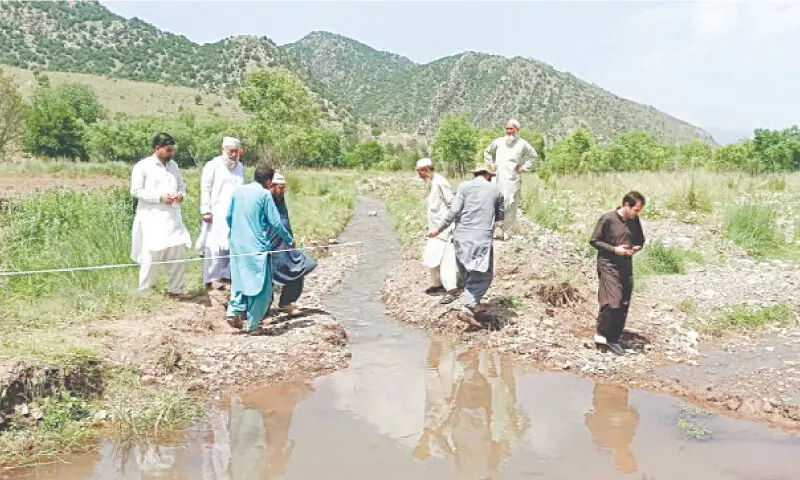

KHYBER: Most parts of upper Bara region of Tirah valley, having a population of more than 50,000, have been facing shortage of drinking water owing to lack of proper water supply schemes despite the fact that these localities are situated on the bank of the Bara River.
The residents of Sandana, Speen Drand, Dray Wandai, Shiekh Mali Baba, Tharkho Kas, Sawkh and Mehraban Kallay predominantly rely on fetching water for their daily consumption from natural springs both within short and long distances from their homes.
In previous years, the task of fetching water from natural springs was solely assigned to women as they would take along earthen and metal pots of different sizes to bring home water twice a day -- in early morning and late afternoon -- to avoid being spotted in open as per local traditions.
Natural springs, known as Gudar locally, also served as a meeting point for tribal women where they would freely discuss their personal and domestic issues. Women would also wash clothes and other items used in kitchen in the Bara River prior to filling their pots with fresh water from natural springs.
Locals say initiation of proper supply schemes can resolve the issue
Locals told this scribe that there was no concept of an organised water supply scheme where they would get water in pipes at their homes as no official authority had paid any attention to that specific issue.
They said that alongside natural springs, some wells dug by local philanthropists also remained a source of water provision to people. Mula Kohay and Farid Kohay were quite famous for their cool water among locals.
Haji Shahi Bagh of Kandaw Jumaat village said that they would face difficult times when flash floods in the Bara River would either wash away the attached natural spring or would pollute those springs with mud and sand.
He said that villagers from different areas would then initiate a ‘cleanup’ operation to cleanse the springs of all pollutants and restore water supply to their homes on a self-help basis. “We also had no knowledge of purity or otherwise of water fetched from these natural springs as no test about the purity of this water is ever conducted,” he stated.
He said that locals would prefer taking water from natural springs situated under the shade of trees as water of those springs were cool and clean in comparison to other water channels running under direct sun.
Naseer Khan of Tharkho Kas village said that most of the water channels and natural springs either vanished or were washed away by floods during their decade-long displacement due to militants’ occupation of upper Bara and Tirah.
He said that a local militant organisation Lashkar-i-Islam had also imposed a ban on women to bring home water from natural springs that intensified the issue of shortage of drinking water while men were either required to support the banned group or had to flee the area for safety.
He said that water was provided to some selected places through a network of plastic pipes laid down by security forces and some reservoirs were also built when army entered the region after forcing militant groups to flee.
“Most of locals still rely on natural springs as relevant government departments and district administration are yet to pay any attention to the issue since return of majority of displaced families in 2022,” he stated.
Ustad Fateh Khan of Speen Drand said that villages and houses situated at an altitude from the banks of the Bara River were still facing grave problems in getting their required quantity of water from natural springs.
He said that in the absence of electricity, which could help to pump water to their houses, they still brought water from natural springs either on mules or donkeys or employed children to fetch water in plastic canisters on their heads and handcarts.
He, however, said that some non-governmental organisations now started installing hand pumps in some localities that were providing the much needed relief to locals, particularly womenfolk.
Turab Ali, an active member of Sipah Khidmat Khalq organisation, believed that more intervention from private sector (NGOs) and a proper survey by public health department could largely help upper Bara residents to overcome the issue of shortage of drinking water.
Published in Dawn, March 23th, 2026