Diminishing ODA and more
“Nostalgia is not a strategy” — Canadian Prime Minister Mark Carney
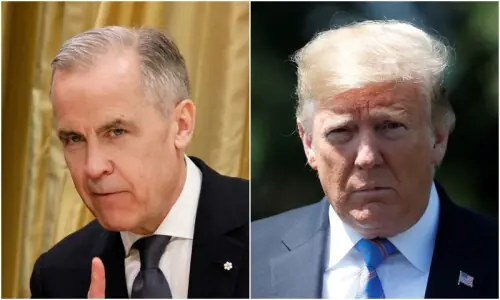
FIFTY years down the road from now, when the world looks back on these turbulent times, one speech, among other things, will stand out. This speech was made by Canadian Prime Minister Mark Carney at the World Economic Forum in Davos on Jan 20, 2026, in which he talked about the “rupture in the world order” and “the end of a pleasant fiction and the beginning of a harsh reality”. He confessed that “We knew the story of the international rules-based order was partially false”, but “we participated in the rituals, and we largely avoided calling out the gaps between rhetoric and reality”. This confession will go down in history as the signpost on a turning point. Mind you, on Jan 20 2026, Feb 28 was still 39 days away.
The subject of my op-ed today is the diminishing of health overseas development assistance (ODA), but I wanted to start with Carney’s speech, as it powerfully sets the larger context.
As for the health ODA, the winds of change had already begun to blow during the last year of Donald Trump’s first term as US president, when on July 6, 2020, at the height of the Covid-19 pandemic, his administration sent a letter to the UN secretary general, communicating America’s intent to withdraw from the World Health Organisation. The withdrawal could not be effected then, because of the end of Trump’s first presidential term. The retraction of Trump’s letters was one of the first actions of president Joe Biden after taking office. In his second term, one of Trump’s first actions was to pull the US out of the WHO. This meant that around one-fifth of WHO funding was lost. As a result, the organisation is suffering, with around 25 per cent of its staff laid off.
Then he dismantled USAID and folded it into the State Department by September 2025. The trend was followed by other high-income countries, and almost all major donors contributing to the development of low- and middle-income countries started cutting aid. Apart from following the trend set by the big boy, there were various other reasons, including donor fatigue vis-à-vis the irresponsibility shown by ill-governed governments towards the well-being and development of their poor and vulnerable populations. For how long can others take responsibility for your household?
In a fast-changing world, we need to start owning our problems.
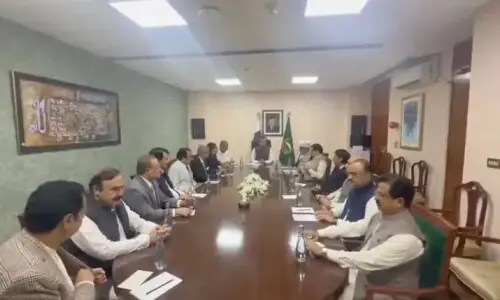
In a recent small policy roundtable organised by Tabadlab, an Islamabad-based advisory service and a think tank, there was a discussion on the subject of ‘Beyond ODA: policy options for Pakistan’s health sector’. Some figures presented at this meeting were striking. General global ODA declined 7.1pc in 2024, and OECD projections had indicated a further drop of up to 17pc in 2025. The trend is expected to continue, reaching 20pc in the coming years. The decline is observed among all major donors. In the case of the US, there has been a drop of $60 billion; Germany, $9.2bn; France, $2.6bn; and the UK, $2.2bn.
In the case of health development aid retrenchment at the global level, the fall has been even greater — 27.7pc between 2019 and 2024, in nominal terms from $50.1bn to $36.2bn. In terms of the resulting human toll, projections indicate up to 22.6 million additional deaths in developing countries by 2030. This includes 5.4m under-five children.
In Pakistan’s case, overall ODA appears stable, though threatened. Since 2015, Pakistan has received an average of $5.2bn in ODA per annum. As a proportion of GDP, overall ODA flows have averaged 1.65pc over the past 10 years, and of this, multilateral aid accounted for 74pc, while bilateral aid accounted for 26pc from 2015-26.
Health-related ODA in Pakistan has amounted to an average of $1.5bn per year between 2015 and 2026, representing a 2.7pc share of total ODA flows in the country. ODA for Pakistan’s health sector, as a percentage of total health expenditure (THE), has hovered around 1pc or less. For example, in 2020-21 of THE in Pakistan, around 47pc of Rs1,962bn ($11.06bn) was spent out of pocket by the people and approximately 45pc by the federal, provincial, district and tehsil governments together. Of this, only 0.4pc came from ODA, i.e., approximately Rs8bn ($45m).
Having said this, the ODA in health has been of critical importance as it supports very important aspects of healthcare in the country. If cash and in-kind assistance are bundled, our routine immunisation programme, the polio eradication programme, medicines for AIDS, TB and malaria, and many other health programmes are dependent on health ODA, some of them quite heavily. Abrupt service disruptions, staff lay-offs, coverage collapse in underserved areas, and functional capacity losses have already been observed. If the trend continues, it would further worsen health equity gaps, cause supply chain disruptions, and weaken disease surveillance systems, with attendant outbreaks.
Various global health initiatives and funds, for example, GAVI and the Global Fund to Fight AIDS, TB and Malaria, have been urging the government to gradually start financing these programmes, but the response has not been encouraging. On the contrary, there have been examples of fungibility. For instance, if the government is spending a particular amount on a programme and the donor starts contributing, the government withdraws its funding and starts spending elsewhere. This is ironic.
In a fast-changing world, we need to start owning our problems by taking financial responsibility for them sooner rather than later. Rather than ending up in an emergency situation, taking a proactive approach would be smoother and more sustainable. Transitional risks would be better taken care of this way. And before somebody tells me that it is a problem of fiscal space, the answer is, no, it is an issue of fiscal prioritisation, which is primarily a matter of mindset rather than money.
We should all read Carney’s entire speech, look at our skies, and start actively strategising on issues that directly affect our people.
The writer is a former SAPM on health with ministerial status, adjunct professor of health systems and president of the Pakistan Association of Lifestyle Medicine.
Published in Dawn, March 20th, 2026