LAHORE: With the global textile trade entering into a new phase, Pakistan’s small and medium-sized exporters face the greatest risk of being squeezed out, the industry sources contend.
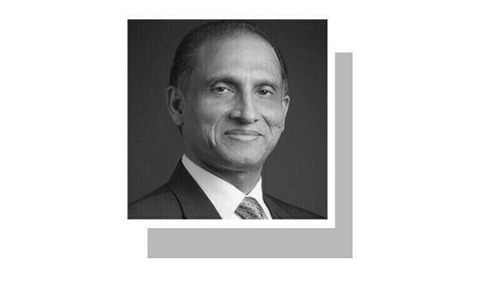
“SMEs form the backbone of Pakistan’s textile ecosystem; but they are also the most vulnerable segment in the current environment,” said Pakistan Textile Exporters’ Association (PTEA) secretary-general Azizullah Goheer. “Rising input costs, limited access to affordable finance and persistent liquidity constraints are creating a situation where many smaller textiles and garments exporters are struggling just to sustain operations, let alone expand.”
Exporters believe that India’s recent trade gains with major markets such as the United States, the UK and the European Union are not just incremental victories; these signal a structural repositioning that could redraw sourcing patterns in the years ahead.
For Pakistan, where textiles account for around 60 per cent of export earnings, the stakes are particularly high. The country’s longstanding advantages like low labour costs and a complete cotton-to-garment value chain are gradually weakening under the weight of rising costs, policy inconsistencies and slowing modernisation.
Talk about a plethora of issues including cost, cash crunch and delayed tax refunds
Industry stakeholders warn that while the competitive pressure is broad-based, it is particularly bad for the SMEs who contribute nearly half to the textile and clothing exports.
“India’s advantage extends beyond tariff reductions. Its trade agreements have lowered duties on garments significantly while also providing policy stability, faster refund mechanisms and integrated industrial infrastructure: factors increasingly prioritised by global buyers seeking reliability alongside cost efficiency,” Goheer argues.
Pakistan, by contrast, continues to grapple with structural bottlenecks. Energy tariffs remain high and volatile, taxation is complex and burdensome, and access to concessional financing is limited. “For SMEs, these challenges are amplified,” he maintains.
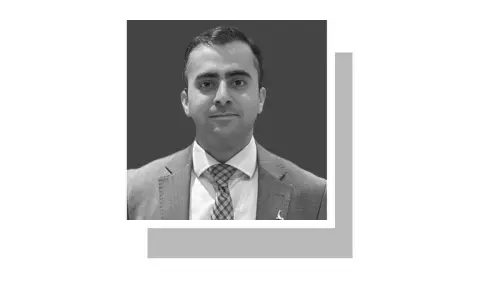
One of the biggest issues for SMEs is access to working capital, notes Arif Ehsan Malik, a medium-sized textile exporter from Faisalabad. “Delayed sales tax refunds and upfront duties on imported inputs lock up liquidity. Larger firms can absorb these delays, but smaller firms simply cannot operate efficiently under such conditions.”
Adding another dimension to the debate, he points to a deeper structural imbalance: the absence of SMEs in policy making. “The problem is not just economic; it is institutional,” he says. “SMEs have virtually no representation where decisions are made. Policies are framed without input from the very segment that constitutes a major share of exports.”
He says that even key institutions meant to support smaller businesses fail to reflect their voice. “It is quite telling that even SMEDA does not have a genuine SME representative on its board,” he said. “If the primary institution for SME development does not include SMEs in its governance, it raises serious questions about how effectively their concerns can be addressed.”
According to him, the policy-making process remains skewed toward larger industry players. “The government typically consults large mill owners when shaping textile policies,” he said. “This creates a disconnect because SMEs operate under very different constraints, especially in terms of liquidity, compliance costs and access to finance.”
He stresses that this imbalance is particularly problematic given the sector’s export structure. “SMEs account for roughly half of textile exports, particularly in value-added segments like garments and made-ups,” he adds. “Yet their challenges are not adequately reflected in policy design. That gap is now becoming a competitiveness issue.”
Recent changes to the Export Finance Scheme (EFS) illustrate this disconnect. The exclusion of key inputs such as cotton, yarn and fabric, along with a shorter utilisation period, has increased costs and disrupted production cycles while disproportionately affecting smaller firms.
A further constraint, Arif maintains, lies in the outdated official definition of SMEs, which no longer reflects economic realities. “The State Bank’s SME definition is decades old and highly restrictive. By limiting SMEs to enterprises with an annual turnover of up to Rs800 million, a large number of genuinely small and mid-sized exporters are effectively excluded from concessional schemes such as the Export Finance Scheme.” He pointed out that this threshold was set when the dollar was below Rs100, and has not kept pace with currency depreciation or inflation.
“In real terms, the scale of business has changed dramatically, but the definition has not. As a result, many firms that should qualify for support are treated as large entities and denied access to incentives,” he says. “To correct this distortion, the turnover ceiling needs to be revised to at least Rs2.5 to Rs3 billion so that policy support actually reaches the segment it is intended to serve.”
Not just that, Arif argues that policies like the recent EFS amendments may appear neutral on paper, but in practice they hit SMEs much harder. “When working capital gets locked due to upfront duties or delayed refunds, smaller firms are the first to feel the pressure because they lack financial buffers.” He also highlights how structural cost pressures are compounding the problem.
“High energy tariffs, multiple levies and expensive financing create a cumulative burden that SMEs cannot easily pass on to buyers,” he notes. “In a global market where margins are already thin, this effectively sidelines smaller exporters.”
Beyond textiles, former president of the Faisalabad Chamber of Commerce and Industry Rehan Naseem Bharara, underscores the broader economic implications. “SMEs are the backbone of the economy in general and of the textile industry in particular. If this segment weakens, it is not just an industry issue - it affects employment, exports and overall economic resilience.”
The consequences of these structural gaps are becoming increasingly visible as global buyers diversify sourcing toward countries offering not just cost advantages but also reliability, compliance and policy stability.
“Competitiveness today is not just about price,” Rehan adds. “It is about speed, predictability and the ability to meet evolving global standards. Without integrating SMEs into policy and support frameworks, Pakistan risks losing ground in precisely those areas.”
He is of the view that these concerns cannot be addressed through incremental adjustments. “It calls for a shift toward inclusive policy making, targeted financial support, timely refund mechanisms and a level playing field that allows SMEs to invest, upgrade and compete.
“As the global textile landscape continues to evolve, the message is becoming clearer: Pakistan’s ability to retain its position in international markets will depend not only on reforms at the macro level, but also on whether its SMEs, the backbone of its export engine, are enabled to survive and grow.”
Published in Dawn, March 20th, 2026