STYLE: DENTED BUT NOT DEFEATED

On the night of March 6, 2026, the Government of Pakistan announced a significant increase in fuel prices — by up to Rs55 per litre (an increase of approximately 20 percent) — making it one of the highest single-time fuel price hikes of all time.
It was a historic, debilitating rise that triggered panic at petrol pumps as the price hike would come into effect at midnight, on March 7. Horns blared until late into the night, with vehicles queuing in long lines to fill up on fuel before the increment came into effect.
The price increase, triggered by the ongoing US-Israeli war in the Middle East, occurred midway through Ramazan, a time when crowds flock to bazaars and malls for their Eid shopping. In the Muslim world, it is considered one of the most lucrative retail seasons of the year, with customers inclined to splurge, make impulse buys and stock up on clothes and gifts.
With the economy under stress and inflation looming, would people want to spend as they had in better times? And while they may continue to purchase necessities, would they be inclined towards indulging in shopping binges or luxury wear at a time when, in the near future, they may have to struggle to make ends meet, given the economic uncertainty?
The logical answer to this question would be a resounding ‘no’. After all, one would assume that stores and bazaars would be empty and, more specifically, fashion designers’ Eid collections would gather cobwebs, with customers no longer able — or willing — to purchase them.
The US-Israeli war on Iran and Iran’s expansion of the war to the rest of the Middle East has triggered global economic uncertainty. In the middle of all this, where does Pakistani fashion stand? While many fashion houses report little impact on sales so far, thanks to Ramazan and Eid, can this current cautious optimism last?
EID SPENDING VS ECONOMIC REALITY
However, some versions of reality tell a different story.
Just a week before Eid, mayhem ensued at the pop-up exhibit at a mall of Nia Mia, a popular high street brand. Huge crowds — eager to shop — broke down some of the installed barriers amid a lack of crowd control.
Historically, the market for luxury goods, including fashion, has invariably taken a hit during periods of economic uncertainty. However, until that ‘hit’ truly makes an impact, Pakistan’s Eid shopping crowds seem to want to shrug away their sense of impending doom and head out to the mall.
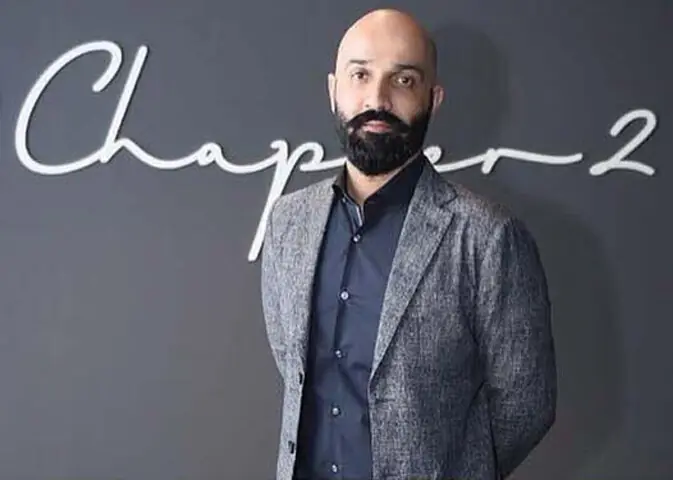
High-street heavyweight Khaadi, for instance, continues to draw in huge crowds. “Business has not been affected at all,” asserts the brand’s CEO Shamoon Sultan. “It is an unfortunate reality that Pakistanis have seen a lot and are very resilient. So, despite the crisis in the Middle East, their Eid shopping is continuing as usual.”
He continues, “However, on a macroeconomic level, if the hike in fuel rates continues, it can prove to be dangerous. It will result in an overall price increase across the board and we will feel the crunch in the following two or three weeks. I hope that the situation improves because, otherwise, wallets will definitely shrink.”
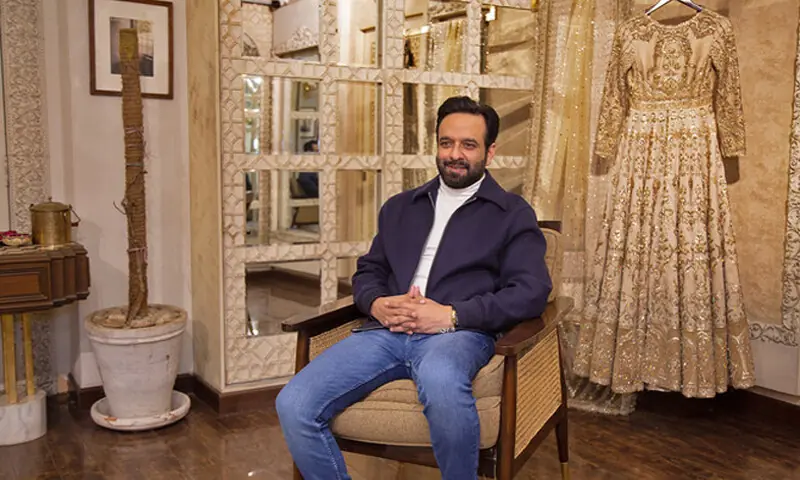
Uzma Ahmad, Director at Image Fabrics, echoes a similar sentiment and observes that business has been only slightly impacted by the war in the Middle East so far.
“We have a niche clientele that continues to make purchases consistently,” she says. “I also feel that we have managed to establish ourselves in the middle ground — between high street ‘massy’ clothes and high-end luxury wear — and offer an aesthetic line that is not only sophisticated but is also relatively affordable. So far, business has been doing well and we are expanding, with two stores all set to open right after Eid!”
THE LUXURY SEGMENT HOLDS ITS GROUND
The local market for luxury wear is similarly on a roll. For instance, designer Rizwan Beyg, who specialises in luxury couture, says that his Eid collection is selling well, with local customers remaining unfazed so far by the global economic climate.
Sania Maskatiya’s CEO, Umair Tabani, observes that the brand’s sales were helped by the fact that its festive Eid collection was launched some time before Ramazan, and credits the timing for this.
“Maybe, if we had launched later, when the crisis escalated in the Middle East, customers may not have been as eager to place orders,” he says. “We got lucky with the timing. Customers placed orders and made advance payments, and now, we’re just making the final deliveries.”
Designer Mohsin Naveed Ranjha believes the impulse to buy is emotional. “I think people just want to celebrate. They may be upset by what is happening in the world but, at the same time, they are happy to be at least safe.
“A slight dip in sales occurred around mid-Ramazan, when tensions escalated in the Middle East, but soon afterwards, people began buying again. And now, in the last week of Ramazan, business is doing really well, with many people rushing to buy their Eid clothes.”
Designer Mohsin Naveed Ranjha believes the impulse to buy is emotional. “I think people just want to celebrate. They may be upset by what is happening in the world but, at the same time, they are happy to be at least safe.”
Shezray Husain, CEO of multi-label boutique Ensemble, also comments on customers’ sentiments: “I think we are just a really emotional nation and Eid clothing holds sentimental value for us. We particularly obsess over what we want to wear on Eidul Fitr, considering it as a kind of ‘reward’ following a month of fasting.”
She continues: “I think perhaps, right now, the middle class is more concerned about the crisis in the Middle East and how it will affect their pockets. The customers who tend to frequent Ensemble, though, have yet to feel the crunch, and they are willing to make purchases right now. It helps, of course, that there are about 150 brands within our umbrella and there is a diverse price range to choose from.”
GLOBAL BLUES
However, on the international front, business for Pakistani brands is not continuing as usual.
“International deliveries are getting delayed,” confirms Mohsin. “[More specifically] deliveries to the Middle East are obviously affected and even orders to the US and Europe were routed via Dubai. They are now being rerouted and this is resulting in higher shipping charges and longer delivery times.”
Menswear designer Emraan Rajput adds that customers are also requesting that their international orders be placed on hold until the situation improves.
“A client living outside Pakistan had placed orders for a destination wedding that was scheduled to take place right after Eid. They have now asked us to stall production, as the wedding has been rescheduled for a few months later, when, perhaps, things may improve. Also, with tariffs on the rise, international shipments have become very expensive and customers end up paying more.”
He also adds that the domestic market has been affected, unlike many of his contemporaries.
“There are so many men who shop for their Eid clothes at the very last minute, with areas such as Karachi’s Zamzama area usually becoming clogged with traffic. This year, though, spirits are definitely down. Customers who would usually buy four kurtas are buying two, and those who purchased two are now purchasing one. The excitement simply isn’t the same.”
However, people are still buying, and it is interesting to note how customers’ shopping patterns vary between the high street and the market for luxury wear. They may be more hesitant to buy designer-wear priced well above Rs50,000, but their wallets still allow them to indulge in shopping binges at malls and during Eid festivals.
FASHION EVENTS: ON UNCERTAIN GROUND?
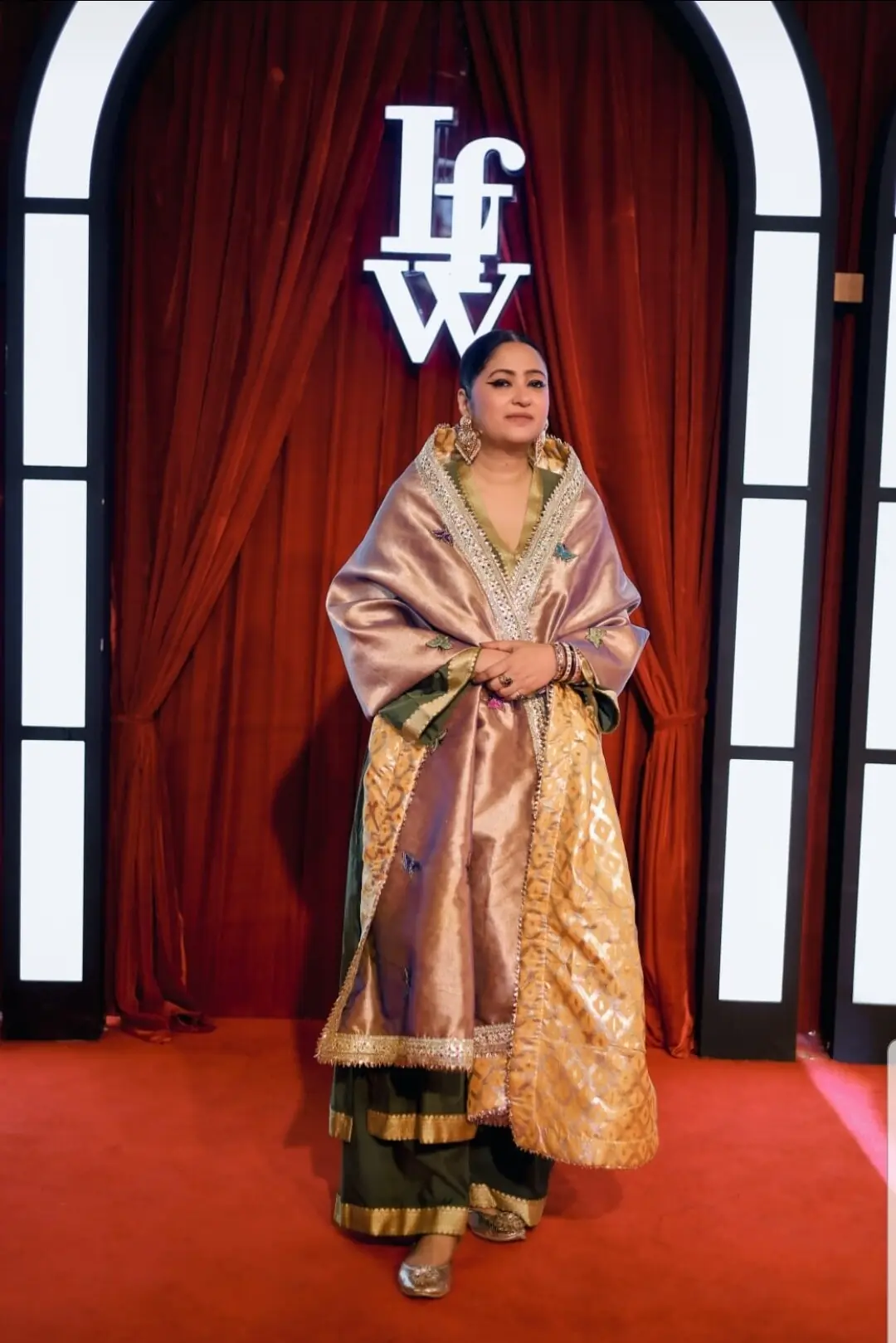
On her part, Maheen Kardar, designer and co-founder of Laam Fashion Week (LFW), observes that shopping activity has been continuing as usual.
For instance, she observes that the recent Laam Festival in Lahore was a success. “The footfall crossed over 100,000 people during the four-day festival and people were shopping and celebrating,” she says.
She believes that, as a nation, Pakistanis have really experienced an extended period of peace, given that political upheavals continue to occur, as do strikes, healthcare crises such as dengue or Covid and natural disasters such as floods or earthquakes.
“This has made us very resilient and we just go on with life. I haven’t observed any dampening of spirits, be it at the Laam Festival or as far as the orders being placed at my design house Karma, are concerned.”
Rizwan Beyg concurs, “We are a nation that starts making memes in times of war. It’s not that we don’t realise the seriousness of the situation. It is just that Pakistanis have gone through so much that we now just simply go on with life and hope that things get better.”
But will this tone-deaf joie de vivre continue with the world at war, the economy perpetually teetering towards crisis and a volatile political climate that could, at any point, turn against Pakistan? It is unlikely.
The Hum Showcase fashion show – a three-day event tentatively scheduled to take place in April this year — has now been “put on the back burner”, according to its show director Rizwan Beyg. “Sponsors are understandably hesitant at this point but, once things get better, we hope that the event will take place.”
CAUTIOUS OPTIMISM
Fortunately, as mentioned earlier, the first LFW took place in early February this year. It was followed by designer Hussain Rehar’s solo show in mid-February and then, the Laam Festival — an Eid ‘bazaar’ — this Ramazan.
Featuring trendsetting fashion, major designers and impressive catwalks, these fashion events had undoubtedly rejuvenated the local fashion scene, making one hope that fashion weeks — having slipped into the shadows since the pandemic — were going to make a comeback and perhaps, finally, Pakistani designers would step away from generic, commercial apparel and be more innovative.
Now, given the economic outlook, will the next LFW, scheduled for autumn or winter this year take place as planned? “Yes, we will be announcing the date soon,” says Maheen Kardar.
They are brave and hopeful words.
The news headlines may fill one with a sense of foreboding but, right now, like many businesses, the business of Pakistani fashion is resolutely forging ahead, hoping that inflation won’t take over and that customers won’t get demoralised and stop buying, and that the global situation will improve.
As Rizwan Beyg puts it poetically, “Fashion, right now, is dented, but not dead.” But it is dented. That cannot be denied.
The writer is a fashion and entertainment journalist with over two decades of experience. She can be reached at maliharehman1@gmail.com
Published in Dawn, ICON, March 19th, 2026