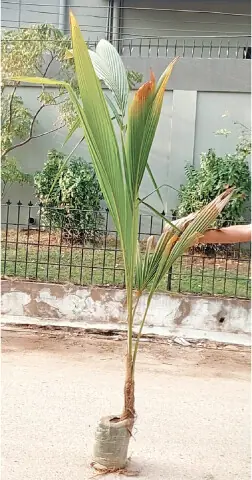
Germination and transplantation are two phases of a plant’s life cycle that can have a significant impact on plant health and growth. Both phases require the gardener’s utmost attention and care. This is equally true for the coconut — whether in seedling form or a small plant that requires transplantation.
In its traditional habitat along water bodies, a coconut fruit that falls or washes ashore germinates naturally and develops into a robust tree. But the process is not as straightforward when coconuts are grown at home in cities. Gardeners recommend purchasing an already-germinated seed or a young plant of coconut from a reliable nursery. These treated plants are less likely to fall victim to any pest and diseases early on. There are comparatively fewer chances of the nascent tree being infertile. The plants that are available at nurseries are usually ones that can grow and even thrive in the local climate.
The coconut plants being grown in Karachi are largely imported from Sri Lanka and Malaysia. Due to import cost and regulatory requirements, many nurseries are only selling Sri Lankan varieties these days. The Malaysian plant is three to five times more expensive than its Sri Lankan counterpart. Both varieties grow well here. One difference between them is height: the Sri Lankan variety grows much higher in Karachi. Currently, a two-to-three-year-old Sri Lankan coconut potted plant, having a height of around six feet, is likely to be Rs2,000 to Rs3,000. Older and taller trees cost more.

Before diving into the details of shifting the plant, it is important to know the most critical aspect of transplanting a coconut tree: identification of its permanent place. Decide on this before you start because reversing the transplanting process is detrimental to the plant. While selecting the spot, ensure there aren’t any electricity or telephone cables overhead. Similarly, there shouldn’t be water lines or sewers underneath. The spot should be at least five feet away from other trees on all sides and in a space which is exposed to direct sunlight throughout the day.
Transplanting a coconut tree is less complicated than it sounds, but only if you know what you’re doing…
Dig a hole that is at least two to three feet in width and depth. Make sure there are no stones or pebbles in the hole. If the purchased plant is in a plastic bag or pot, then it should be watered beforehand. It will make it easy for the plant to be removed from the pot or bag and shifted with the roots and surrounding soil intact.
If the plant is not easily sliding out of the pot due to root compaction, then there are two options: either gently tap the pot from the outside or insert your finger into the pot’s drainage hole while the pot is inverted and supported by the palm of your other hand.
Once the plant is out of the pot, carefully place it into the hole. The reason for the extra-wide hole dug earlier is that, while placing the new tree into it, a supporting bamboo stick has to be inserted alongside it. This removable bamboo acts as a support while keeping the plant upright and ensures it doesn’t get uprooted, especially during windy days. This bamboo stick is removed after roughly six months. The hole is filled with the nursery soil and is topped with a two-inch layer of compost, fertiliser or manure.
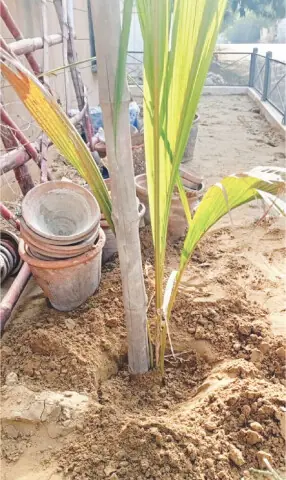
Coconut trees need ample watering throughout their life cycle. The plant’s water requirement goes up during transplantation and the transferred plant should be provided with at least eight to ten litres of water daily.
Published in Dawn, EOS, March 19th, 2026