0
0

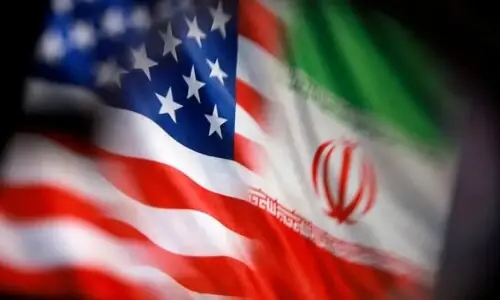
NORTH Korea’s swift backing of Iran after joint US-Israeli strikes appears to serve purposes far beyond routine diplomatic solidarity. By rallying behind Tehran, Pyongyang is signaling its intention to draw closer to Russia, Iran’s key partner, through carefully calibrated messaging that keeps it at arm’s length from the conflict.
From the standpoint of regime security, the Kim Jong Un regime’s denunciation of the strikes as a violation of sovereignty functions as preemptive political signaling against any future external attempt to undermine its own system.
Such rhetoric is also a manifestation of Pyongyang’s deeply ingrained belief that nuclear weapons are the ultimate guarantee of regime survival — a conviction observers say will only harden after the attacks on Iran.
At a broader strategic level, the move reflects Pyongyang’s geopolitical calculus: aligning itself with Russia’s push for a multipolar world order, also espoused by Iran, that challenges US dominance.
“In short, supporting Iran helps maximise the regime’s survivability, while also earning it credit in Moscow,” Doo Jin-ho, director of the Eurasia Research Center at the Korea Research Institute for National Strategy, said. North Korea issued a press statement by an unnamed Foreign Ministry spokesperson on March 1 condemning the US-Israeli attacks on Iran the previous day as an “illegal and reckless act of aggression and the most despicable form of violation of sovereignty.”
The statement added that “the growing acts of US hegemony witnessed by the international community are a clear example of its destructive role in undermining world peace and stability and the grave consequences that follow.”
Another statement followed on March 10 in the form of an answer by an unnamed North Korean Foreign Ministry spokesperson, a lower-level format than a formal press statement. It denounced “violations of a country’s political system and territorial integrity” and interference in its internal affairs, while expressing respect for the Iranian people’s right to choose their supreme leader.
Analysts say Pyongyang’s condemnation of the attacks on Iran that killed Supreme Leader Ali Khamenei can be seen as a move aimed at easing regime insecurity over the possibility of a decapitation strike, however slim that prospect may be. Doo noted that US President Donald Trump’s mention of Cuba as a possible next target could be deeply unsettling from Kim Jong-un’s perspective.
“There is no guarantee that the US decapitation strike against Khamenei would not become a precedent for North Korea’s future, meaning Pyongyang must prepare for even the worst-case scenario,” Doo said.
“Against this backdrop, North Korea’s condemnation of what it calls an invasion of a sovereign state and its declaration of support for Iran appear aimed at producing a preemptive political deterrent effect (against any similar future scenario).”
Doo further explained that a US decapitation strike against the North Korean leader remained highly unrealistic in light of North Korea’s nuclear capabilities, as well as its strategic relationships with Russia and China.
Experts say that by backing Iran — a country attacked while nuclear negotiations with the US were still in play — Pyongyang is also reinforcing a message: That nuclear weapons are the ultimate guarantee of sovereignty and regime survival.—The Korea Herald/ANN
Published in Dawn, March 16th, 2026