Gwadar Development Authority saves Rs15m through austerity steps

GWADAR: The Gwadar Development Authority (GDA) has saved Rs15 million during the current fiscal year due to the authority’s austerity policy.
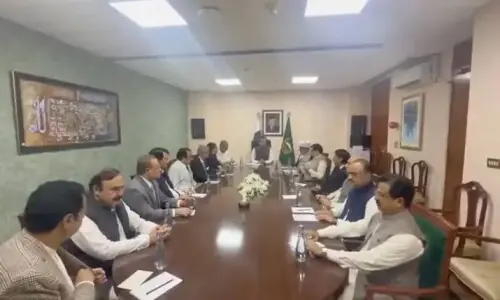
The savings were achieved by cutting unnecessary spending and optimising resource use across multiple departments, a meeting of the GDA, presided over by director general Moeen-ur-Rehman Khan, was informed.
A detailed review of GDA’s revenue over the past three years was conducted at the meeting, which also discussed new opportunities and practical strategies to increase revenue, better utilisation of financial resources, and the implementation of the austerity policy.
Chief Engineer Haji Syed Muhammad, Town Planning Director Shahid Ali, Finance Director Zakir Majeed, Administration Director Changezai Khan, Building Controller Nazir Ahmed, Environment Director Rasool Bakhsh Baloch, Land Management Director Mansoor Ahmed, Finance Deputy Director Shakur Ahmed and other officials attended the meeting.
Proposals sought to boost authority’s financial condition
While giving a briefing, Finance Director Zakir Majeed said a detailed analysis of revenue from various departments, including town planning, building control, land management, environment, and water section, had been conducted, and multiple options for enhancing financial resources were under consideration.
The director general directed all department heads to conduct a comprehensive review of existing revenue resources and propose actionable measures to boost the authority’s financial condition. He sought a detailed report with concrete proposals.
He made it clear that a comprehensive planning was underway to make the GDA a financially strong and self-reliant institution, capable of meeting its own financial needs and gradually achieving full financial autonomy.
He instructed the officials concerned to ensure strict implementation of the austerity policy in light of the current global and regional economic situation. Measures include limiting fuel usage, government transport, water pumping stations, and other machinery to ensure responsible and efficient utilisation.
Published in Dawn, March 16th, 2026