0
0


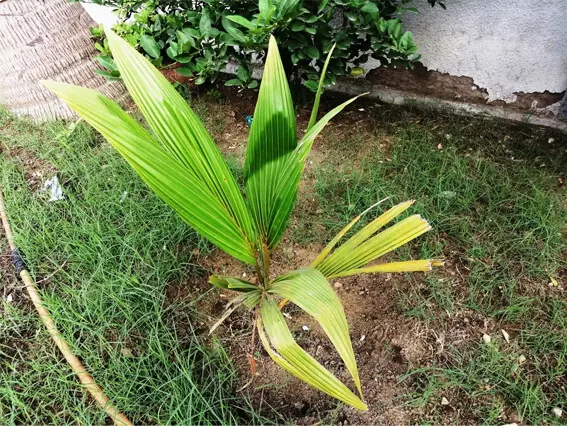
Many fruit trees offer value primarily for their produce — food for humans and animals or fodder for poultry. In comparison, the produce of the coconut tree offers a variety of benefits.
The fibrous husk alone offers a surprising range of uses, including making the coconut buoyant. This layer, known as the mesocarp, contains coir fibres and its air pockets make it an effective organic medium for seeds and seedlings. Commonly known as cocopeat, it is sold at plant nurseries and seed stores. Cocopeat is also added to soil for improving nutrients, water retention and aeration.
From the fibrous husk that becomes a growing medium or a doormat, to the shell carved into bowls and souvenirs, to the leaves that thatch roofs and sweep courtyards, few plants offer as much as the coconut palm
The husk of the coconut is also used to prepare biodegradable foot mats, packing bags, brushes, brooms and ropes. In addition, it can be used as nests for poultry and pet birds, while dried husk can be used as combustible material for cooking. The coconut shell can also be used as bowls or spoons. You might have come across baskets made of coconut leaflets. Hats, brooms and mats are also made from dried coconut leaflets. Dried leaves are also used as shading for roof structures.

During my school days, the sweeper would sweep the concrete school grounds with a massive, dried coconut tree leaf. The length of the leaf covers more ground per stroke, making it both faster and more effective than a conventional broom. Many decorative pieces are crafted from coconut shell or husk. Some typical souvenirs sold in Sri Lanka include miniature elephants or monkeys carved from coconut shell.
A coconut that has fallen from a tree and landed on suitable ground will quickly germinate and turn into a small plant. Tropical conditions, including temperatures ranging between 25 and 30 degrees Celsius and a moist environment are ideal for the plant’s growth. In the early stages, germination is sustained by the nutrients within the fruit, with the coconut water providing essential nourishment. This early self-sustaining phase can last from a few weeks to several months. As the plant begins to develop, the soil underneath takes over nourishment responsibilities for the nascent plant through its young roots.
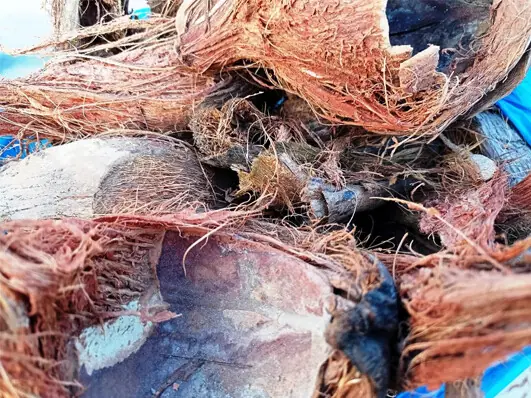
At the base of the coconut — the end by which it is attached to the tree — are three spots. These spots are called the eyes of the coconut. Coconut water is extracted by piercing one of the eyes. After germination and during early stages of growth, a sharp green shoot emerges out from one of these eyes, splitting the shell in the process. Depending upon conditions, a coconut may take between three and six months to germinate. In the early stages, the first leaf of the coconut tree is a single leaf without any separate leaflets.
The coconut plant should be placed where it receives direct sunlight throughout the day. The coconut plant is water-intensive, which is why it is usually found near coastlines, rivers and other water sources. The plant has to be watered regularly, with the surrounding soil kept consistently moist. Finally, the plant should be provided with an appropriate amount of nitrogen-rich fertiliser in the early stages of its life cycle.
Growing a coconut palm is relatively easier when a germinated small plant is purchased from a nursery or seed store. Once it has reached the height of around two feet and sprouted between three and six leaves, it can be transplanted to its permanent location. At that time, the age of the plant is likely to be between eight months and one year, by which point it will have developed both a stronger root system and greater resilience.
Published in Dawn, EOS, May 15th, 2024