Fire chief blames management of Gul Plaza for loss of life


 0
0
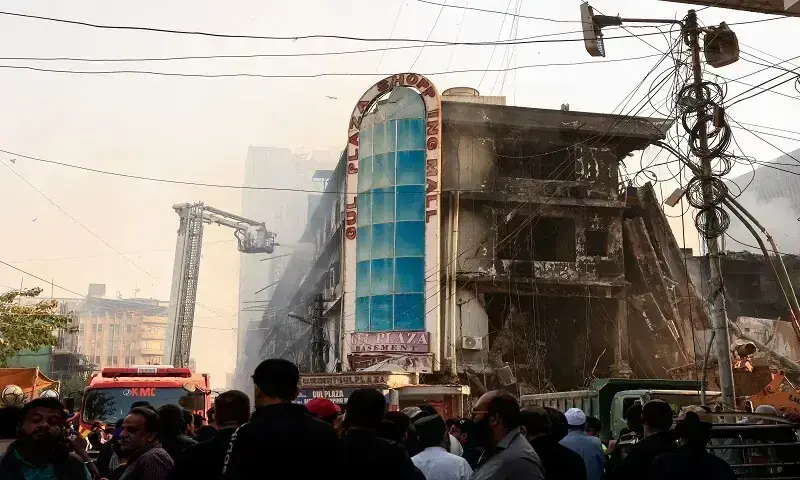

• Says lack of fire safety measures, disconnection of electricity and blocking of exits caused fatalities
• Forensic investigation can determine exact origin of fire, commission told
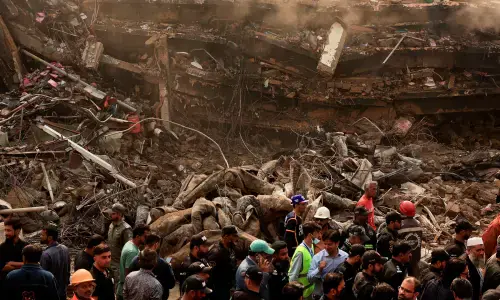
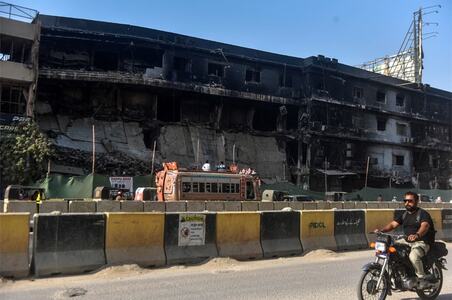
KARACHI: Chief Fire Officer Muhammad Humayun Khan has blamed the Gul Plaza administration for the loss of life due to lack of implementation of fire safety protocols, failure to make a prompt announcement about the fire, blocked emergency exits and disconnection of electricity without evacuating people trapped inside.
He said this in response to a questionnaire from the single-judge commission, headed by Justice Agha Faisal of the Sindh High Court.
In his reply / statement, Mr Khan submitted that information about Jan 17 Gul Plaza fire was received at the central fire station at 10:26pm, first fire tender was dispatched at 10:27pm and it was arrived at the site in around 10 minutes.
He maintained that the one-minute response time was consistent with internationally recognised performance benchmarks while travel time was influenced and impeded by external factors such as traffic congestion and road access.
Responding to a question about the origin of the fire, the official said that it would be subject to forensic determination by the competent investigating agency as the entire building was already engulfed in flames and dense smoke when the first fire tender arrived at the site.
The fire brigade chief further stated that the fire had significantly accelerated by multiple contributing factors during firefighting operation including critical deficiencies in fire safety provisions required under the law and presence of highly inflammable goods.
About a question regarding access to exits and staircases of the building, he submitted that several emergency exits were blocked, locked or unusable before and during the incident while absence of effective emergency lighting, exit signage and trained floor wardens had hindered safe evacuation.
“The exits leading from the first floor to the upper portions of the building were found locked and the exits from the ground floor to the basement as well as departure point from the mosque were also locked,” he stated in the reply.
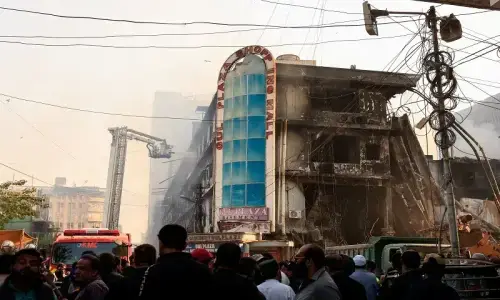
To another question about entry of fire crew into the building, the chief fire officer said, “No dedicated firefighter access/entry shafts or protected firefighting stairs were available. Multiple windows and entry points were secured with grills, restricting internal access. Due to extreme heat, dense smoke, blocked access routes and structural instability risk, rescue and suppression operations were conducted primarily from the exterior using ladders and snorkel; grills were cut where feasible to facilitate rescue.”
About electricity, he replied that there was no power when the fire crew arrived at the site. He said trapped people could have been evacuated if the electricity was not switched off or emergency light system was installed.
He also stated that initially, water tankers had faced difficulties in reaching the site due to traffic congestion and later the area was cordoned off by the law enforcement agencies ensuring continuous access to bowsers.
Regarding another query of the commission, the fire chief replied, “As per firefighting SOPs, the firefighters have to lower the flame temperature of the premises prior to making internal entry in order to prevent life loss.
“At the time of incident, the fire environment was characterised by extremely high temperatures, dense smoke accumulation and extensive flame involvement, creating interior conditions incompatible with human survival.
“Operational assessment indicated that any interior entry under such conditions would have exposed both public and responding personnel to immediate and severe life-threatening hazards,” he stated.
Blaming the Gul Plaza administration for the primary loss of life, he said major contributing factors identified included blocked or unusable exits, lack of fire alarm and detection system, absence of automatic sprinkler protection and internal emergency response including fire and evacuation planning, unsafe electrical installations and lack of emergency lights.
The chief fire officer also submitted that multiple persons were rescued from the building by fire crew through external rescue operations by using ladders and snorkels.
Meanwhile, the registrar of the commission, Iqbal Hasan Khatti, has issued a notice to the chief fire officer, asking him to produce certified copies of call log book, occurrence book and vehicle log book between Jan 17 to Jan 21.
Published in Dawn, March 14th, 2026