Syria’s Kurds caution Iranian counterparts against aligning with US
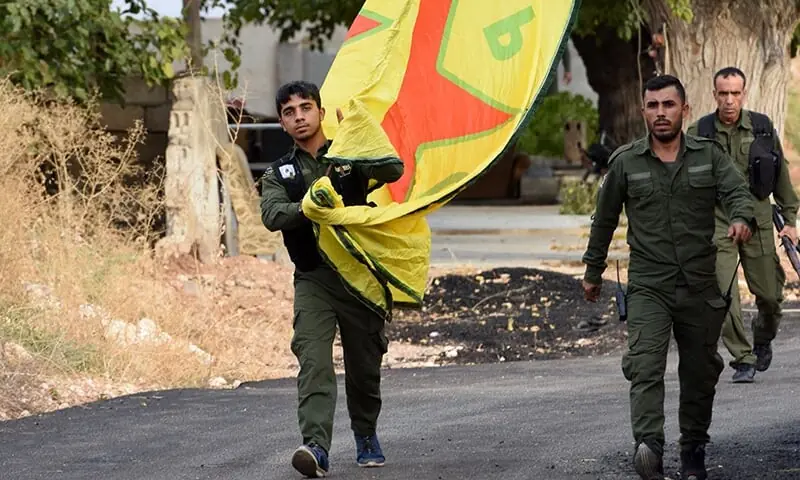
QAMISHLI: Kurdish residents of northeast Syria warned Iran’s Kurds against aligning with the US to fight the Iranian government, citing their own experience in Syria in recent months as evidence their Iranian counterparts would be “abandoned.” Iranian Kurdish militias based in northern Iraq have consulted with the United States in recent days about whether and how to attack security forces in western Iran, as the United States and Israel pound Iran with air strikes.
But Syria’s Kurds warned their Iranian counterparts against partnering with Washington. “I hope that the Kurds of Iran will not ally themselves with America, because they will abandon them,” said Saad Ali, a 45-year-old resident of the northeastern Syrian Kurdish town of Qamishli.
“Tomorrow, if an agreement is made between them (the US) and the Iranians, they will eliminate you. Do not make our mistakes,” he said. Syrian Kurdish fighters aligned with the US more than a decade ago to fight the militant Islamic State group, setting up their own semi-autonomous zone in the territory they had seized from the ultraconservative Islamist fighters. But in January, Syria’s new army under President Ahmed al-Sharaa captured most of the Kurdish-held areas in a sweeping offensive. Syria’s Kurds called on the US to intervene on their behalf, and felt betrayed when Washington instead urged them to merge with Sharaa’s forces.
Kurds’ bitter experience
It remains a bitter experience for Syria’s Kurds and a lesson they say should be heeded by Iranian Kurds. “In my opinion, the Kurds in Iran should maintain a firm stance: they will not engage in any wars within Iranian territory without firm, signed guarantees from the United States regarding the future of these Kurdish regions in Iran,” said Amjad Kardo, a 26-year-old Syrian Kurd in Qamishli.
“We Kurds here in Syria, in particular, have had a negative experience with the Americans in Syria, and their abandonment of Kurdish resistance movements.” An Iranian Kurdish source said Kurdish leaders did have concerns about being “betrayed” like the Kurdish groups in northern Syria.
The source said Iranian Kurdish leaders had requested guarantees from the US, without saying what they were. US President Donald Trump said on Thursday it would be “wonderful” if Kurdish forces crossed the border from northern Iraq into Iran, but declined to answer a question on whether the US would offer them air support if they did so. On Saturday, he appeared to switch positions, telling reporters he doesn’t want Kurdish fighters going into Iran.
Exercise caution
Ahmed Barakat, head of the Kurdish Progressive Democratic Party in Syria, said that Iranian Kurdish forces should exercise “extreme caution”. Barakat said the decision was ultimately up to them, but he believed that “accepting the invitation of the United States and being considered the spearhead in confronting or weakening the Iranian regime is not, at present, in the best interest of the Kurds of Iran.”
Israel has been holding its own talks with Iranian Kurdish insurgent groups based in the semi-autonomous region of Iraqi Kurdistan for around a year, this news agency reported last week. The Kurds are an ethnic group which was left stateless a century ago when the borders of the modern Middle East emerged from the collapsing Ottoman Empire.
Mostly Sunni Muslims, they are concentrated in a mountainous region straddling the borders of Armenia, Iraq, Iran, Syria and Turkiye. In Iraq, they inhabit three northern provinces led by their own regional government. But in other countries — Iran, Turkiye and now Syria — their dreams of an autonomous region or state have remained out of reach.
Published in Dawn, March 9th, 2026