Syrian government, Kurdish forces announce integration deal
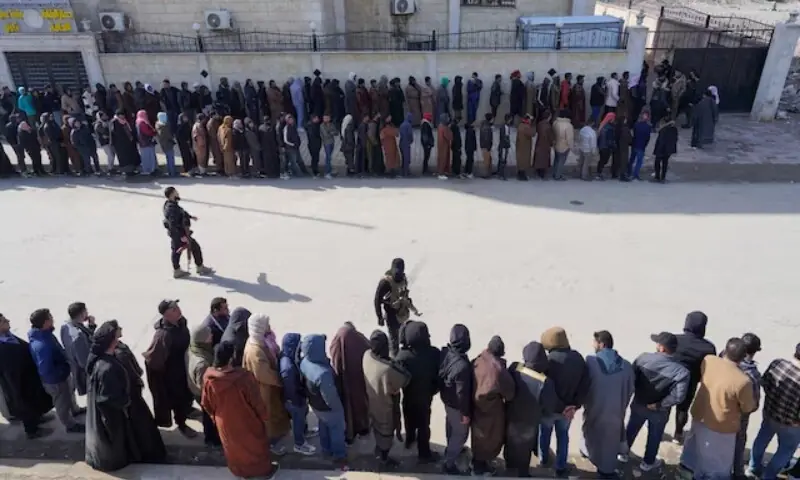

The Syrian government and the Kurdish-led Syrian Democratic Forces (SDF) group declared a ceasefire deal on Friday that foresees a phased integration of Kurdish forces with the state, staving off a potentially bloody battle for the northeast.
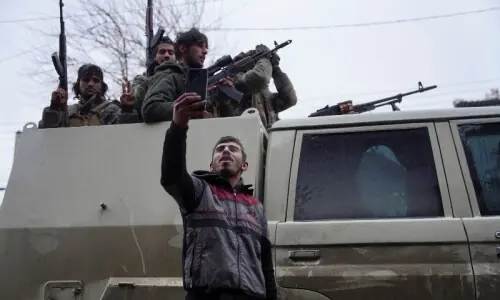
The sides announced the agreement after government forces under President Ahmed al-Sharaa captured swathes of northern and eastern Syria from the Syrian Democratic Forces (SDF) this month, forcing the Kurdish forces to retreat into a shrinking enclave.
The fate of the SDF, which once held a quarter or more of Syria, has been one of the biggest issues looming over the country since fighters led by Sharaa toppled President Bashar al-Assad 14 months ago.
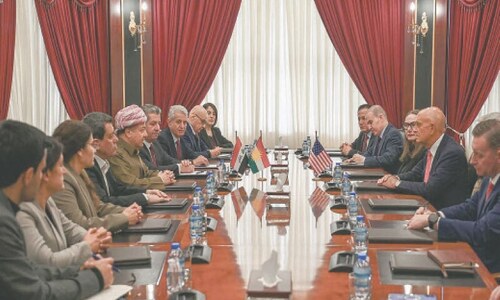
US envoy Tom Barrack, who has been closely involved in mediation efforts, declared the agreement “a profound and historic milestone in Syria’s journey towards national reconciliation, unity, and enduring stability”.
Deal aims to unify Syria
Under the agreement, forces that had amassed on front lines in the north would pull back and Interior Ministry security forces would deploy to the centre of the cities of Hasakah and Qamishli in the northeast, both held by the SDF.
The agreement includes the formation of a military division that will include three SDF brigades, in addition to the formation of a brigade for forces in the SDF-held town of Kobani, also known as Ain al-Arab, which will be affiliated with the governorate of Aleppo.
Governing institutions established by the Kurdish-led groups in the northeast are to be merged with Syrian state institutions.
Damascus and the SDF first struck an integration deal last March, but made scant progress towards implementation before a year-end deadline, paving the way for government forces to go on the march.
Noah Bonsey, senior adviser with the International Crisis Group think-tank, said the deal was “a potentially historic turning point”.
“It looks like both sides have succeeded in defining a middle ground that works for both of them on some incredibly difficult questions,” he said.
“It spares northeast Syria what could have been a really ugly military showdown. Implementation will be tricky. There are a lot of challenges ahead,” he said, adding that he was waiting to see all the terms.
An SDF statement said the deal “aims to unify Syrian territory and achieve full integration in the region by strengthening cooperation between the concerned parties and unifying efforts to rebuild the country”.
Syrian state-run broadcaster Al-Ikhbariya published an almost identical statement, citing a government official.
A senior Syrian government official told Reuters the deal was final and had been reached late on Thursday night, and that implementation was to begin immediately.
The United States has been closely involved in efforts to mediate a deal between the sides for almost a year.
The SDF was once Washington’s main Syrian ally, helping the US military fight the Islamic State. But its position grew weaker as President Donald Trump built close ties with Sharaa.
Kurds on high alert
The areas seized by Damascus this month have included Syria’s main oil fields and important agricultural land.
The statements did not address control of the last remaining SDF-controlled border crossing to northern Iraq, known as Semalka.
The Syrian official said the Syrian state would take over all border crossings. A spokesperson from the SDF did not immediately respond to a Reuters question on the crossing.
The Syrian official said the military division in the northeast would include “groups from the SDF within brigades, alongside other brigades”.
The official said that fighters would join such brigades as “individuals” and that the whole division would be under the authority of Syria’s Defence Ministry.
There was no immediate response from the SDF to questions on the method of integration and the command structure of the brigades.
Kurds have been on high alert for a potential government push into the Kurdish-majority areas of the northeast, mindful of last year’s violence against minority Alawites and Druze.