0
0
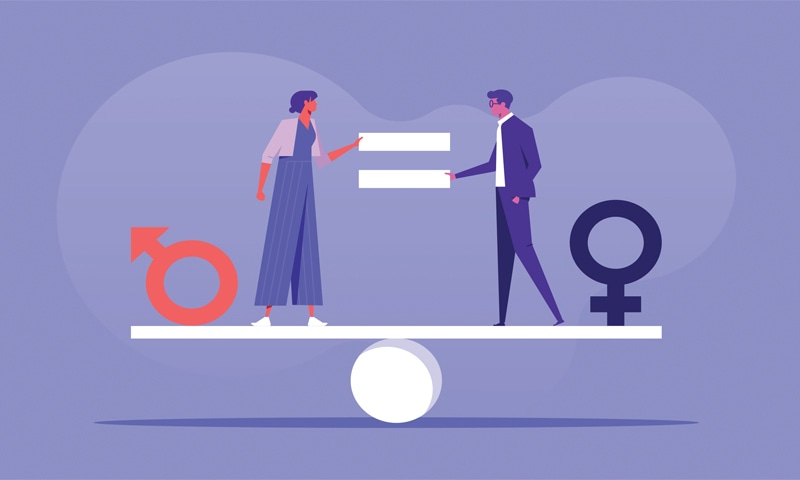

As senseless wars inflict death, destruction and displacement — burdens that women disproportionately bear both in conflict zones and beyond — March offers a moment to reflect on and assess the progress, or lack thereof, towards national commitment to gender parity.
Even if one sets aside the data, the lived experience of women, at home, in the workplace, on the streets and in society at large, suggest that Pakistan has a long way to go to achieve gender equality. There is ongoing debate over policy measures, the quality of legislation, and the weak implementation of existing laws. However, many experts argue that the deeper challenge lies in changing the entrenched social biases against women. As for the numbers and Pakistan’s comparative performance, global reports present a deeply disturbing picture.
Pakistan ranks last among the 148 countries assessed in the World Economic Forum’s Global Gender Gap Index 2025. With overall gender parity at 56.7 per cent, the country has closed only 2.3 percentage points of the gap over the past decade. It trails well behind regional peers, Bangladesh (24), China (103), Nepal (125), Sri Lanka (130), India (131) and Iran (145), in a region that is itself among the worst in terms of gender equality.
Development practitioners, parliamentarians and economists call for more effective strategies to empower women and for stronger implementation of relevant laws. However, many question the portrayal of Pakistan as the worst country in the world for women.
‘Gender-friendly legislation and initiatives can deliver only limited gains unless societal attitudes toward women fundamentally change’
Pakistan Peoples’ Party parliamentarian Syeda Nafisa Shah, who heads the National Assembly’s Special Committee on Gender Mainstreaming, was not satisfied with Pakistan’s ranking.
“The Gender Parity Index captures some indicators but overlooks others, and even within the index, selected indicators are assigned uneven weightage, which can skew a country’s global position. I am not sure whether these indices adequately account for poverty-alleviation and resilience programmes such as the Benazir Income Support Programme [BISP] and Sindh People Housing for Flood Affectees [SPHF]. In some cases, Pakistan’s data is scattered or inaccurate, which further complicates the picture.
“We have examined these concerns in our committee and recommended that the National Commission on the Status of Women and the Pakistan Bureau of Statistics [PBS] work to streamline and improve the accuracy and consistency of national data. At the same time, it is also true that women in Pakistan remain far behind where they should be. Both provincial and federal governments must, therefore, demonstrate stronger political will to ensure gender equality across all policies and programmes,” Ms Shah added.
PBS’s chief statistician, Dr Naeem uz Zafar, however, defended the PBS — the key government agency responsible for collecting and disseminating national data. He noted that while there is always room for improvement, technological advances now offer opportunities for more frequent and even real time data updates. He also stressed the need to better synchronise data generated across different departments to enhance overall data quality.
Dr Zafar said that, according to data processed in 2025, about 2.5pc of women in Pakistan own a house in their name, while 7.5pc hold property jointly. However, he cautioned that these estimates are derived from interview-based surveys, which can be less precise.
“To accurately assess gender parity in asset ownership, such as land, farms or houses, data should ideally be drawn from administrative records like land registries, revenue offices and building control authorities, as these are formal registers,” he said. Integrating such administrative data with PBS statistics, he added, could significantly improve reporting.
Versha Qazi, Gender Specialist at the SPHF, highlighted the programme’s impact on women participation in resilient housing initiatives. To date, 39,635 Village Reconstruction Committees have been formed with 265,203 members, including 110,698 women (42pc), strengthening women’s voice and influence in community decision-making. More than 520,000 women have started receiving funds to rebuild their homes.
Commenting on Pakistan’s low ranking on the Global Gender Parity Index, Ms Qazi noted that the index often overlooks groundwork and interventions aimed at improving outcomes. Programmes such as the BISP and SPHF, she said, provide critical safety nets and resilience that enable women to move beyond survival toward empowerment.
She further identified education, economic empowerment and strong legal protections as key drivers of progress and indicators that reflect real gaps. Expanding financial inclusion, skill training and credit access, alongside efforts to change restrictive social norms, she argued, is essential to accelerate gender parity.
Dr Dur e Nayab, former joint director as the Pakistan Institute of Development Economics, also questioned the credibility of the indices. When asked how the situation could be improved, Dr Nayab emphasised the need for deeper social change. “My key policy suggestion is to work on breaking gender-related stereotypes and mindsets. Gender-friendly legislation and initiatives can deliver only limited gains unless societal attitudes toward women fundamentally change,” she added.
Dr Shireen Mustaffa Narejo, a former senior Sindh officer with extensive administrative experience, argued that the reliance on percentages often masks real progress. “Anyone who has lived in or closely observed Sindh over the past decade would be surprised by parity index results,” she said. “You don’t need be an expert, the change is visible to anyone paying attention.”
She pointed to initiatives such as BISP digital cash transfer to adult women and allocation of land titles to thousands of women under the SPHF, which she said are strengthening women’s status and their role in household decision-making.
Responses from federal cabinet members and the Punjab leadership on the gap between perception and reality of gender equality were not received before the deadline of this report.
Published in Dawn, The Business and Finance Weekly, March 8th, 2026