0
0
KARACHI: A new national “social movement” advocating empowered and constitutionally protected local governments was launched on Saturday, as political leaders, legal experts and civil society representatives gathered at the Karachi Press Club (KPC) for a seminar highlighting the need for structural governance reforms in Pakistan.
The movement, titled “Ba-Ikhtiar Awam”, is being led by former federal minister Asad Umar and aims to mobilise citizens across the country to push for constitutional amendments that would establish strong and independent local governments as a permanent third tier of governance.
The launching seminar, titled “Aik Tarmeem Awam ke Liye”, was also addressed by senior journalist Aamir Zia, legal expert Barrister Salahuddin, former Sindh Assembly members Bilal Ghaffar and Sidra Imran, as well as Dr Sanjay, Shiraz Ali and City Councillor Uzair Ahmed Siddiqui.
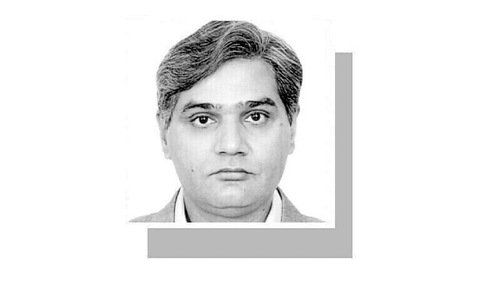
Speaking on the occasion, Mr Umar said Pakistan’s progress depends on the strength of democratic institutions and governance structures. He noted that prolonged political confrontation has weakened institutional development and hindered effective governance.
Asad Umar calls for new ‘Charter of Democracy’ to strengthen institutions and ensure effective governance
“Pakistan needs a new Charter of Democracy that focuses on strengthening institutions and improving governance,” he said.
He said that Pakistan’s constitutional framework had evolved from the Government of India Act 1935, and that while the Eighteenth Amendment to the Constitution of Pakistan was an important milestone in granting provincial autonomy, it did not adequately address issues of governance at the grassroots level.
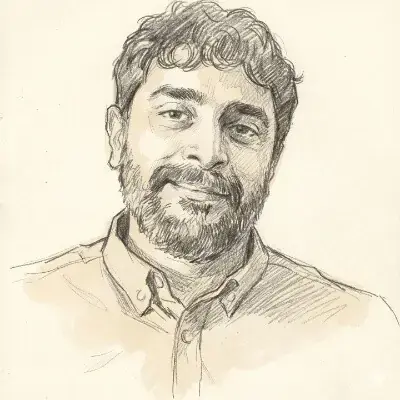
Senior journalist Aamir Zia said debates about making Karachi a separate province or placing it under federal control reflect public frustration over governance failures. However, he stressed that governance challenges are not limited to urban centres.
“The situation in rural Sindh is also far from satisfactory,” he said. “Karachi contributes significantly to the national economy but receives very little in return.”
Senior lawyer Barrister Salahuddin discussed the constitutional dimensions of the debate, noting that in most developed democracies, the responsibilities of federal, regional and local governments are clearly defined.
“In Pakistan, the structure and authority of local governments remain ambiguous,” he said.
He explained that although the Constitution of Pakistan 1973 outlines federal and provincial powers, local governments were never fully institutionalised. The only constitutional provision on the subject, Article 140A, introduced during the tenure of former president Pervez Musharraf, obliges provinces to establish local governments but leaves their structure largely undefined.
He emphasised the need for constitutional reforms to clearly define the powers, structure and financial autonomy of local governments to ensure effective governance and accountability at the grassroots level.
Former MPA Sidra Imran said that “Ba-Ikhtiar Awam” seeks to build a nationwide, citizen-driven campaign for independent and constitutionally protected local governments. The initiative argues that Pakistan’s governance challenges stem from an overly centralised system where decisions about essential services are taken by distant authorities rather than locally elected representatives.
The movement advocates a system in which every district, city, town and village would have a directly elected local government that is financially autonomous, administratively independent of provincial interference and protected by the Constitution from premature dissolution, she said.
“The movement plans to build public awareness, develop policy proposals based on international best practices and mobilise democratic pressure to push for constitutional amendments that would formally recognise local governments as a permanent third tier of governance in Pakistan,” she added.
Published in Dawn, March 8th, 2026