0
0
BY most accounts, the protest was not massive. Nor was it unexpected. And yet, it ended in gruesome bloodshed. The question is: why? Where were the security agencies?
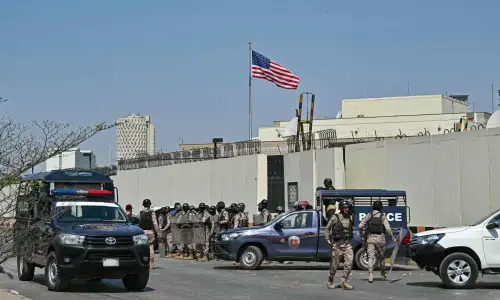
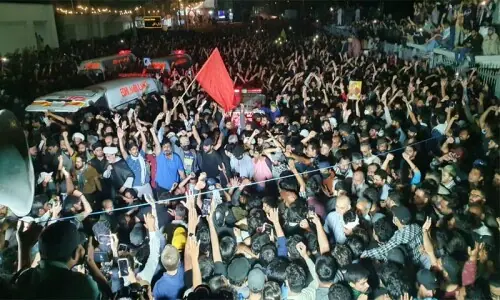
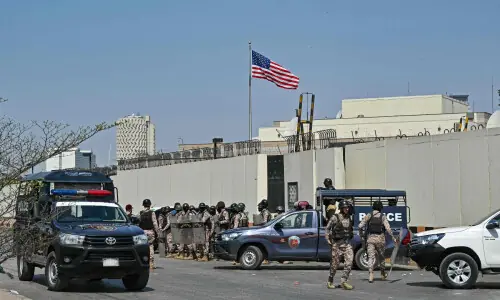
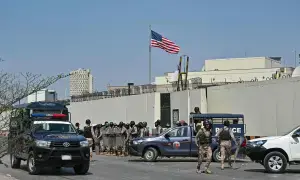
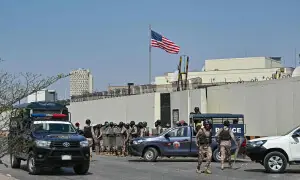
For context, around a dozen Karachiites were killed and scores others injured this Sunday when a protest outside the American consulate in Karachi took an ugly turn. The incident happened hours after the assassination of Ayatollah Ali Khamenei was confirmed by Iranian media. By then, an outpouring of grief had snowballed into palpable anger against the US and Israel.
It is worth pointing out that Ayatollah Khamenei’s death had been announced by the US president much earlier, on Saturday night. This means the security agencies had ample time to plan for contingencies. They should have anticipated that the violent death of a widely revered figure could provoke a strong reaction, and cordons should have been placed hours before the first mourners took to the streets. Instead, we saw the security of one of the most impenetrable compounds in the city melt away before a group of understandably furious protesters. The subsequent carnage was recorded for the world to see.
Diplomatic missions are sensitive sites, and host states bear a clear obligation under international law to protect them. Yet there seems to have been no command and coordination on the day of the tragedy. We still do not know who was responsible for the shootings: local police, private security or the US Marines posted inside the consulate. Were the chains of command clear to these actors? Was their communication effective? Was it operational ambiguity in a high-risk situation that led to so many fatalities?
Most pressing are the questions of why lethal force was authorised, and by whom. Who fired the shots? Under what rules of engagement? Were non-lethal measures exhausted before live ammunition was used? International standards permit lethal force only when strictly necessary to protect life. If that threshold was met, authorities must demonstrate it. If it were not, there must be accountability.
A credible, independent, and time-bound inquiry is now necessary. It must investigate security planning for the diplomatic mission, the on-ground decision-making, and the use of force. It must conduct its investigation transparently and, where negligence or misconduct is established, enforce accountability. The public deserves answers, and the state cannot continue avoiding them indefinitely.
Published in Dawn, March 4th, 2026