Turkiye will contribute to re-establishment of Pak-Afghan ceasefire, Erdogan tells PM Shehbaz

Prime Minister Shehbaz Sharif on Tuesday held a telephone conversation with Turkish President Recep Tayyip Erdogan, in which the latter said Turkiye would “contribute to the re-establishment of the ceasefire between Pakistan and Afghanistan”.
According to a post on X by the Turkish Presidency, the two leaders discussed ties between Pakistan and Turkiye and also “regional and global issues”.
“Condemning the terror attacks carried out in Pakistan, President Erdogan said Turkiye will continue to stand by Pakistan in its anti-terror fight, and that it will contribute to the re-establishment of the ceasefire between Pakistan and Afghanistan, reached through Turkiye’s initiatives as well,” the Presidency said.
“Stressing that engaging once again in diplomacy in the region regarding the conflicts that began with the attacks against Iran will be extremely beneficial, President Erdogan noted that Turkiye stands ready to provide all the support it can to that end,” it added.
Meanwhile, PM Shehbaz said that in the phone call with Erdogan, the two discussed the “escalating situation in the Middle East”.
“I strongly condemned the Israeli attack on Iran and the subsequent regrettable attacks on brotherly Gulf countries. I apprised President Erdogan of my outreach to the brotherly Gulf leadership and reaffirmed Pakistan’s full solidarity with them, as well as our readiness to play a constructive role in promoting de-escalation and dialogue,” he said.
“We agreed that maximum restraint by all parties is imperative to prevent further escalation. We also exchanged views on recent developments in Afghanistan and resolved to remain in close and frequent contact in our shared pursuit of peace and stability in the region,” he said.
According to Radio Pakistan, PM Shehbaz also said during the phone call that Pakistan had conveyed its readiness to play a constructive role in efforts aimed at resolving the crisis in the Middle East.
“Both leaders underscored the importance of maximum restraint by all parties to prevent further escalation,” it said.
The report further added that PM Shehbaz also took President Erdogan into confidence on the “recent developments in the context of Afghanistan”.
“The two leaders agreed to remain in close and frequent contact in this regard while continuing their efforts to bring peace and stability in the region,” the report said.
Relations between Pakistan and the Afghan Taliban are at their lowest point in the four years since the group came to power.
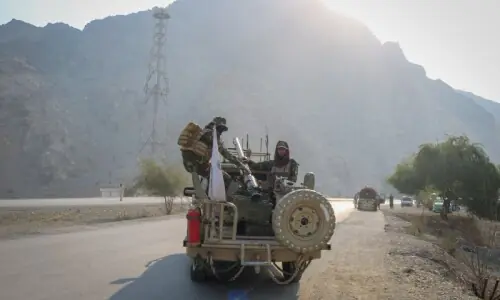
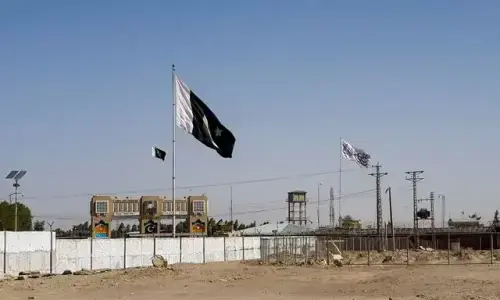
Last year in October, border clashes had erupted between Pakistan and Afghanistan across their 2,600-kilometre frontier. Following those clashes, Turkiye and Qatar had stepped in to mediate.
The first round in Doha produced a fragile ceasefire, while the second, also in Doha, ended with only a general agreement to develop a mechanism for verifying compliance and a decision to continue talks. The third round concluded without any concrete agreement.
On Feb 22, Pakistan targeted terrorist camps and hideouts overnight in the Nangarhar and Paktika provinces of Afghanistan, which led to the Afghan Taliban launching unprovoked attacks along the border last week.
In response, Pakistan initiated Operation Ghazab lil-Haq on Feb 26. In a briefing on Monday, a senior security official said that Pakistan was in no hurry to wind up ‘Operation Ghazab lil Haq’, and would continue cross-border action against terrorist sanctuaries inside Afghanistan until Kabul offers verifiable guarantees against terrorism facilitation.
“Operations in Afghanistan will end when Afghanistan’s Taliban Regime provides verifiable assurance of compliance to Pakistan’s demand of quitting facilitation of Fitna al Khawarij and Fitna al Hindustan. We are in no hurry,” the top official said in an interaction with journalists.
He added that “the duration of Pakistan operations depends on actions on ground by Afghan Taliban Regime,” indicating there was no fixed timeline and that de-escalation would be conditional.
Defending the scope and conduct of the current campaign, the official said the targets were specific and intelligence-driven.
“Pakistan is not resorting to attacking random targets in Afghanistan, rather the infrastructure supportive to terrorists groups are specific targets.”