• Govt says seven TTP, IS-Khorasan camps targeted in response to Imambargah bombing, recent incidents in KP
• Islamabad ‘has conclusive evidence’ of terrorist handlers directing attacks from Afghan soil
• Security officials estimate ‘more than 80’ terrorists killed; accuse them of using civilians as human shields
• Kabul protests deaths, summons Pakistani envoy
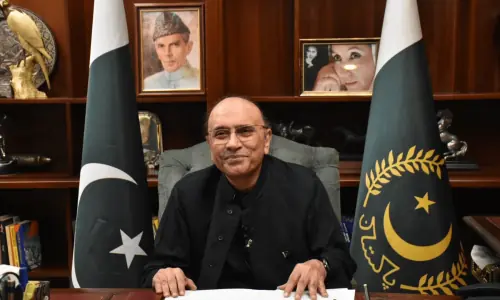
• President Zardari says actions rooted in inherent right to defend our people
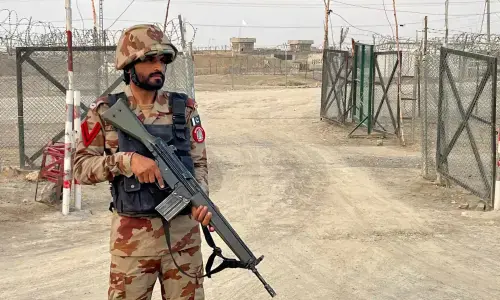
ISLAMABAD: Pakistan targeted terrorist camps and hideouts overnight in the Nangarhar and Paktika provinces of Afghanistan, the government said on Sunday, with an official saying that “more than 80” terrorists had been killed in the air strikes.
The strikes were the most extensive military engagement between the two neighbours since border clashes broke out in October last year.
According to an information ministry statement, issued in the early hours of Sunday, the strikes were carried out in response to a number of terrorist attacks inside Pakistan — such as the suicide bombing at an Islamabad Imambargah and a number of attacks in Bannu and Bajaur during the holy month of Ramazan.
“Pakistan has conclusive evidence that these acts of terrorism were perpetrated by Khwarij at the behest of their Afghanistan-based leadership and handlers.”
The information ministry said that in a retributive response, Pakistan carried out “intelligence-based selective targeting of seven terrorist camps and hideouts belonging to Pakistani Taliban [Fitna al Khwarij] and its affiliates, and [Islamic State-Khorasan] at the border region of Pakistan Afghan border with precision and accuracy.”
Fitna al Khwarij is the term the state uses to refer to the banned Tehreek-i-Taliban Pakistan (TTP).
The suicide attack on the Imambargah in Islamabad earlier this month had claimed more than 30 lives. The IS-K terrorist group had claimed responsibility for it.
“Despite repeated efforts by Pakistan to urge the Afghan Taliban Regime to take verifiable measures to deny use of Afghan territory by terrorist groups and foreign proxies to carry out terrorist activities in Pakistan, the Afghan Taliban Regime failed to undertake any substantive action against them,” the statement noted.
Several leaders hailed what they termed “decisive action” against terrorists. Speaking at a ceremony in Lahore, National Assembly Speaker Ayaz Sadiq said terrorism imposed on Pakistan would be dealt with decisively. He emphasised that Pakistan continued to act with caution, responsibility, and restraint in addressing these challenges.
Sindh Chief Minister Murad Ali Shah also congratulated the nation on the successful operation against terrorists, adding that Pakistan had given a strong response to terrorism originating from Afghan soil.
Parliamentary Affairs Minister Tariq Fazal Chaudhry, in a post on X, stated that the strikes by the “Pakistan Air Force were retribution for the innocent lives lost to terrorism”. He also issued a stern warning, saying that while “Pakistan desired peace, it would not compromise on its land, people and honour”.
Kabul protests
Meanwhile, the Taliban regime in Kabul called the strikes a violation of its sovereignty, saying “an appropriate and measured response will be taken at a suitable time”, Reuters reported.
The news agency quoted the Afghan foreign ministry as saying that it had summoned Pakistan’s ambassador over what it described as violations of Afghan airspace and the bombing of civilians, calling the strikes “a provocative act”.
A Taliban spokesperson also claimed the attacks had killed and injured dozens of people, but Pakistani authorities termed such claims a “false and malicious narrative designed to create cover for terrorist sanctuaries”.
They maintained that TTP terrorists routinely blended into civilian areas and used non-combatants as human shields, adding that Pakistan’s operational planning accounted for this, and forces took measures to reduce or eliminate any collateral damage.
They described the actions as a “limited, proportionate response to an ongoing terror wave”, which saw mass casualty attacks inflicted on Pakistani civilians and security forces.
Photos from Nangarhar’s Bihsud district — one of the locations Afghan authorities claim were targeted by Pakistan — showed people using a bulldozer to search through and clear the rubble of a destroyed building, which was being guarded by Taliban fighters.
The AFP news agency quoted a Pakistani security source as saying that the overnight air strikes had killed “more than 80” militants, and that the death toll was expected to rise.
‘Failed’ diplomacy
Sunday’s statement indicated that Pakistan expected the Taliban regime in Kabul to honour its commitments under the 2020 Doha Agreement to deny use of its soil by terrorists targeting Pakistan.
The strikes come days after Defence Minister Khawaja Asif warned Pakistan’s western neighbour that Pakistan would not hesitate to launch air operations inside Afghanistan to combat militancy, until Kabul provides security assurances.
Following the flare-up in October 2025, the two countries had engaged in protracted diplomacy, supported by friendly regional actors such as Qatar, Turkiye and Saudi Arabia.
Although several rounds of talks were held, they did not lead to any rapprochement between the two sides.
Since then, leading figures — such as President Asif Ali Zardari and Prime Minister Shehbaz Sharif, among others — have repeatedly called on Kabul to address the issue for the sake of peace.
“This time, it must be decided whether Afghanistan wants to live peacefully or not,” PM Shehbaz had said at a recent workshop in Islamabad.
Similarly, while thanking world leaders for their support in the aftermath of the imambargah bombing earlier this month, President Asif Ali Zardari also warned that the Taliban regime’s policies had created conditions “similar to or worse than pre-9/11”.
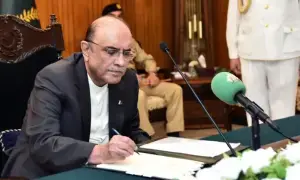
In a fresh statement on Sunday, President Zardari said that Pakistan’s recent actions were rooted in its inherent right to defend its people against terrorism emanating from across its borders, and followed repeated warnings that went unheeded.
In addition, a recent report by the UN Security Council’s Analytical Support and Sanctions Monitoring Team found that the TTP enjoys preferential treatment among terrorist groups operating from Afghanistan under the Taliban regime, heightening concerns among member states that the outfit could pose an extra-regional threat.
Published in Dawn, February 23rd, 2026