Gulf states get caught up in war against Iran

• Largest Saudi oil refinery closed; QatarEnergy shuts LNG production
• Explosions rock Dubai, Abu Dhabi, Doha and Manama
• Saudi army on ‘full alert’; Kuwait shoots down three US F-15s in ‘friendly fire’
• Asia, sourcing 60pc of its oil from region, faces severe supply shock
• European natural gas price soars
BEIRUT: The war launched by the United States and Israel against Iran has now spread across the Middle East, threatening to plunge the global economy into chaos, as Tehran widened its attacks to hit oil facilities in Saudi Arabia and the UAE.
The Israeli military carried out new strikes on Tehran, and AFP reporters in the Iranian capital heard explosions ring out on the third day of the US-Israeli joint assault.
Gulf monarchies threatened to retaliate as Saudi and Emirati oil facilities were hit, Qatar halted LNG production, tankers were attacked off Oman, maritime traffic through the Strait of Hormuz was halted and energy prices soared.
The Gulf militaries have so far focused on intercepting the hundreds of missiles and drones launched by Iran after US-Israeli strikes killed its supreme leader.
Qatar said it had shot down two Iranian Su-24 ground attack jets, after it announced it had been obliged to halt LNG production.
Separately, a drone strike at Saudi Aramco’s Ras Tanura refinery — one of the region’s biggest — has forced it to halt some operations.
A source close to the Saudi government warned that a “concerted” Iranian attack on oil facilities could trigger a military response.
“It depends if this is seen as a direct attack on Aramco by the Iranian leadership or a rogue drone,” the source told AFP, referring to the state oil giant.
Saudi Arabia would target “Iranian oil facilities if Iran mounts a concerted attack on Aramco”, the source added.
Another source told AFP that the Saudi army had raised its readiness level to “full alert”.
Meanwhile, a fire broke out after Musaffah fuel tank terminal in the United Arab Emirates was targeted by a drone, without impacting its operations, Abu Dhbai media office said on Monday.
Abu Dhabi National Oil Company operates a facility in Musaffah from which fuel is transported by trucks, while a 1,600-kilometre pipeline network distributes finished products across the emirate of Abu Dhabi.
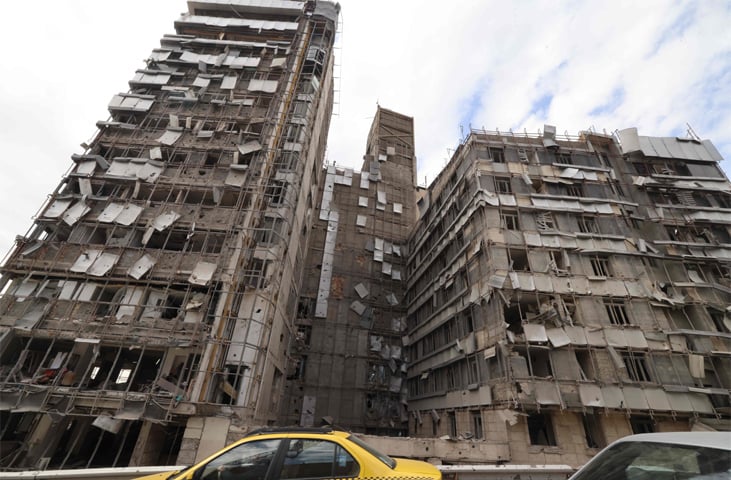
Iran’s retaliatory attacks have hit ports, airports, residential buildings and hotels along with military sites across the wealthy region of oil giants and staunch US allies.
Blasts echoed across Dubai, Abu Dhabi, Doha and Manama on Monday.
At least six people have been killed and dozens injured since the attacks on Gulf states began.
Kuwait and Bahrain
Earlier on Monday, smoke poured out of Kuwait City’s US embassy, an AFP correspondent saw. The embassy did not say it had been hit, but warned people to stay away.
Three F-15E Strike Eagles were mistakenly shot down by Kuwaiti air defences in a friendly-fire incident late on Sunday, the US Central Command said. The crews parachuted to safety.
Shrapnel fell at Mina Al Ahmadi refinery, one of Kuwait’s biggest, injuring two workers, but did not disrupt production, the Kuwait National Petroleum Company said.
In northern Kuwait, smoke billowed over a power station, three witnesses told AFP. An energy ministry spokeswoman said a fuel container was hit by shrapnel after a drone interception.
Kuwait was hard-hit on Monday with 19 people injured, the health ministry said. The small, oil-rich country has a large US military presence.
Bahrain suffered its first death when debris from an intercepted missile sparked a fire on a ship in the port city of Salman, killing one Asian worker and seriously injuring two others, the interior ministry said.
Meanwhile, the widening conflict in the Middle East is roiling global energy markets, disrupting crucial oil and gas supplies to Asia and threatening a fragile global economic recovery as prices surged on Monday.
The supply chain crisis, a direct result of Israeli and US strikes on Iran and retaliatory actions by Tehran, forced shutdowns of oil and gas facilities.
The conflict severely disrupted shipping in the Strait of Hormuz, a vital waterway through which about a fifth of the world’s oil supply transits, causing some 200 ships to drop anchor to avoid risk.
The disruptions highlight the significant risks to Asia, the world’s biggest oil-consuming region, which sources 60pc of its crude from Middle Eastern producers. Attacks on Sunday damaged three tankers and killed one seafarer.
Brent crude futures leaped as much as 13pc to $82.37 a barrel before pulling back to trade up $6.27, or 8.6pc, at $79.14 a barrel. US West Texas Intermediate crude was up $5.05, or 7.5pc, at $72.07.
The immediate fallout saw a spike in energy costs, with major importers like Japan, India and China now facing rising transport fees and the possibility of having to tap strategic reserves. Ship insurers cancelled war risk cover on Monday and tanker freight rates are expected to jump.
Japan’s Chief Cabinet Secretary Minoru Kihara confirmed the impact on its supply chain.
“Some crude oil tankers bound for Japan from the Middle East are waiting in the Persian Gulf, avoiding passage through the Strait of Hormuz,” Kihara said at a briefing.
The loss of LNG supply from Qatar, Oman and the United Arab Emirates would also hit Asian buyers hardest. Rystad Energy analysts noted that countries like Pakistan, India and Bangladesh face a choice between attracting cargoes from other producers or reducing gas demand.
Some Indian refiners have informed Middle East suppliers that they cannot secure ships to load crude, sources at two companies said. India’s oil ministry is considering all options, including sourcing Russian oil if the crisis persists.
Despite the turmoil, the International Energy Agency noted the oil market is relatively well supplied, with output from the United States, Guyana and OPEC+ expected to exceed global demand growth this year.
Still, the conflict’s effects rippled across other commodities. European natural gas prices soared more than 50pc, while Asian LNG prices climbed almost 39pc.
Published in Dawn, March 3rd, 2026