LAHORE: A fact-finding study by the Human Rights Commission of Pakistan (HRCP) in collaboration with the European Union (EU) has revealed serious violations of basic human rights norms in the design and delivery of water, sewerage and drainage services in the provincial metropolis.
The study titled “Urban exclusion in access to water and sanitation in Lahore” finds that the provision of water, sewerage, and drainage services in a rights-based, equitable, and inclusive manner faces serious hurdles from service providers and the bureaucracy. “Departments and agencies continue to work in uncoordinated and fragmented ways, under conflicting logic, pressures, and targets, resulting in the waste of both taxpayers’ money and their confidence in the public sector.
The absence of legislatively mandated local government in Lahore exacerbates the issue of accountability by removing clear structures for citizen representation, oversight, and responsiveness in municipal affairs,” it reads, adding that the provincial government’s accountability mechanisms are plentiful but fragmented, much like the agencies they are intended to hold accountable.
Lahore, Pakistan’s second-largest city, faces mounting challenges in its water, sewerage, and drainage systems, as rapid urbanisation, unregulated expansion, and inadequate maintenance have placed a significant strain on its capacity to provide equitable and sustainable water and sanitation services.
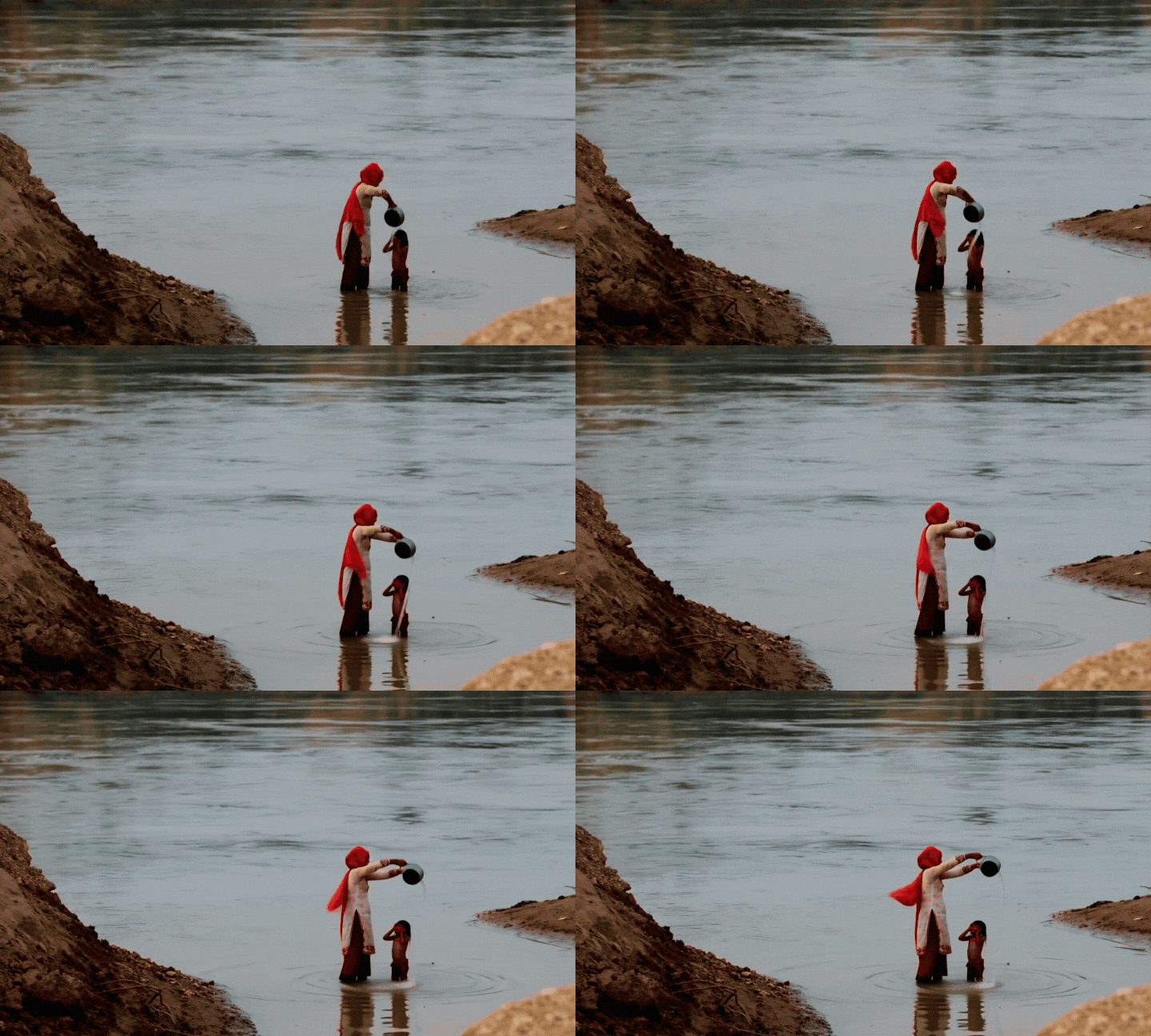
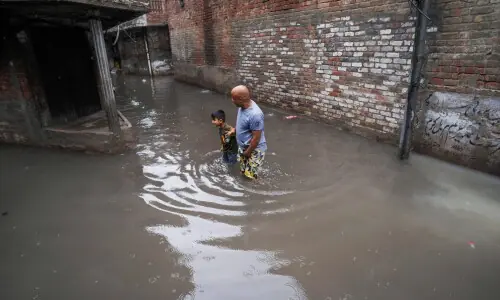
The consequences are visible in recurring urban flooding, water contamination, and inadequate access to safe water and sanitation facilities - issues that disproportionately affect low income and marginalised communities.
The water, sewerage, and drainage systems in Lahore have evolved through a combination of colonial legacies, post-independence urban policies, and piecemeal infrastructural interventions. As a colonial legacy, the water system in Lahore is rooted in the idea of the human-water divide. Its design, which is based on a static, stationary, technocratic, and engineering worldview, has been emulated by the successive post-colonial governments.
HRCP-EU study says officials don’t view provision of services from human rights perspective; highlights dependence on bottled water; Wasa claims water quality, flood control improving
The study mentions conduction of interviews by the fact-finding team with recently retired officials from water-related services in Lahore wherein it was found that technical and administrative staff, as well as bureaucrats, did not view the provision of services from a human rights perspective. “Nothing would have been accomplished in Lahore if the government had been listening to the “human rights people,” the study quoted a bureaucrat as remarked during talk.
It states that the pervasive presence of bottled water in both public and private spheres stand as a stark indictment of a fundamental governmental failure: the inability to provide universally accessible, safe drinking water through public piped systems. This reliance on a privatised, commercialised solution creates a de facto two-tiered society, where one’s purchasing power determines access to a basic human necessity. Consequently, this system systematically excludes the poor and marginalised, who are forced to bear the disproportionate burden of either spending a portion of their income on bottled water or risking their health with unsafe public supplies. Instead of properly fixing the piped water system, the government has installed several filtration plants in major cities, where citizens can obtain filtered water.
The study finds that the water wastage in Lahore has not been sufficiently studied and is largely undocumented. The wasteful use of water, ranging from dripping taps to watering lawns and washing cars in front of the home, is deeply ingrained in urban Lahore’s collective psyche.
It points out that the development standards and land use rules prescribed by the Lahore Development Authority’s building and zoning regulations act against the water cycle as they block water seepage, cause runoff problems, and impede water recharging. Almost none of the road surfaces in the city are water-sensitive, except in a few streets (and in a cooperative housing society on Canal Road), where bricks have been used, allowing water to drain through them.
The study clarifies that the natural and man-made disasters are closely linked to human rights because they directly affect people’s ability to enjoy fundamental rights to life, health, housing, food, water, and security. “While floods are often perceived as natural events, their impact is frequently shaped by human factors, including poor planning, inadequate infrastructure, and social inequality. So the governments have a responsibility to prevent and mitigate the effects of flooding through effective disaster preparedness, early warning systems, and equitable recovery measures,” it argues.
The HRCP’s interviews with transgender persons and individuals living with disabilities underscored the difficulties they face in accessing water and sanitation in private and public spaces. Transgender respondents said they had repeatedly faced refusal when attempting to use washrooms in government buildings. Individuals with disabilities reported that none of the buildings they had visited had an accessible toilet.
It further states that climate change has significant and far-reaching impacts on water, sewerage, and drainage systems, as it alters rainfall patterns, intensifies extreme weather events, and raises temperatures.
The study recommends advocacy on legislating the human right to water and sanitation, as Pakistan has yet to legislate the human right to water and sanitation, despite court judgements that have interpreted existing constitutional guarantees to include access to safe water.
It seeks increase in equitable access in informal and low-income settlements by prioritising the regularisation and upgrading of water and sanitation infrastructure in informal and low-income settlements through pro-poor service models, ensure inclusive and non-discriminatory access to sanitation facilities, reduce water wastage through water metering, regular operations and maintenance (O&M), protect safety and dignity of sanitation workers, introduce a community-based complaints redressal mechanism, cultivate a culture of water preparedness and decolonise from volume-based quantifications to water-sensitive urbanism by prioritising large-scale, volume-based supply targets over ecological balance, local hydrology, and community needs.
When contacted, Wasa Lahore Managing Director Ghufran Ahmad expressed disagreement with the findings of the study. “The Lahore’s water arsenic level ranges between 20 and 25 ug/L (ppb), which, according to guidelines of the World Health Organization (WHO) should be 10 ug/L. “But according to our environmental standards, the 50 ug/L is safe. So the WHO’s recommended level 10 is just a guideline and not the standards that are set by each country keeping in view their environment,” he argued.
He said the regulations have been made already under which the consumers, if found involved in wastage of water are liable to pay heavy fines. Mr Ghufran claimed to have minimised urban flooding in Lahore with timely drainage and rainwater harvesting projects. “The decades-old sewerage/drainage lines are also being replaced in the city under the Lahore Development Programme,” he maintained.
Published in Dawn, March 3rd, 2026