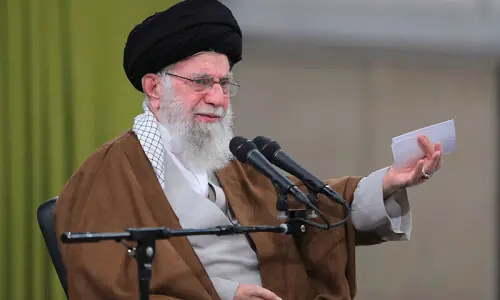
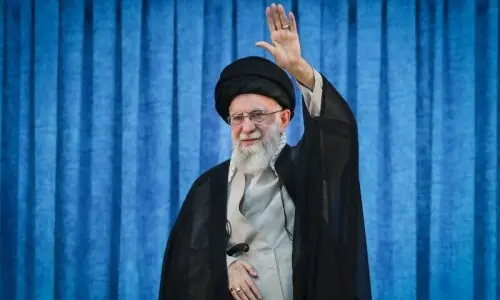
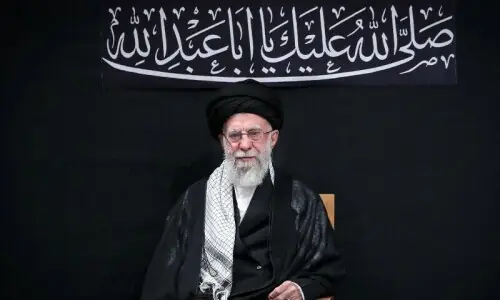
THERE is no question about it: with the brutal assassination of Iran’s Supreme Leader Ayatollah Ali Khamenei and members of his family in Tehran on Saturday, the US and Israel have chosen the path followed by states gone rogue. They have established a dangerous precedent by killing the head of a sovereign country in cold blood. No consideration of international conventions stopped them and the broader fallout of this egregious crime is a new normal that many other states with similarly reprehensible tendencies may want to adopt.
The late Khamenei had led Iran for decades since the death of Ayatollah Ruhollah Khomeini in 1989. Under him, post-Revolution Iran dealt with the aftermath of a devastating war with Iraq; it witnessed intensifying economic sanctions and unrest; and saw no let-up in tensions with the US and Israel. The ayatollah’s killing mirrors earlier ‘decapitation strikes’ carried out by Israel against Hezbollah chief Hasan Nasrallah and Hamas leader Ismail Haniyeh. An interim governing council is already in place, indicating that Iran was ready for the worst.
The late Khamenei was the spiritual guide of millions of Muslims worldwide. The protests following his death, including in Pakistan, were only to be expected. Pakistan has deep cultural and religious links with Iran; millions here followed the religious edicts of the ayatollah who was a Shia marja. Sunday’s violence at the US consulate in Karachi was particularly of concern — at least 10 protesters were killed, with two more deaths in Islamabad.
Meanwhile, hostilities have continued, with targets hit in Iran, while several Gulf countries have reported retaliatory missile and drone strikes. If the US-Israeli aggression continues, it is difficult to see the situation winding down anytime soon.
While Iran’s anger is understandable, there is a need for it to show restraint and refrain from attacking targets in neighbouring countries. The Iranians say they are hitting US interests, but there is always collateral damage in conflict and Iran will find itself further isolated in the region — thus playing right into the hands of the US-Israel combine. There is wisdom, instead, in using diplomatic and political tools and protesting at international forums to put pressure on the guilty.
The Global South, including other Muslim states, should stand with Iran, and condemn both this gross violation of its sovereignty and the perpetrators in unambiguous terms. They should remember that they may be next as Israel and the Trump administration will target anyone who dares to disagree with them. Attempts at regime change have always backfired — it is up to the people of a country to decide the kind of government they want. All Washington and Tel Aviv have achieved is more chaos spreading across the Middle East. The two must be held to account for their bloodstained adventurism.
Published in Dawn, March 2nd, 2026