• PM speaks to Saudi prince, UAE president
• Dar calls counterparts from Iran, S. Arabia, UAE
• UN chief warns escalation threatens global peace
KARACHI: Pakistan on Saturday regretted the “breakdown of talks and outbreak of hostilities in the Middle East” as countries around the world voiced fear of a Middle East conflagration after the United States and Israel carried out strikes on Iran on Saturday.
“Pakistan regrets the breakdown of talks and outbreak of hostilities in the Middle East. Pakistan condemns the unwarranted attacks against the Islamic Republic of Iran. These attacks come at a time when diplomatic efforts were underway to reach a peaceful and negotiated solution,” the Foreign Office said.
It maintained that such a course of action “will undermine the peace and stability of the entire region, with far-reaching consequences”.
Pakistan also “strongly condemned” the attacks by Iran against Saudi Arabia, Bahrain, Jordan, Kuwait, Qatar, and the United Arab Emirates (UAE). Separately, Prime Minister Shehbaz Sharif spoke to Saudi Arabia’s Crown Prince Mohammed bin Salman bin Abdulaziz Al Saud.
According to the Prime Minister’s Office, the premier strongly condemned the serious regional escalation that had taken place as a result of the Israeli attack on Iran, followed by the “regrettable attacks on other Gulf countries”.
He also spoke to UAE President Sheikh Mohamed bin Zayed Al Nahyan. According to the Prime Minister’s Office, he strongly condemned “the serious regional escalation” resulting from the Israeli attack on Iran earlier today, followed by the “regrettable attacks against the UAE as well as in other Gulf countries”.
Meanwhile, Deputy Prime Minister and Foreign Minister Ishaq Dar “strongly condemned the unwarranted attacks against Iran” in a phone call he received from the Iranian Foreign Minister Abbas Araghchi.
According to the Foreign Office, the two leaders “reviewed the evolving situation in Iran and the wider region”. The statement said Mr Dar “strongly condemned the unwarranted attacks against Iran” and called for an immediate halt to escalation through “urgent resumption of diplomacy to achieve a peaceful, negotiated resolution to the crisis”.
Mr Dar also spoke to Saudi Arabia’s Foreign Minister Faisal bin Farhan Al Saud. “Both leaders expressed deep concern over the unfolding regional developments, and agreed to remain in close contact on the evolving situation,” the Foreign Office said. He also spoke to his UAE counterpart, Abdullah Bin Zayed al Nahyan. They expressed “serious concern” over recent developments and agreed to remain in close contact.
World reaction
Turkish President Tayyip Erdogan said that US-Israeli attacks on Iran violated Iran’s sovereignty and targeted the peace of the Iranian people, adding he was saddened and concerned.
In a speech in Istanbul, Mr Erdogan said Iran’s attacks on Gulf countries were also unacceptable, and he warned that without restraint and diplomacy, the region risked being “dragged into a circle of fire”.
“We call on all parties to cease hostilities immediately,” the Turkish foreign ministry said in a statement. FM Hakan Fidan immediately spoke by phone with his Iranian counterpart Abbas Araghchi and six other top diplomats about ways to “end the attacks”, a ministry source said.
China also warned against any further escalation in the Middle East on Saturday, calling for an “immediate halt” to violence after attack and retaliation.
“China calls for an immediate halt to military actions, urges avoiding further escalation of tensions, and encourages the resumption of dialogue and negotiations to maintain peace and stability in the Middle East,” Beijing’s foreign ministry said.
Russia also condemned US and Israeli strikes on Iran as a “dangerous adventure” that could spark “catastrophe” in the region and urged its citizens to leave Iran and Israel. “Washington and Tel Aviv have once again embarked on a dangerous adventure that is rapidly bringing the region to the brink of a humanitarian, economic, and — this cannot be ruled out — radiological catastrophe,” Russia’s foreign ministry said on Saturday. “The aggressors’ intentions are clear and openly declared: to destroy the constitutional order and overthrow the government of a state they find undesirable, which has refused to submit to the diktat of force and hegemonism.”
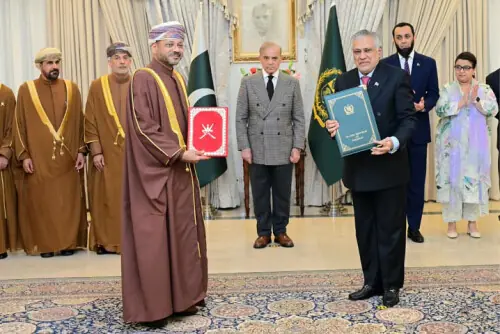
Meanwhile, Oman called on all parties to stop fighting, warning of “dire consequences”.
Oman’s Foreign Minister Badr Albusaidi said that active and serious negotiations mediated by his country between Iran and the US were “yet again undermined”.
“Neither the interests of the US nor the cause of global peace are well served by this...I urge the US not to get sucked in further. This is not your war,” he said on X.
India’s foreign minister said he had spoken with his Israeli and Iranian counterparts about the spiralling Middle East conflict and urged dialogue to end the violence. Iraqi authorities also denounced US-Israeli strikes on Iran and warned against drawing Iraq into the conflict.
Venezuela’s government said it condemned the attacks against Iran as well as reprisals by Iran. The Brazillian government, in a statement, also expressed “grave concern” about strikes.
UN chief condemns strikes
UN Secretary-General António Guterres on Saturday condemned joint US and Israeli strikes on Iran as well as Tehran’s retaliatory attacks across Israel and parts of the Gulf region, warning that the escalating hostilities threaten international peace and security.
“I condemn today’s military escalation in the Middle East. The use of force by the United States and Israel against Iran, and the subsequent retaliation by Iran across the region, undermine international peace and security.”
UN High Commissioner for Human Rights Volker Turk said bombs and missiles were not the way to resolve differences but “only result in death, destruction and human misery.” Civilians, he noted, “end up paying the ultimate price.”
The UN Security Council was scheduled to hold an emergency meeting later on Saturday to discuss the crisis. The session was convened at the request of French President Emmanuel Macron.
The International Atomic Energy Agency (IAEA), called for restraint and said it had not so far detected any radiological impact.
Meanwhile, Britain, Germany and France slammed Iran for retaliating to the strikes with attacks on countries in the Middle East hosting US military bases.
With input from agencies
Published in Dawn, March 1st, 2026