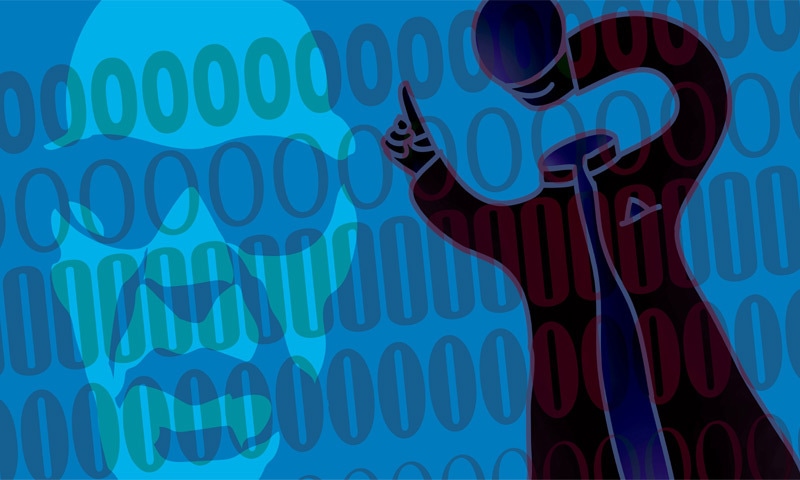

More than a spontaneous eruption of the ‘masses’, the rise of contemporary ‘messianic’ leaders in politics is largely about the transformation of politics into what the American political scientist David Schultz called “politainment”.
Modern-day populism is rarely a struggle for resources by the poor. Instead, it functions as a clash between rival elites, especially via social media, thus turning political parties into digital fan clubs. Although populist rhetoric frequently invokes the people against a ‘corrupt elite’, most modern uprisings are not exactly driven by the underprivileged. These movements represent what the American historian Christopher Lasch famously described as the “revolt of the elites.”
Whereas the 20th century was defined by the revolt of the masses through labour unions and peasant movements, the 21st century has been about a tussle between the mainstream elite and an “alternative elite.” And within these elites lie all forms of contemporary politics: leftist, liberal and rightist. Lasch described the alternative elite as a class mainly comprising urban middle-class professionals and entrepreneurs who have gained significant economic clout but find the path to institutional power blocked by traditional politics and processes.
Rather than seeking to dismantle the system, these alternative elites aim to force a system readjustment, so they can enter what they believe is blocked to them. That’s why they are sometimes also called the “blocked elite.” They cloak their ‘activism’ in the language of a ‘people’s struggle’, even though their core aim is to transform their class-specific economic and political desires into a broader moral mission.
Contemporary populism is not a rebellion of the downtrodden but a power struggle between rival elites who weaponise moral rhetoric and algorithmic crowds in order to become political brands
The 2016 Brexit Campaign in the UK was spearheaded by wealthy financiers and fringe-political elites. They claimed to be “taking back control for the common man.” In reality, the Brexit movement was a vehicle for a specific wing of the British elite to decouple the UK from European regulations that hindered their particular economic ambitions.
Behind Trump was a faction of Silicon Valley billionaires and hedge fund managers who felt stalled by the economic regulations of the established American political and economic system. They used the language of a “workers’ revolt” and of the interests of the “ignored masses” to push for policies that benefitted their own economic ventures and interests.
The alternative elites have altered the relationship between leader and follower, recasting politics as a form of consumerism. Dutch political scientist Cas Mudde notes that modern populism operates by using a rhetorical cocktail, designed to sound anti-status-quo while remaining ideologically ambiguous. When populists promise ‘dignity’ or ‘sovereignty’ or ‘morality’, it’s just like a cola brand promising ‘happiness.’ These promises are emotionally charged but intellectually hollow and lean entirely on the sellers’ own not-very-egalitarian interests.
To paraphrase the French political scientist Bernard Manin, leaders have become brands that appeal to the fantasies and desires of their followers rather than their material needs. According to the Italian sociologist Paolo Gerbaudo, party meetings have transformed from sites of policy debate into mere coordination sessions for viral optics.
A 2018 study by the Norwegian academics Gunn Enli and Linda Therese Rosenberg posits that this model prioritises “an aesthetic of authenticity” over any tangible governance. Supporters of populist leaders are not looking for technical solutions to complex socio-economic problems anymore. They are seeking a feeling of elation, provided by performative spectacles. They are seeking ‘politainment’.
Consequently, the role of the media has also shifted, from being the primary gatekeeper of information to becoming a participant in ‘politainment’. As the Italian professor of political communication Gianpietro Mazzoleni observes, journalists frequently provide the “oxygen of publicity” that populist movements crave.
Indonesian professor of communication Rachmah Ida suggests politicians are scrutinised by the media through entertaining, yet reductive, media formats. The media is now primarily chasing “algorithmic crowds.” The media has transitioned from being a neutral gatekeeper to an active participant in the spectacle of ‘politainment’. According to Mazzoleni, the media now feeds the very beast it aims to scrutinise.
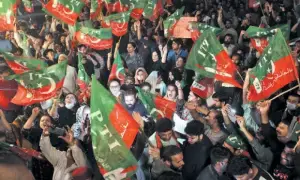
The acceleration of this ‘politainment’ circus is fuelled by a sophisticated digital infrastructure. Unlike the organic, gritty crowds of yesteryears, who gathered on the streets on the pretext of shared material grievances, we are now witnessing the rise of the algorithmic crowd. This is a mass that gestates inside the glow of a smartphone, marinating in digital echo chambers long before it ever manifests as a physical entity on the street. It is a revolution pre-packaged in an app, where the mob is assembled by code before it ever hits the road.
When this digital mob finally mobilises on the streets, any semblance of individual self or a functioning moral compass is promptly binned. Driven by exaggerated social and political anxieties and moral panics circulated through digital platforms, these mobs bypass legal frameworks to deliver what they imagine is ‘street justice.’ This is what happened on May 9, 2023, in Pakistan.
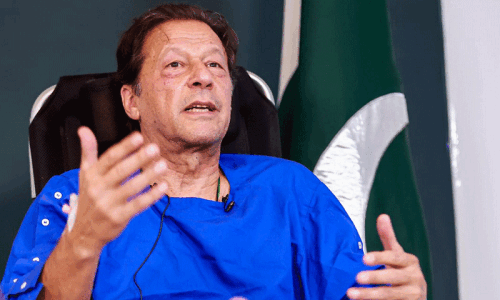
In Pakistan, the trajectory of Imran Khan’s ‘movement’, from its 2011 surge to the volatile upheavals of 2023, serves as a definitive case study of this. His movement was not pioneered by the rural peasantry or the proletariat, but by a frustrated ‘alternative elite.’ Comprising the urban middle class and corporate professionals, these groups felt their upward mobility stifled by the entrenched patronage networks of the established parties or the mainstream elite.
Supported by the then military establishment, Khan and his party sought to force a systemic readjustment that prioritised the anxieties and ambitions of their own class. But they cleverly framed this class-specific ambition as a grand “struggle for Naya Pakistan.”
The Pakistani state had spent decades nurturing rigid nationalist and moralist narratives to ensure stability, only to watch Khan gradually hijack these exact scripts. Using sophisticated digital tools, he turned the state’s own ideological programming against it.
Yet, having already been transformed into a brand, Khan has seen his party and supporters devolve into a digital fan club, where supporters consistently prioritise emotional surges over political expertise. In this collision between the state and Khan’s party, the space for rational, pragmatic discourse has effectively vanished.
As a messianic protagonist, Khan cannot afford the luxury of pragmatism. In his worldview, compromise is never a political necessity but a catastrophic surrender of his self-proclaimed moral ‘mission’. It is within this ideological rigidity that he has trapped himself and the state is perfectly content to let him remain there.
It is a psychological cell far more confining than any physical room he occupies at Adiala Jail.
Published in Dawn, EOS, March 1st, 2026