Sindh approaches ADB for revival of Karachi Circular Railway
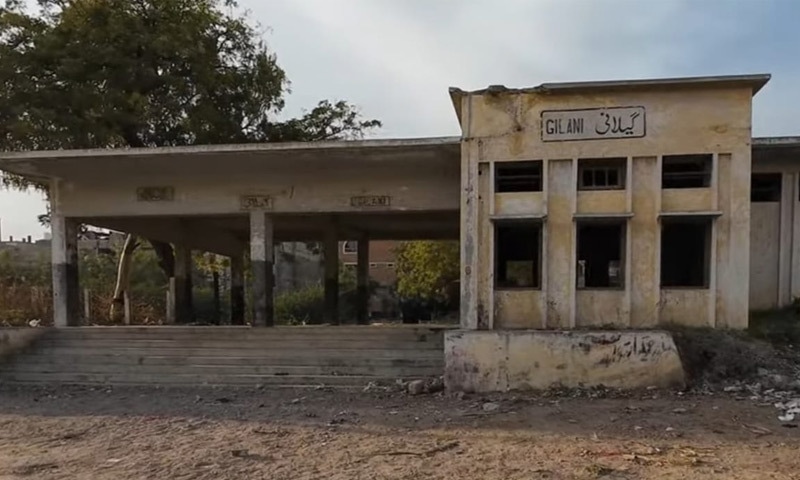
• CM Murad seeks ‘financial and technical’ support from Asian Development Bank for KCR
• ADB ‘agrees in principle’; advises govt to submit documents for board approval
• Decision taken after no progress made under CPEC over the last 10 years: sources
KARACHI: Perturbed by years of failed attempts to revive the Karachi Circular Railway (KCR) with support from China, the Sindh government has asked the Asian Development Bank (ADB) to finance the circular rail network, signalling a renewed effort to get the city’s much-awaited project back on track.
While officials kept mum as to whether Beijing refused to finance the KCR under the China-Pakistan Economic Corridor (CPEC), sources said Sindh Chief Minister Syed Murad Ali Shah approached the ADB after the project remained stalled for years due to technical snags and bureaucratic delays.
The KCR was included in the CPEC in December 2016 at the request of the Sindh government and later approved by the Executive Committee of the National Economic Council in 2017. However, the PTI government opted to revive it on a build-operate-transfer basis under a public-private partnership model, with heavy subsidies for the private partner.
That plan was later abandoned by the subsequent PDM-led government, which shifted back to seeking Chinese investment under CPEC. However, the project continued to face delays and even a planned visit by the Sindh CM to China for financial and technical assistance in September 2025 never materialised.
In November 2025, Prime Minister Shehbaz Sharif had assured the Sindh CM that the federal government in collaboration with the provincial government would revive the project, but there was no development since then.
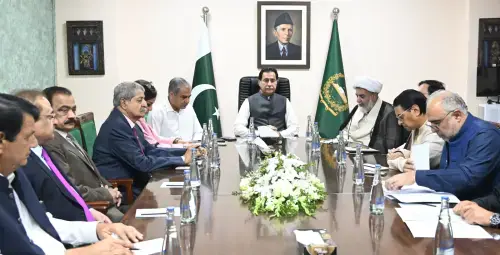
On Wednesday, hopes of its revival rekindled when the CM met a delegation of the ADB and declared that KCR was not just a transport project but “a lifeline for the city”.
“We want to revive KCR with modern infrastructure and integrated urban planning. With ADB’s technical and financial support, we can transform Karachi’s mass transit system and provide affordable, safe transport to millions,” the CM told the ADB delegation.
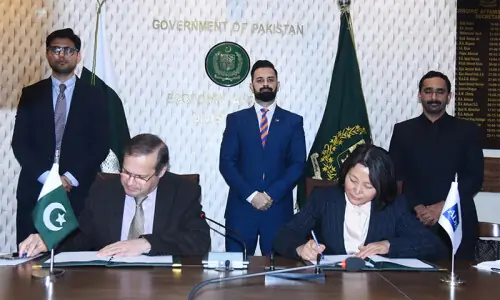
The meeting, held at the CM House, was attended by Chief Secretary Asif Hyder Shah, ADB Country Director Emma Fan and others.
According to a press statement, the chief minister told the delegation that the KCR remained a flagship priority for the provincial government and the megacity urgently needed the KCR so it could serve as a feeder to various Bus Rapid Transit (BRT) lines and help resolve the city’s transport issues.
Seeking ADB’s financial and technical support to revive the KCR, he said that since the Bank was already supporting the provincial government in developing the Red Line BRT project, this was the right time to also support the revival of the KCR project.
The chief minister noted that restoring the KCR would significantly reduce congestion, lower carbon emissions and support inclusive economic growth in Karachi.
“The ADB country director agreed in principle to the KCR project and advised the provincial government to submit the necessary documents to be placed before the bank’s board for approval,” the CM House statement said.
The KCR, originally launched in the 1960s to link Karachi’s suburbs with the city centre, was shut down by the late 1990s due to mismanagement, underinvestment and encroachments and its revival has been held back mainly by funding gaps.
In the 2000s and 2010s, Japan’s JICA conducted feasibility studies and pushed for modernisation, but funding and bureaucratic delays stalled progress. Later, in 2015, KCR was proposed as part of the CPEC projects, but no major breakthrough materialised in the last 11 years.
E-bus service
The Sindh CM and ADB also agreed to expand the electric bus services in Karachi and other divisional headquarters of Sindh under a sustainable mobility framework.
Both sides agreed to deepen development cooperation and expedite priority transport projects across the province.
The chief minister said the provincial government was committed to clean and green transport solutions to improve air quality and urban mobility.
“Electric buses will not only modernise public transport but also help us tackle climate change and reduce fuel dependence,” he said.
“The ADB country director discussed possible financing options, including project readiness financing and co-financing arrangements, to support these initiatives,” said the press statement.
“The meeting agreed that the provincial government would submit the e-buses proposal to the ADB for necessary action,” it added.
Published in Dawn, February 26th, 2026