FM Dar to undertake 3-day Saudi visit, will attend OIC session on Israel pursuing West Bank annexation: FO
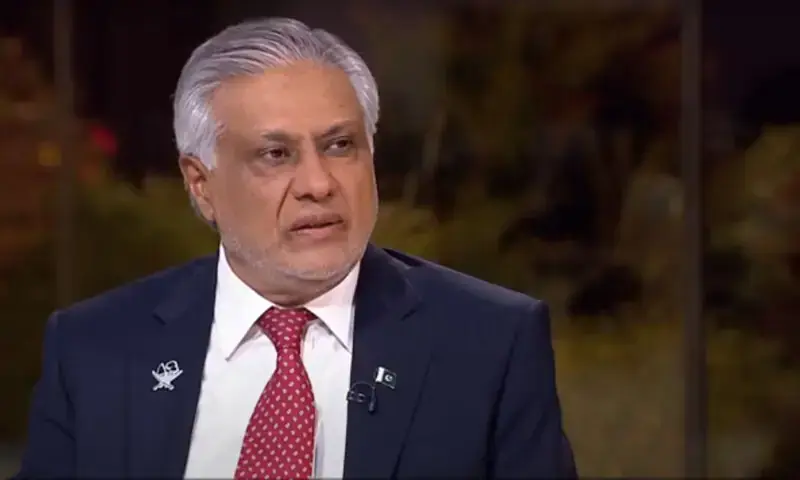
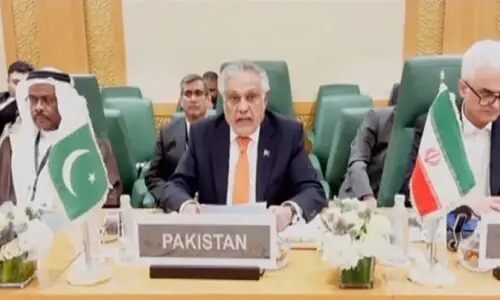
Deputy Prime Minister and Foreign Minister Ishaq Dar will embark on Thursday on a three-day visit — from February 26-28 — to Saudi Arabia to participate in the Open-Ended Extraordinary Ministerial Session of the Organisation of Islamic Council (OIC) Executive Committee, according to the Foreign Office (FO).
The FO said in a statement on Wednesday that the ministerial session would be held on February 26 in Jeddah “to consider the illegal decisions of the Israeli occupation authorities aimed at expanding settlements, pursuing annexation, and attempting to impose Israeli sovereignty over the Occupied West Bank”.
The meeting is taking place against the backdrop of the Israeli government approving a proposal to register large areas of the occupied West Bank as “state property” for the first time since the occupation of the territory in 1967.
The move is in violation of international law, which states that an occupying power cannot confiscate land in occupied territories.
At the ministerial session in Jeddah, FM Dar would share Pakistan’s perspective on the “latest illegal measures by Israel to convert areas of the Occupied West Bank into so-called ‘state land’“, the FO said.
He would also hold bilateral meetings with his counterparts from OIC member states on the sidelines of the ministerial meeting, the FO statement said, adding that he would also “undertake brief visits to the Holy Cities”.
Earlier, several Muslim and European countries, including Pakistan, condemned Israeli attempts aimed at the “unacceptable de facto annexation” of Palestinian land in the occupied West Bank.
“We are clear that Israel’s illegal settlements, and decisions designed to further them, are a flagrant violation of international law, including previous United Nations Security Council Resolutions and the 2024 Advisory Opinion of the International Court of Justice.
“These latest decisions are part of a clear trajectory that aims to change the reality on the ground and to advance unacceptable de facto annexation,” a joint statement by the countries said.
The Palestinian Presidency has also slammed the Israeli government’s decision, calling it a “serious escalation” and saying the Israeli move effectively nullifies signed agreements and clearly contradicts resolutions of the UN Security Council, according to Wafa news agency.
Palestinian group Hamas has also condemned the decision, calling it an attempt “to steal and Judaise lands in the occupied West Bank by registering them as so-called ‘state lands’”.
Most Palestinian land is not formally registered because it is a long, complicated process that Israel stopped in 1967. Registration of land establishes permanent ownership.