Israel moves to claim West Bank land as ‘state property’
• Palestinian presidency calls the move a ‘serious escalation’
• Hamas condemns Tel Aviv’s attempt ‘to steal and Judaise lands’
• Israeli strikes kill 12 more people in less than 24 hours despite truce
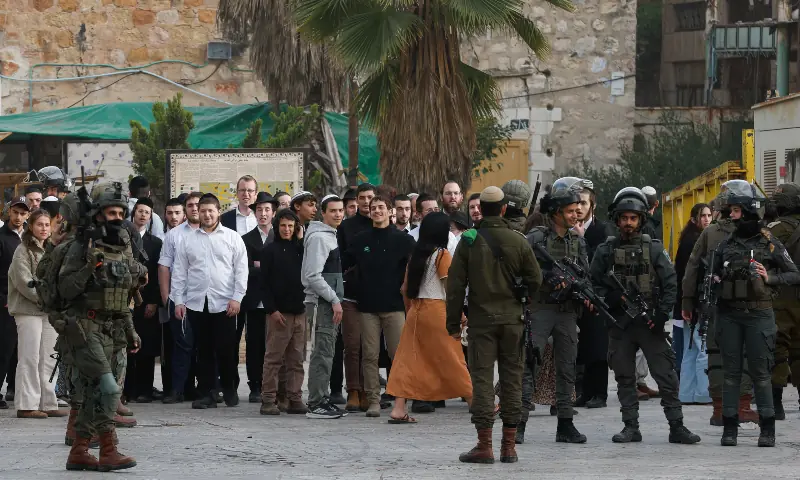
JERUSALEM: The Israeli government has approved a proposal to register large areas of the occupied West Bank as “state property”, for the first time since the Israeli occupation of the territory in 1967, in clear violation of the international law that states an occupying power cannot confiscate land in occupied territories, Al Jazeera reported.
The development was announced by Israeli public broadcaster KAN on Sunday when Israeli forces killed at least 12 Palestinians in less than 24 hours, according to Gaza’s civil defence agency.
The proposal, approved by the Israel security cabinet, was submitted by Finance Minister Bezalel Smotrich, Justice Minister Yariv Levin, and Defence Minister Israel Katz. “We are continuing the settlement revolution to control all our lands,” Smotrich said.
The Palestinian Presidency slammed the Israeli government’s decision, calling it a “serious escalation” and saying the Israeli move effectively nullifies signed agreements and clearly contradicts resolutions of the UN Security Council, Wafa news agency reported.
Most Palestinian land is not formally registered because it is a long, complicated process that Israel stopped in 1967. Registration of land establishes permanent ownership. International law states an occupying power cannot confiscate land in occupied territories.
However, Katz described the move as an “essential security and governance measure designed to ensure control, enforcement, and full freedom of action for the state of Israel in the area”, the Jerusalem Post stated.
Palestinian group Hamas condemned the decision, calling it an attempt “to steal and Judaise lands in the occupied West Bank by registering them as so-called ‘state lands’”.
In a statement, the group called the approval “a null and void decision issued by an illegitimate occupying power. It is an attempt to forcibly impose settlement and Judaisation on the ground, in flagrant violation of international law and relevant UN resolutions.”
De facto annexation
Analysts describe the move as a de facto annexation of the Palestinian territory, warning that it will profoundly reshape its civil and legal landscape by eliminating what the Israeli ministers called longstanding “legal obstacles” to the expansion of illegal settlements there.
Speaking from Ramallah, political analyst Xavier Abu Eid told Al Jazeera that Israel is “packing annexation into some sort of a bureaucratic move”. He said the International Court of Justice in 2024 said that Israeli actions amount to annexation of the occupied West Bank.
“People should understand this is not just a step towards annexation, we are experiencing annexation as we speak today.
What the Israeli government is doing is implanting their political programme — a policy that has already been presented,” he said.
Strikes amid ceasefire
In multiple strikes since dawn on Sunday, Israeli forces killed at least 12 people, Gaza’s civil defence agency reported.
Despite a US-brokered truce that entered its second phase last month, violence has continued in the Palestinian territory, with Israel and Hamas blaming each other for violating the agreement.
The civil defence agency said five people were killed and several injured in the attack on a tent sheltering displaced people in Jabalia, five others were killed and several injured in a separate early morning strike in the southern city of Khan Yunis, and another Palestinian was killed in Israeli shelling in Gaza City. Besides, Israeli gunfire killed one person in Beit Lahia in north Gaza, it added.
“Israel doesn’t understand ceasefires or truces,” said Osama Abu Askar, who lost his nephew in the Jabalia attack.
He said the people were killed as they slept. Gaza’s health ministry said at least 601 Palestinians have been killed since the truce began, while Israel claimed at least four of its soldiers were killed in the same period.
Published in Dawn, February 16th, 2026