0
0


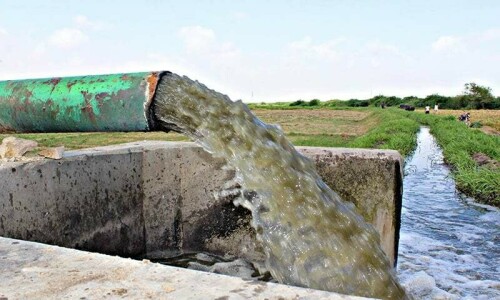
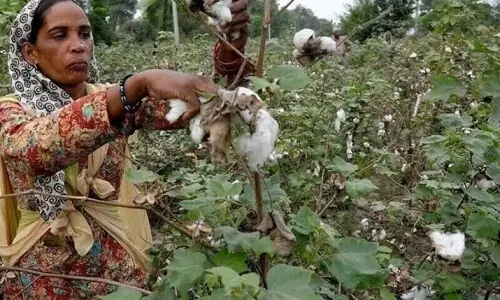
PUNJABS agricultural sector is increasingly dependent on groundwater, with withdrawals now exceeding the aquifers natural recharge rate. This growing imbalance is steadily lowering water tables across the province.
The Punjab Irrigation Department`s (PID) annual pre- and post-monsoon data of water tables, based on piezometer readings from more than 3,000 boreholes, reveals a persistent decline in groundwater levels in nearly all districts. Pakpattan, Okara, and Sahiwal are among the most affected districts, with water levels falling by 1.81ft, 1.72ft, and 1.52ft per year respectively. Likewise, Vehari and Multan face similar depletion, with annual declines of 1.31ft and 1.08ft.
In volumetric terms, the strain on aquifers is even more alarming. According to estimates by the PID, annual groundwater extraction in the Okara and Rahim Yar Khan districts stands at approximately 4.15 million acre-feet (MAF) and 4.08 MAF, respectively.
To put this into perspective, each of these districts is using tube wells to extract groundwater equivalent to more than half the storage capacity of Mangla Dam now Pakistan’s largest reservoir after the completion of the Mangla Raising Project, with a total capacity of 7.5 MAF.
The reliance on groundwater for crop irrigation continues to rise, driven by a mix of agronomic, economic, and policy factors.
As Pakistan continues to grapple with flooding, unmanaged excess surface water could be used to recharge over stressed aquifers using existing, abandoned canal infrastructure
Over the past several years, the area under water-intensive rice has steadily expanded, largely at the expense of cotton and, more recently, sesame.
Due to shrinking landholdings and rising input costs, the economic pressure on farmers is mounting. In response, they are increasing cropping intensity in irrigated areas using short-duration seed varieties.
This is placing additional strain on groundwater resources.
Moreover, the expansion of cultivated land has driven up irrigation water demand.
According to the 7th Agriculture Census of Pakistan (2024), Punjab’s cultivated area has increased by nearly 10 per cent, from 26.97m acres in 2010 to 29.64m acres in 2024. Much of this newly cultivated land depends heavily on groundwater for irrigation. Consequently, land classified as irrigation by tube well only has expanded from 4.89m acres in 2010 to 9.98m acres in 2024.
Collectively, all these factors have contributed to the increase in the number of tube wells across Punjab, which now exceed 1.3m. Solar-powered tube wells, in particular, have provided fresh momentum as they replace costly electric and diesel-run systems. Hence, the widespread adoption of solar technology has made groundwater pumping cheaper, easier, and largely unregulated. As a result, groundwater withdrawals in Punjab have now surpassed 53 MAF nearly matching the province`s entire allocated share of canal (surface) water, which stands at 56 MAF.
There is nothing inherently wrong with groundwater pumping; the real concern arises when withdrawals persistently exceed aquifer recharge. In Pakistan, recharge traditionally occurs through natural processes, including rainfall infiltration, river and canal seepage, and the downward percolation of excess irrigation water from agricultural fields. However, in view of excessive groundwater withdrawals, these natural means are insufficient to replenish the aquifers.
Many countries and cities worldwide have already experienced acute water crises, with Tehran (Iran) serving as a recent and sobering example. Punjab also risks experiencing a similar fate unless strategic interventions are undertaken to recharge over stressed aquifers and avert a future water crisis, without any delay.
Unfortunately, our bureaucracy and political leadership have so far favoured policy responses that rely heavily on commandand-control and price-based deterrents, such as licensing tube wells or imposing a tariff on groundwater extraction. While presented as solutions, these measures will place an immense burden on farmers` livelihood and make their lives miserable. Moreover, such acts create opportunities for rent-seeking and corruption at lower levels of enforcement.
The challenge, therefore, is not merely to restrict groundwater use, but to restore balance between withdrawal and recharge.
Therefore, instead of relying primarily on regulatory or coercive measures, there is an urgent need to adopt strategies that enhance aquifer recharge, and strengthen the long term resilience of the water system.
One promising avenue lies in addressing another persistent issue: Pakistan continues to grapple with unmanaged excess surface water during periods of intense rainfall and flooding. This challenge presents a strategic opportunity to recharge over stressed aquifers by using existing canal infrastructure and introducing scalable, farm-level recharge wells (boreholes).
The PID has several abandoned canals and emergency escape channels that could be repurposed as groundwater recharge ponds. Similarly, thousands of villages historically had drinking water ponds on government lands. While many of these ponds have been encroached upon, a significant number still remain and could be converted into effective groundwater recharge structures.
At the farm level, groundwater recharge wells widely adopted in many countries have demonstrated both cost-effectiveness and operational efficiency. However, a dedicated project under the Annual Development Program me is required to promote these wells in Punjab. Along with recharging groundwater, they would also provide farmers with an effective way to drain excess water from their fields during heavy rains.
In conclusion, the clock is ticking and the stakes are high; what is urgently needed is not just technical solutions, but the political will and a fundamental shift in the mindset of our decision makers who tend to act reactively only after a crisis becomes irreversible.
Chaudhary Mohammad Ashraff is the former director general (on-farm water management) of the Punjab Agriculture Department, and Khalid Wattoo is a development professional and a farmer.
Published in Dawn, The Business and Finance Weekly, February 16th, 2026