FESTIVAL: THE FRAGILE PULSE OF WORDS

Literary festivals require a delicate act of curation — a heady mix of vision and restraint. However, the 17th edition of the Karachi Literature Festival (KLF), which was held between February 6 and 8, owed much of its vitality to guest speakers keen to put on a good show.
This year’s theme, ‘Literature in a fragile world’, was fuelled by an unswerving, if wildly optimistic, belief in the transformative power of the written word. In his opening address, Oxford University Press Pakistan Managing Director Arshad Saeed Hussain likened literature to “a steadfast pulse that refuses to flat line, even as the world becomes harsh and discordant.”
Eminent critic Nasir Abbas Nayyar built on this motif, albeit without resorting to lofty proclamations or static stereotypes. In a soul-stirring keynote address, he explored how stories subsume identities rooted in memory. He argued that any attempt to dismiss our identity produces a rupture and often results in a conscious effort to rewrite our stories.
However, literature isn’t just a force of liberation in troubled times; it is also subject to categorisations that are reinforced by literary awards. The KLF prizes, which are announced every year at the opening ceremony, have become a benchmark in determining which creative voices hold value. The KLF-Getz Pharma Prize for Urdu Poetry was awarded to Aahang by Dilawar Ali Azar, whereas Naseer Soomro’s Namak Ki Betiyan won the Urdu prose prize.
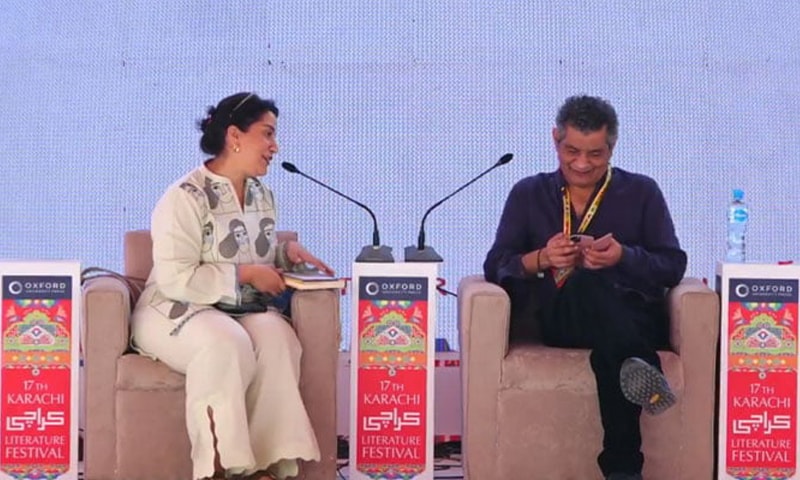
The 17th Karachi Literature Festival was fuelled by an unswerving, if wildly optimistic, belief in the transformative power of the written word and was notable for its inclusivity of provincial languages
Incidentally, the three novels nominated for the KLF-Getz Pharma English Fiction Prize for 2026 — Outside Women by Roohi Choudhry, Ferdowsnama by Shandana Minhas and When the Fireflies Dance by Aisha Hassan — have been released by foreign presses. The decision to recognise books from international presses sends a subtle message to Pakistan’s active and indomitable English-language publishers that they need to do more to measure up. Be that as it may, it was reassuring to witness the scintillating Ferdowsnama clinch the prize.
Regrettably, the master of ceremonies mispronounced the name of the winning book, but promptly corrected the error. While Minhas wasn’t present to receive the honour, her touching and inspirational message, read aloud by the MC, helped salvage what had undoubtedly been an awkward moment. “[Ferdowsnama] was a tough sell, and this award will hopefully help it find more readers,” stated the message. “[The award] will hopefully also remind writers in the audience... that the novel form is called ‘novel’ for a reason. Take your freedom on the page and run with it.”
The crowning glory of this year’s festival was the Sindhi mushaira — a testament to the abiding influence of provincial languages on our creativity. This feature should be repeated in subsequent iterations of the festival. Another highlight was the inter-school debate on the topic, ‘Literature Today: Elitist or Essential’. It was a welcome change to witness students from Karachi Grammar School, Lyceum and Cedar College, instead of seasoned professionals, deliberating on the subject.
A large number of sessions drew attention to the literary contributions of noted authors, including those who aren’t often given their due in mainstream discourse. Rauf Parekh launched Intikhab-i-Kalaam, his compilation of multifaceted Urdu author Shanul Haq Haqqee’s poems. In a discussion with Najeeba Arif, Parekh said Haqee had a deep awareness of the language and wrote with a “love for the Urdu lughat [lexicon].” Speaking at the launch, Haqee’s son, Shayan, said the eminent Urdu author wasn’t driven by a desire for extensive self-promotion and wrote passionately, yet quietly, during his lifetime.
A conversation on poet, critic and playwright Atta Shad primarily unfolded in Balochi and occasionally transitioned into Urdu. Chaired by Zahida Raees Raji, the discussion also turned an intimate gaze on Shad’s Balochi as well as Urdu poetry. “[Shad’s] Urdu poetry incorporated some Balochi literary traditions and techniques, and introduced a new mode of expression for Urdu readers,” stated Waheed Noor, author of Sukoot Bol Para. “This is an important feat because the Urdu ghazal was taking on a new character at the time, with poets such as Faiz Ahmed Faiz, Noon Meem Rashid, and Ahmed Faraz at their peak.”
Numerous Urdu books were launched, including poetry collections by Syed Kashif Raza and Kishwar Naheed. The former’s collection of poems, titled Gul-i-Dogana, was also shortlisted for the KLF-Getz Pharma Prize for Urdu Poetry 2026.
Actor, author and theatre practitioner Sameena Nazir launched her third book, Jaazu Bhayya. In a lively conversation with journalist and columnist Wusutullah Khan, the multifaceted author admitted to being a storyteller who, like water, moulds herself according to the situation.
“My mother was an exceptional goh [storyteller],” she said. “She’d travel to India and return with an arsenal of stories that we’d absorb.” Nazir explained how her mother’s oral narratives became the measure of her imagination, and it seemed as though she’d seen the places and met the people she was told about. “One of my stories depicts that period,” she said. “Some readers were shocked as to how I’d witnessed it so closely. I told them it was through my mother’s anecdotes.” Nazir urged writers to portray characters in an “unbiased” manner, without allowing them to be tainted by their own narrow worldview.
Within the domain of English literature, the festival boasted a diverse array of talks showcasing emerging writers, dystopian literature and poetry. ‘Karachi Between the Lines’, a panel discussion moderated by critic Nusrat Khwaja, gave three Pakistani English-language authors — including award-winning author Zain Saeed — the opportunity to explore the creative potential of the city by the sea.
“[We were] trying to tackle the impossible task of discussing Karachi,” Saeed remarked after the panel discussion. Despite the wide scope of the subject, Saeed still felt the session was “interesting and thought-provoking”, observing that his fellow panellists read some exceptional pieces. “I would’ve liked to discuss more of Karachi as a multiplicity [and] an unknowable entity, but sadly didn’t have the time,” he added.
Some intriguing titles were launched at the festival, including Shueyb Gandapur’s well-received Coming Back: The Odyssey of a Pakistani Through India and poet Adrian H. Husain’s much-awaited novel Dream Work of Lisa D. Mohammed Hanif’s Rebel English Academy, one of the most anticipated books of the year, was also launched at the festival.
Moderated by author Sanam Maher, the session began with Hanif reading from the first chapter. “This novel helped me revisit the hanging of Zulfikar Ali Bhutto and understand how it impacted ordinary lives,” he said. Hanif claimed no character is easy to write, but his protagonist, the poet Baghi, took on a life of his own as he was relatable. “Even if you visit a street without a gutter, you’ll find a poet residing there,” he said in his trademark wry and humorous manner.
The two sessions where historian Sam Dalrymple assumed centre-stage — which included the launch of his debut book Shattered Lands: Five Partitions and the Making of Modern Asia — were well-attended and offered some enriching insights on the intricacies of Partition. An engaging session on Jane Austen’s work captured her relevance as a modernist novelist, dismissing the notion that she was a potential cheerleader for Empire.
On the whole, the three-day annual literary extravaganza gave professionals and emerging talent the opportunity to showcase their creative and intellectual strengths.
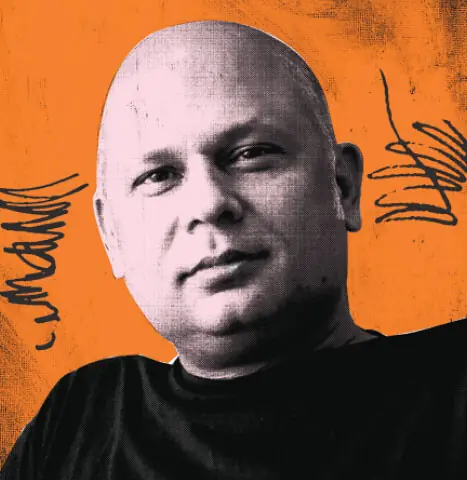
The writer is the author of the critically acclaimed novels Typically Tanya and No Funeral for Nazia.
X: @TahaKehar
Published in Dawn, Books & Authors, February 15th, 2026