Trade pact signed with Cambodia
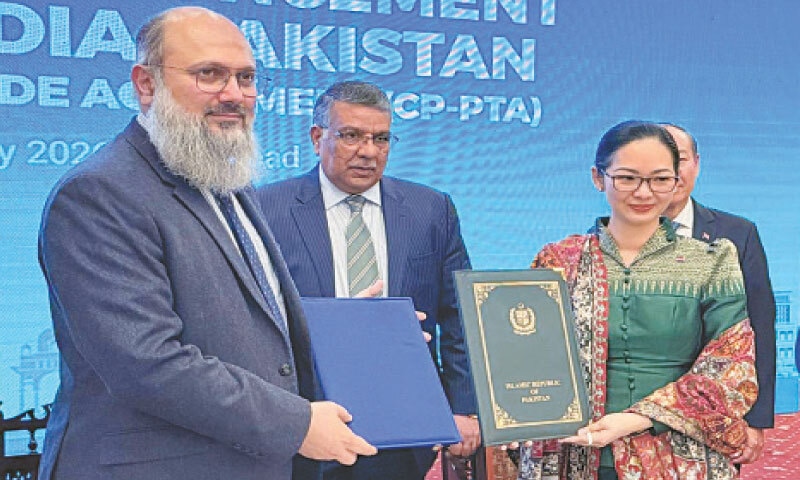
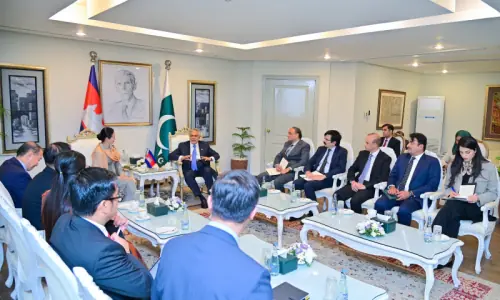
ISLAMABAD: Pakistan and Cambodia on Wednesday signed an agreement between their trade promotion organisations (TPOs) at the conclusion of the second meeting of the Joint Trade Committee (JTC).
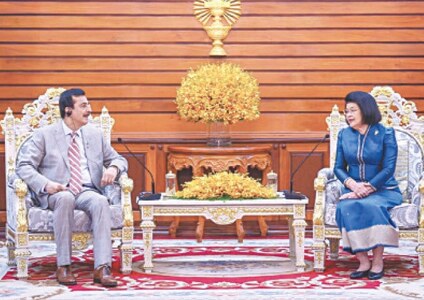
The agreement was signed by Commerce Minister Jam Kamal and Cambodia’s Minister of Commerce Cham Nimul, who co-chaired the meeting held in the capital.
Mr Kamal said the JTC had served as a structured and effective platform for reviewing progress, addressing challenges, and exploring new avenues for cooperation. While noting encouraging growth in bilateral trade, he underscored the considerable untapped potential in market access, investment and sectoral collaboration.
He reaffirmed Pakistan’s commitment to advancing discussions on a Preferential Trade Agreement (PTA) to improve market access and diversify trade baskets.
During the meeting, Pakistan highlighted the export potential of rice, pharmaceuticals, textiles, and agricultural products, while Cambodia identified opportunities in cassava, cashew nuts, footwear, and rubber products. Both sides agreed to facilitate direct engagement between their business communities to translate these complementarities into tangible trade flows.
The Board of Investment presented opportunities in energy, information technology, tourism and infrastructure, positioning Pakistan as a gateway to Central Asia.
Cambodia, for its part, outlined incentives under its new investment law and Special Economic Zones (SEZs), proposing itself as a strategic production base for Pakistani enterprises seeking access to Asean and Regional Comprehensive Economic Partnership (RCEP) markets.
The two sides agreed to expand cooperation in multiple sectors. In agriculture, they decided to establish a technical working group. In aviation, they agreed to nominate focal persons to advance an Air Services Agreement. They also resolved to exchange focal points for a double taxation avoidance agreement and explore memorandums of understanding in health cooperation.
Other areas of collaboration include standards and conformity assessment, cooperation in the non-bank financial sector, information and communication technology — particularly digital transformation, artificial intelligence and cyber security — as well as labour and vocational training exchanges.
Published in Dawn, February 12th, 2026