Iran FM looks to more nuclear talks, but warns US against any attack
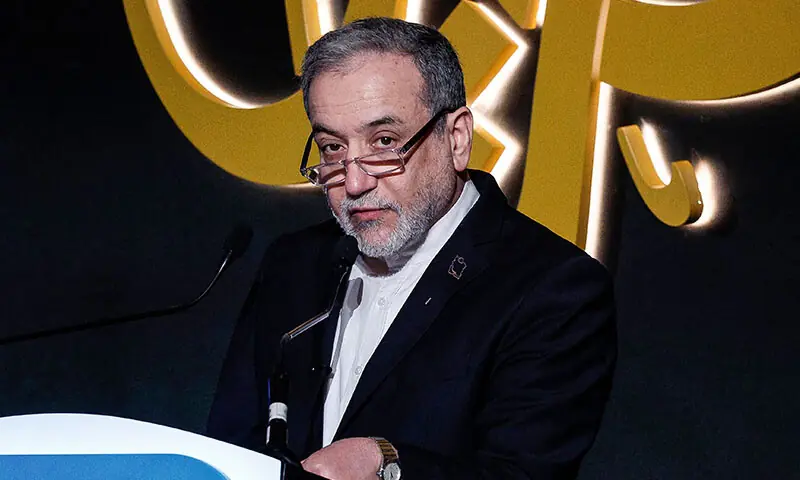

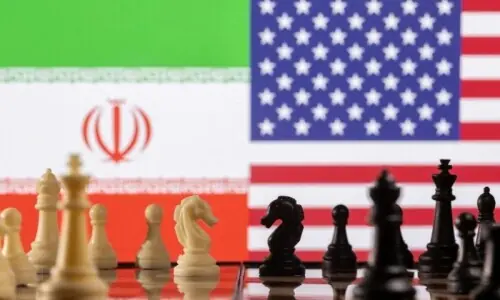
Iranian Foreign Minister Abbas Araghchi said on Saturday he hoped talks with the United States would resume soon, while reiterating Tehran’s red lines and warning against any American attack.
According to excerpts published on his official Telegram channel during an interview with the Al Jazeera network, Araghchi said that Iran’s missile programme was “never negotiable” in Friday’s talks in Oman.
He warned that Tehran would target US bases in the region if the US attacked Iranian territory.
However, Araghchi also said that despite the talks in Muscat being indirect, “an opportunity arose to shake hands with the American delegation”.
He called the talks “a good start”, but added that building trust would take time. He said the talks would resume “soon”.
US President Donald Trump on Friday called the talks “very good” and pledged another round of negotiations next week.
Despite this, he signed an executive order effective from Saturday that called for the “imposition of tariffs” on countries still doing business with Iran.
The United States also announced new sanctions against numerous shipping entities and vessels, aimed at curbing Iran’s oil exports.
More than a quarter of Iran’s trade is with China, with $18 billion in imports and $14.5bn in exports in 2024, according to World Trade Organisation data.
Araghchi told Al Jazeera that nuclear enrichment was Iran’s “inalienable right and must continue”.
‘Defence issue’
“We are ready to reach a reassuring agreement on enrichment,” he said. “The Iranian nuclear case will only be resolved through negotiations.”
He also said Iran’s missile programme was “never negotiable” because it relates to a “defence issue”.
Washington has sought to address Iran’s ballistic missile programme and its support for proxies in the region — issues which Israel has pushed to include in the talks, according to media reports.
Tehran has repeatedly rejected expanding the scope of the negotiations beyond the nuclear issue.
Friday’s unprecedented talks between the two arch enemies came amid a major US military buildup in the region in the wake of Iran’s crackdown on protests that began in late December, driven by economic grievances.
Aragchi warned that Iran “will attack their (US) bases in the region” if Washington targets Iranian territory.
The negotiations were the first since nuclear talks between Iran and the United States collapsed last year following Israel’s unprecedented bombing campaign against Iran, which triggered a 12-day war.
During the war, US warplanes bombed Iranian nuclear sites.
Araghchi told Al Jazeera that if attacked again, “we will attack their bases in the region”, referring to the United States.
At Friday’s talks in Oman, the US delegation was led by Trump’s Middle East envoy Steve Witkoff and his influential son-in-law Jared Kushner.
“In a very positive atmosphere, our arguments were exchanged and the views of the other side were shared with us,” Araghchi told Iranian state TV after the talks, adding that the two sides had “agreed to continue negotiations”.
Speaking to the official IRNA news agency, Araghchi expressed hope that Washington would refrain from “threats and pressure” so that “the talks can continue”.
On Saturday, Araghchi criticised what he labelled a “doctrine of domination” that allows Israel to expand its military arsenal while pressuring other states in the region to disarm.
He was speaking at the Al Jazeera Forum conference in Qatar, but in his speech did not refer to Friday’s talks in Oman with the United States.