‘Back-channel talks underway after Pakistan decide to skip India T20 World Cup clash’


 20
20

LAHORE: The government of Pakistan’s decision on Sunday not to play its T20 World Cup group match against India, scheduled for Feb 15, has prompted the International Cricket Council (ICC) to initiate back-channel efforts to resolve the issue and avoid significant financial losses, Dawn has learnt.
The decision was announced around 15 days ahead of the scheduled fixture, giving the ICC sufficient time to explore possible options, including accommodating any reservations Pakistan may have, sources said.
According to sources, a couple of other cricket boards have also stepped in to assist the ICC in its efforts to reach an amicable solution with the Pakistan Cricket Board (PCB).
Pakistan announced its decision without citing a specific reason for boycotting the match against India. In the past, however, Australia and the West Indies forfeited their World Cup matches against Sri Lanka in 1996 on security grounds following instructions from their governments. England and New Zealand similarly forfeited matches against Zimbabwe and Kenya, respectively, during the 2003 World Cup on political grounds.
Some quarters have termed Pakistan’s move a mistake, noting that unlike previous instances involving other teams, no explicit justification was provided. Sources, however, said the PCB has factored this into its position and plans to rely on proceedings of the ICC’s Dispute Resolution Committee (DRC) in a case filed by Pakistan against India in 2018.
That case stemmed from India’s failure to honour a memorandum of understanding (MoU) signed between the PCB and the Board of Control for Cricket in India (BCCI) in 2014, under which the two countries were to play six bilateral series between 2015 and 2023.
In return, the PCB had supported the ICC’s ‘Big Three’ revenue-sharing model, under which India, Australia and England received a larger share of ICC revenues.
“During the hearing, the PCB asked the BCCI to explain its refusal to tour Pakistan,” a source familiar with the 2018 proceedings said. “Initially, the BCCI stated that it was not obliged to provide a reason. Later, it claimed that the Indian government had not allowed the tour.”
When the PCB requested written instructions from the Indian government, the BCCI responded that such decisions were conveyed verbally and not documented, the source added.
Despite this, sources expressed concerns that, as in 2018, the BCCI influence within the ICC could again result in a ruling against Pakistan, potentially leading to financial penalties or sanctions. In such an event, the government of Pakistan may consider approaching an international court of arbitration, sources said.
It is believed that Pakistan’s decision was influenced by a recent ICC ruling involving Bangladesh. The ICC had rejected Bangladesh’s request to shift its World Cup matches from India to Sri Lanka on security grounds and instead excluded Bangladesh from the tournament, replacing it with Scotland. The decision was passed by a 14-2 majority, with only Pakistan and Bangladesh voting against the move.
The India-Pakistan fixture is considered the most lucrative match in world cricket and a cornerstone of the ICC’s revenue model. Media reports estimate its overall commercial value at around $500 million, factoring in broadcast rights, advertising premiums, sponsorships, ticket sales and ancillary commercial activity. Advertising slots during an India-Pakistan T20 typically fetch between Rs2.5 million and Rs4 million for 10 seconds.
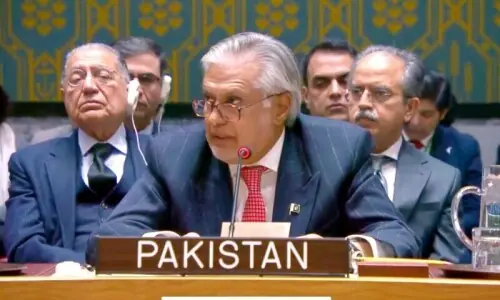
Following Pakistan’s announcement, the ICC issued a strongly worded statement, urging the PCB to “explore a mutually acceptable resolution which protects the interests of all stakeholders”.
“The ICC notes the statement made by the government of Pakistan regarding the decision to instruct its national team to selectively participate in the ICC Men’s T20 World Cup 2026,” the statement said. “While the ICC awaits official communication from the PCB, selective participation is difficult to reconcile with the fundamental premise of a global sporting event.”
“ICC tournaments are built on sporting integrity, competitiveness, consistency and fairness, and selective participation undermines the spirit and sanctity of the competition,” it added.
While acknowledging the role of governments in matters of national policy, the ICC warned that the decision was “not in the interest of the global game or the welfare of fans worldwide, including millions in Pakistan”.
There are reports that even if Pakistan maintains its stance, the Indian team will travel to Colombo for the scheduled match. If Pakistan do not field a team at the appointed time, India are expected to claim the points under tournament regulations.
Published in Dawn, February 3rd, 2026