Equities end January on cautious note amid economic worries


 0
0
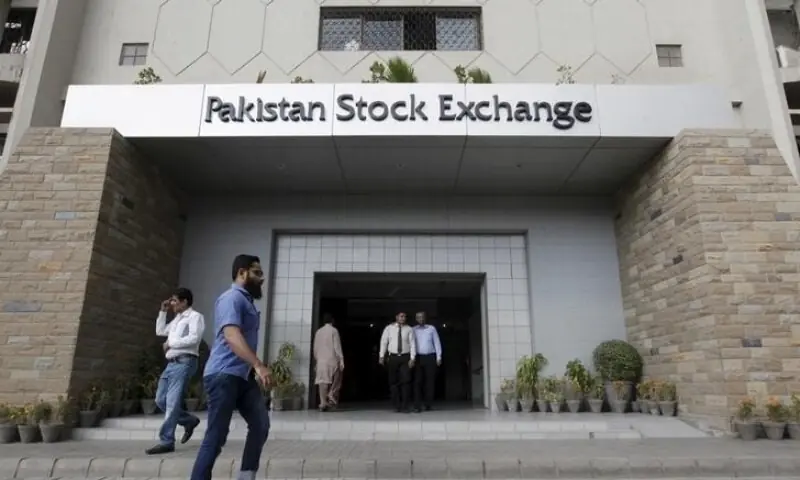

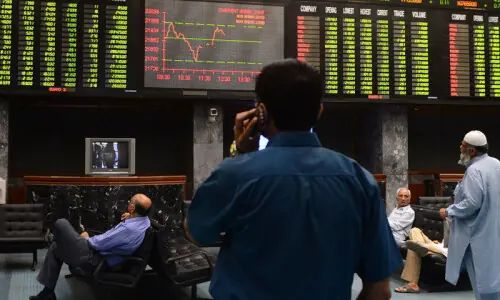
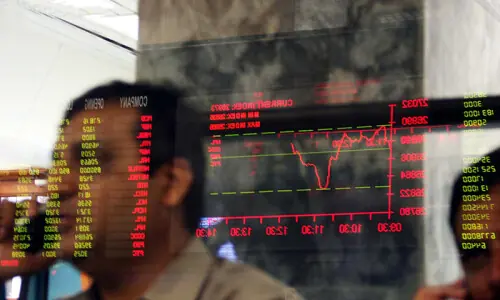
KARACHI: The Pakistan Stock Exchange (PSX) wrapped up the first month of calendar year 2026 on a firm footing, scaling fresh all-time highs. However, a sharp sell-off in the final week dragged the benchmark lower as investors booked profits amid mounting economic concerns and geopolitical tensions.
According to Topline Securities Ltd, the KSE-100 index extended its upward momentum during January, gaining 10,120 points, or 5.8 per cent, month-on-month, mainly on the back of fresh equity allocations typically seen at the start of the year.
However, sentiment weakened towards the end of the month after the State Bank of Pakistan (SBP) kept its policy rate unchanged at 10.5pc, contrary to market expectations of a 50-75 basis points cut.
Key macroeconomic developments during the month offered a mixed picture. Consumer price inflation eased to 5.61pc in December 2025, down from 6.15pc a month earlier. Workers’ remittances rose to $3.6 billion, marking a 17pc increase year-on-year and 13pc growth month-on-month. Car sales reported by the Pakistan Automotive Manufacturers Association stood at 13,280 units, up 35pc year-on-year but down 14pc compared to November.
The external account came under pressure as the current account posted a deficit of $244 million in December, compared with a revised surplus of $98m in November. Foreign direct investment recorded a net outflow of $135m against an inflow of $180m in the previous month.
Policy rate pause, weak results and geopolitics dent sentiment
Meanwhile, Fitch Ratings affirmed Pakistan’s long-term foreign-currency issuer default rating at ‘B-’ and assigned a ‘RR4’ recovery rating. Prime Minister Shehbaz Sharif also announced a 300bps cut in the Export Refinance Scheme rate to 4.5pc to support exporters.
Market participation improved during the month, with average daily traded volumes rising 25pc month-on-month to 1.08bn shares, while average daily traded value increased 45pc to Rs108bn.
Weekly performance, however, told a different story. According to Arif Habib Ltd (AHL), the KSE-100 index closed the final week at 184,174 points, shedding 4,993 points, or 2.6pc week-on-week. Analysts attributed the subdued tone to escalating geopolitical tensions, fertiliser giant Fauji Fertiliser Company’s fourth-quarter results falling short of expectations, the SBP’s decision to hold rates, and rollover-week pressures.
On Jan 26, the SBP maintained the policy rate at 10.5pc and shared its macroeconomic outlook, projecting GDP growth of 3.75-4.75pc for FY26, a current account deficit of 0-1pc of GDP, and inflation stabilising between 5-7pc over FY26-FY27. To ease liquidity conditions, the central bank reduced banks’ cash reserve requirement, lowering the average fortnightly CRR from 6pc to 5pc and the minimum daily requirement from 4pc to 3pc.
Banking sector deposits grew 23.6pc year-on-year to Rs37.4 trillion by December 2025, while investments rose 30.1pc to Rs37.9tr. In the energy sector, gas production increased to 3,197 million cubic feet per day in the third week of January, the highest since January 2025, while oil output rose to 67,066 barrels per day, the strongest level since August 2024.
Power sector circular debt declined to Rs1.7tr by December 2025, compared to Rs2.4tr a year earlier. SBP-held foreign exchange reserves edged up by $13.4m to $16.1bn, while the rupee appreciated marginally by 0.03pc week-on-week to close at Rs279.80 against the dollar.
AHL expects the market to regain positive momentum in the coming week, supported by the upcoming inflation reading, forecast at around 5.8pc year-on-year, and the ongoing corporate results season. The KSE-100 is currently trading at a price-to-earnings ratio of 9.3 times, offering a dividend yield of about 5.3pc.
AKD Securities Ltd echoed a cautiously optimistic view, noting that while the index lost nearly 5,000 points over the week, sentiment improved towards the end of the week as geopolitical tensions eased and banking sector indicators remained strong.
The brokerage expects the benchmark index to trend higher on the back of improving macroeconomic conditions, reform momentum and political stability, with a year-end target of 263,800 points.
Published in Dawn, February 1st, 2026