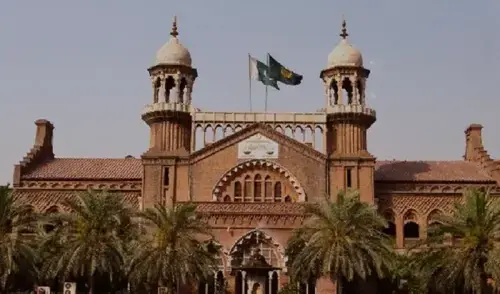
LAHORE: For the second consecutive day on Thursday, the Punjab Assembly witnessed heated arguments over the start of post-budget and pre-budget debates, as the absence of Finance Minister Mujtaba Shujaur Rehman stalled the proceedings and exposed sharp divisions across the House.
Panel of Chairpersons Samiullah Khan informed the House that the finance minister was unavailable due to his prior commitments. He sought the House’s opinion on whether the debate should begin, prompting strong reactions from the members.
The opposition flatly refused to start discussions on the budget in the absence of the finance minister, while the treasury benches insisted the debate should proceed.
A member, retired Brig Mushtaq, argued that the discussion would only be meaningful if the finance minister was present, and proposed postponement. In contrast, the PML-N Chief Whip, Rana Arshad, reminded the House that members had been waiting for days and demanded an immediate start of the budget debate.
Treasury MPAs Amjad Ali Javed and Ahmed Iqbal Chaudhry also supported the postponement of the debate, stressing adherence to the parliamentary procedure.
Ahmed Iqbal pointed out that three of the four days allocated for the budget debate had already passed without any substantive discussion, rendering the whole exercise a mere “symbolic practice.”
Chairperson Samiullah Khan ruled that once an item is on the agenda, it is deemed part of the assembly proceedings, adding that the matter of counting the previous days would be referred to the speaker.
Despite the controversy, the post-budget general debate was eventually initiated without the finance minister.
Speaking on the floor, PTI’s Imtiaz Sheikh criticised the government for “governance failures”, citing a tragic incident where a young woman and her toddler daughter fell into a sewer, alleging that police force was used to hush up the issue. He also mocked the restrictions on kite-flying slogans, saying banning names cannot erase leaders.
Members across party lines questioned the government’s performance, highlighting its “failure to meet targets, ballooning non-development expenditure, underutilisation of sectoral budgets and a lack of transparency.”
Figures were cited to show drastic gaps between allocations and actual spending on agriculture, higher education, commerce, human rights, and local government, alleging that the government’s focus remained limited to roads and construction.
The government, as well as the opposition members, expressed their concerns over the rising poverty, crime rate, employee welfare cuts, pension reforms and delayed development spending. Concerns were also voiced over provincial debt, flood-related expenditures, low utilisation of development funds and weak performance in sectors like mines and minerals.
Opposition member Waqas Mann said the official figures did not reflect the lives of Punjab’s 130 million people, noting that nearly 10 million children remain out of school, law and order remains fragile, farmers are in distress and basic living conditions for workers remain dire.
The session underscored the growing frustration over budget priorities, lack of transparency and governance issues, with lawmakers demanding the budget debate be taken seriously as it was the most critical business of the year.
Published in Dawn, January 30th, 2026