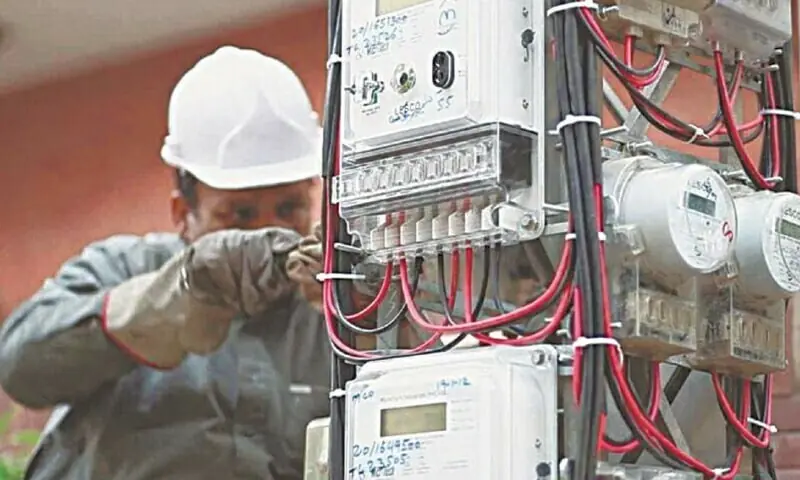


ISLAMABAD: The Central Power Purchasing Agency (CPPA) on Thursday reported that power consumers across the country would be paying Rs1.41 per unit higher fuel charges in February bills than in the current month, as industrialists said the base electricity tariff had already increased by Rs2-3 per unit with effect from Jan 1 for the full fiscal year.
At a public hearing presided over by legal member of the National Electric Power Regulatory Authority (Nepra), Amina Ahmed, the government also reported that it was working on another tariff package under which unutilised electricity would be offered at marginal cost — the actual cost of power supply — to various consumer categories during day time to absorb surplus capacity because of low demand amid rising solar penetration.
“The government is currently working on various options to offer an incentive tariff package (as an alternative to growing net metering), and soon we will approach Nepra for approval”, after its clearance from the federal cabinet, said an official of Power Planning and Monitoring Company (PPMC) of the Power Division.
He was responding to Nepra member Maqsood Anwar Khan, who asked whether the government intended to address the widening gap between day and night utilisation of grid electricity, as net-metered consumers draw from the grid at night. Officials cited a low of around 8,261MW and a peak of 14,888MW in Dec.
Consumers in for Rs1.41 per unit hike in February
A CPPA official said the consumers enjoyed a negative fuel cost adjustment (FCA) of 93 paise per unit in January on account of consumption in November, which had come to an end. He said power distribution companies (Discos) would now need 48 paise per unit additional FCA on account of December consumption, resulting in a net increase of Rs1.41 per unit to be charged to consumers in February billing.
They confirmed that the higher FCA cost was mainly due to an incremental incentive package that increased consumption by about half a billion units, resulting in the need for utilisation of expensive power plants, given the limitations of hydropower and nuclear plants. On average, consumption in December was 6.5 per cent higher than in November and 8.47pc higher than in December 2024, while annual growth in demand was reported at 2.45pc.
Industrial representatives Rehan Javed and Amir Shaikh challenged a 22pc growth in consumption by the industrial sector on account of a three-year incremental incentive package claimed by the CPPA and PPMC officials and argued that official data was not based on facts.
Published in Dawn, January 30th, 2026