European countries including UK lose measles elimination status
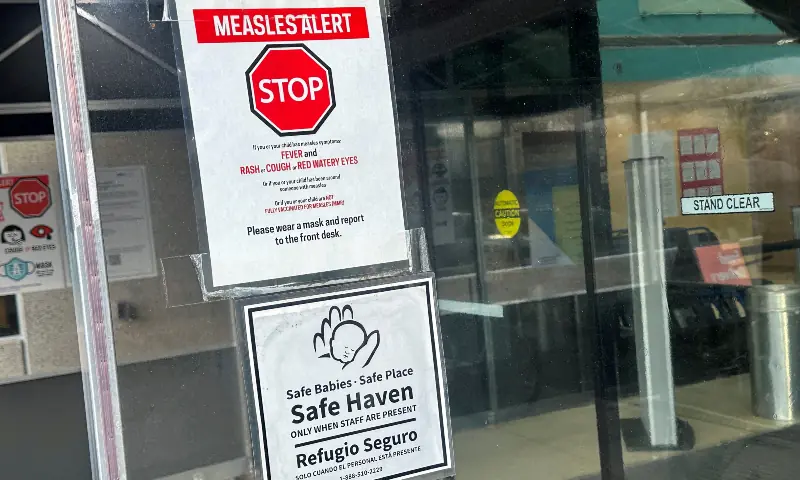


Britain and several other European countries have lost their measles elimination status, the World Health Organisation (WHO) said on Monday, after a jump in infections across the continent.
Spain, Austria, Armenia, Azerbaijan and Uzbekistan also lost their status, and the WHO urged countries to boost vaccination rates, particularly among under-protected populations, to prevent the viral disease from infecting more children.
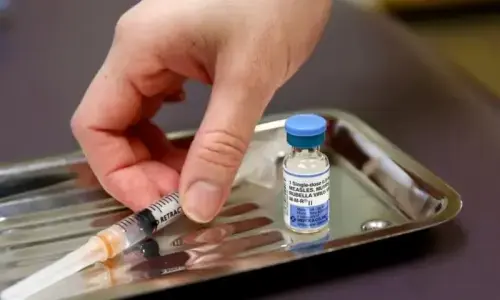
Measles is entirely preventable by vaccination, but it is very contagious, and so it is among the first illnesses to rebound when vaccination rates decline. It commonly causes symptoms including high fever and a rash, but can also lead to serious long-term complications and even death.
Sign of declining vaccination
Health experts have warned that rising outbreaks worldwide point to a resurgence of other preventable illnesses in populations increasingly mistrustful or skeptical of vaccines since the COVID-19 pandemic.
“The UK’s change of status reflects a broader challenge we’re facing across the WHO European Region,” the UN health agency said on its website. Several other European countries already have regular measles transmission, according to the WHO, including France and Romania.
Canada lost its elimination status last year, and the US is working to retain its status as infections mount.
WHO committees in each region decide whether a country is measles-free using case rates. To be considered measles-free by the WHO, a country must have no locally transmitted cases of the same strain for 12 months or longer.
The decision to strip certain European countries of their status was made last September based on data from 2024. But the WHO only released the information on Monday after getting sign-off from every country involved.
To keep measles at bay, vaccination rates must exceed 95 per cent, the WHO estimates. Yet in the UK, only 84.4pc of children had the two doses needed for full protection in 2024. Government data showed 2,911 confirmed cases in England that year, the most since 2012.
On Monday, the UK Health Security Agency said all children should be vaccinated to protect themselves from measles. The UK was first given elimination status in 2016, before losing it in 2018 then regaining it in 2021.