IN the aftermath of the Gul Plaza fire, a war of words has erupted between the MQM and PPP over the poor state of civic affairs in Karachi, with the two federal coalition partners blaming each other for the decrepit condition of the megacity.
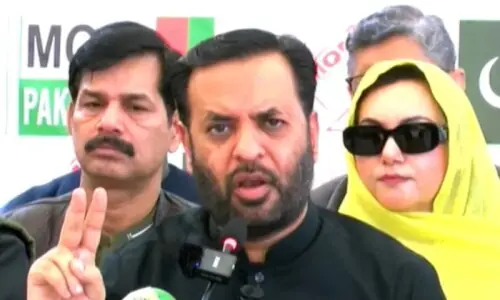
In a presser on Thursday, the MQM claimed the PPP, which rules Sindh, was responsible for “chronic misgovernance” in Karachi, holding the party responsible for Gul Plaza and similar past disasters. The PPP replied in the same coin, with the Sindh information minister referring to the MQM’s past — and not entirely unearned — reputation for political violence. In a strange solution to the city’s urban woes, Federal Health Minister Mustafa Kamal, a former mayor of the city, called for placing Karachi under federal control.
This is a very bad idea. It goes against the spirit of devolution as envisaged in the 18th Amendment, and can lead to ethnic strife in Sindh. Moreover, one can also question how efficiently the entities the centre currently controls are performing. The fact is that by engaging in mudslinging, both the MQM and PPP are deflecting attention from the real question: what ails Karachi and who is responsible?
It would not be wrong to say that all parties, at the centre and the provincial level, including the MQM and PPP, are responsible for the city’s plight. Parties that have ruled at the centre, such as the PML-N and PTI, seem hardly interested in the Sindh capital’s future, with the former not having a major vote bank in the city, while the latter ignored Karachi despite bagging the majority of the metropolis’s National Assembly seats in 2018.
As for the PPP, despite ruling Sindh for nearly two decades, its attempts to fix Karachi’s issues are cosmetic at best and negligence at worst. The MQM, which in the past enjoyed unparalleled power in Karachi, ‘gifted’ the city extortion, strikes and land-grabs (also known as ‘china cutting’). Hence the MQM criticising the PPP, or vice versa, is a case of the pot calling the kettle black.
Instead of unwise schemes such as making Karachi a federal territory, the solution lies in better and more responsive local government. Here the PPP has indeed blocked attempts at reforming the LG law in such a way that the third tier would become fully empowered. Instead, provincial ministers and bureaucrats still cling to what should be purely local powers.
Even the ADB, in a 2024 report, has noted that “the devolution of funds and functionaries to the city has been poor”. This must change. Instead of dragging each other through the mud, the PPP, MQM and other parties interested in Karachi’s welfare must reform the LG law so that the city can become a more liveable place.
Published in Dawn, January 24th, 2026