THE Indus Waters Treaty (IWT) of 1960 has long been heralded as one of the most durable water-sharing agreements in history. Despite multiple wars and decades of profound political animosity between India and Pakistan, the IWT managed to survive, providing a fragile framework for regulating the shared waters of the Indus River system. However, the delicate equilibrium of this treaty has been shattered. The move by India to place the IWT in abeyance is not merely a diplomatic protest; it represents a fundamental strategic pivot. In an era increasingly defined by climate change and existential resource competition, the suspension of the IWT signals a shift toward a new, perilous world order where water security dictates state survival, and historical norms are rapidly eclipsed by the “law of the jungle.”
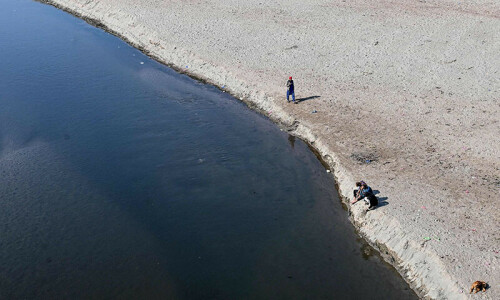
To understand the severity of the hydro-political reality of scarcity, one must look beyond the immediate geopolitical friction and consider the changing hydrology and demography of the region. Climate change is rapidly altering the cryosphere of the Himalayas, which feeds the Indus basin. Glacial retreat, erratic monsoon patterns, and severe, prolonged droughts are making water availability increasingly unpredictable.
The World Resources Institute (WRI) provides a stark warning in its Aqueduct Water Risk Atlas, mapping a future where water becomes the most prized — and contentious — resource on the planet. According to WRI projections, vast swathes of the globe, including South Asia, face escalating levels of baseline water stress. By mid-century, trillions of dollars in GDP will be exposed to high water risk as demand drastically outstrips renewable supply. In such a landscape, water is no longer just an environmental issue; it is a fundamental driver of national security.
As resources diminish, states are becoming increasingly inward-looking. The international order, which once placed a premium on cooperation, is giving way to a more ruthless framework where states prioritise their own existential needs above collective agreements. In this light, placing the IWT in abeyance is not a temporary diplomatic manoeuvre; it is a strategic preparation of the ground for an eventual unilateral withdrawal. As water scarcity increases, the temptation for an upper-riparian state to leverage control over water flows to secure its own agricultural and energy requirements becomes overwhelming, effectively treating the resource as sovereign property rather than a shared heritage.
For Pakistan, the stakes are high because the Indus basin underpins agricultural production, rural livelihoods and food security.
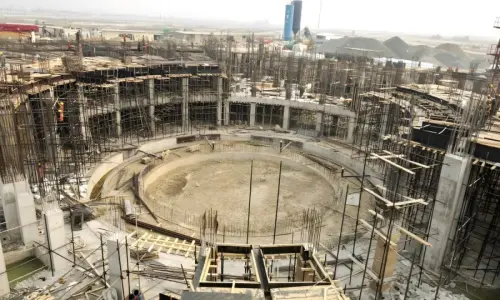
The intensification of India’s construction of storage dams along the Chenab River, despite the legal challenges and protests from Pakistan, is part of the strategic calculus and entirely consistent with this new paradigm. These projects allow for greater control, storage, and diversion of water. For Pakistan, an agrarian economy whose very existence relies on the Indus system, this is not a developmental disagreement — it is an existential threat. The Chenab-Beas link tunnel and the Salal sediment bypass illustrate the dilemma. Such projects may be presented as engineering responses to energy needs and sedimentation, yet transferring water between basins or modifying sediment-control infrastructure on a shared river raises both questions and concerns. The legal status and technical details of each project must be assessed individually for cumulative impact and downstream confidence.
In August 2026 the Court of Arbitration rejected India’s unilateral abeyance of the treaty and reaffirmed that it remains in force. The court also ordered interim measures restricting specified construction at the Ratle hydroelectric project till 90 days after the Neutral Expert’s final decision expected in July 2027. India’s rejection of the court’s authority leaves a gap between legal pronouncement and practical compliance.
The coming decision on pondage, spillways, low-level outlets and sediment flushing will matter, but the deeper question is whether both will accept a credible process for resolving disagreements. If the Neutral Expert and Court of Arbitration reach conflicting conclusions, and one or both governments dismiss the outcome, the treaty risks becoming an instrument that exists formally but no longer commands confidence.
An institutional collapse would have consequences extending far beyond the immediate available water. It could erode hydrological data sharing, weaken flood warning cooperation, discourage investment in regional water management and intensify competition over reservoirs and infrastructure. A breakdown could also encourage unilateralism in transboundary river governance endangering peace at a time of growing geopolitical tensions and environmental fragility. The central danger remains the growing uncertainty in a system already under intense human pressure. For Pakistan, the stakes are high because the Indus basin underpins agricultural production, rural livelihoods and food security. For India, the consequences would include a more volatile neighbourhood, heightened diplomatic costs and a precedent that could complicate its own relations with other upstream countries. Neither country can insulate itself from the climatic and economic consequences of a destabilised basin.
The gravity of the situation is exacerbated by the nuclear capabilities of both nations. The failure of the current global negotiations in limiting warming to 1.5 degrees Celsius is also ensuring that hydrological instability will only worsen and add to the fear of scarcity. The international community must act before the legal impasse becomes a humanitarian and security crisis. Political wisdom and environmental diplomacy can also play a major role in averting a potential catastrophe. A nuclear-armed upstream power and a highly water-dependent nuclear-armed lower-riparian state cannot afford to let a river become an instrument of existential threat. If water insecurity contributes to political instability, military escalation or a wider regional confrontation, the consequences will not remain confined to South Asia.
The writer is a climate policy analyst.
Published in Dawn, November 16th, 2026