SC upholds tribunal order restoring sessions judge
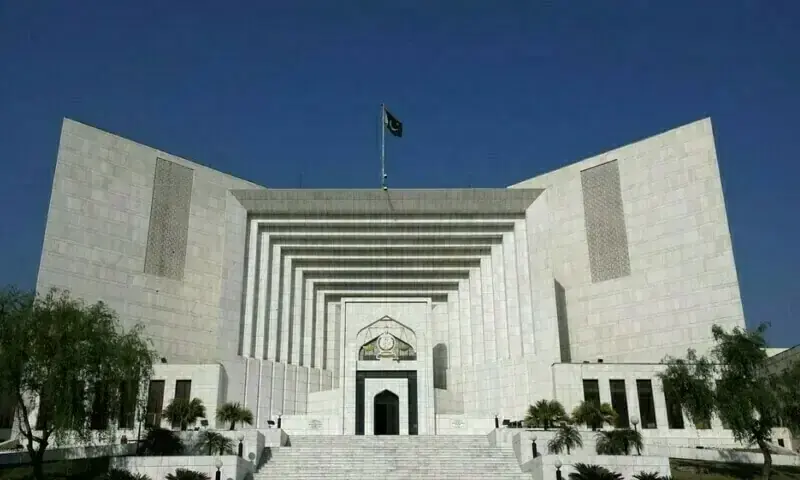


ISLAMABAD: The Supreme Court on Friday set aside a petition filed by the Sindh High Court’s former chief justice against the decision of a judicial service tribunal that had ordered the reinstatement of a sessions judge.
A three-judge SC bench comprising Justice Shahid Waheed, Justice Naeem Akhtar Afghan and Justice Shakeel Ahmed announced the verdict.
District and Sessions Judge Aijaz Ali Khaskheli, who joined the Sindh judicial service in 1996, was removed from office in 2016 by then SHC chief justice Sajjad Ali Shah who was later elevated to the Supreme Court and retired upon reaching superannuation in 2022.
The controversy stemmed from an appeal filed by the former SHC chief justice through the court registrar, seeking clarification on a point of law: whether a service tribunal could interfere with the lawful exercise of discretion by the competent authority, namely the chief justice of the high court, in awarding punishment.
Mr Khaskheli, who was serving as a judge of the accountability court in Hyderabad at the time, is the respondent in the appeal.
Three-judge bench sets aside former SHC chief justice’s petition
He was appointed as a civil judge in 1996 and promoted to the rank of district and sessions judge in 2014. In 2016, he was suspended and subsequently dismissed following disciplinary proceedings initiated by the then SHC chief justice on allegations of misconduct.
The former judicial officer later approached the Sindh Subordinate Judicial Service Tribunal, which had on Sept 30, 2024, ruled in his favour. The tribunal held that the disciplinary proceedings were procedurally flawed and that the penalty of dismissal was disproportionate to the alleged misconduct.
The tribunal also noted that the then chief justice, who was the complainant in the case, had acted as both the initiating and punishing authority, in violation of the principle of nemo judex in causa sua — that no one should be a judge in their own cause.
The dispute arose after the respondent judge issued what was termed an “unlawful notice” to the then Hyderabad commissioner, seeking his personal attendance. The notice alleged that funds for the construction of a compound wall of a bungalow occupied by the respondent judge had been withheld by the commissioner.
The commissioner approached the office of the SHC registrar, who brought the matter to the attention of the then chief justice. The respondent judge was subsequently dismissed from service.
After the service tribunal decided in favour of the respondent judge last year, the matter came before the Supreme Court. The SHC registrar argued that the tribunal’s decision should be overturned, contending that it had erred in applying the law and that the dismissal was justified.
Conversely, the counsel for the respondent judge submitted that the disciplinary proceedings were fundamentally flawed as the SHC chief justice, who initiated the complaint, also acted as the punishing authority. This, he argued, violated the principles of natural justice.
The respondent further contended that the disciplinary proceedings were initiated without first repatriating him to his parent department, as required under the Sindh Civil Servants (E&D) Rules, 1973. It was also argued that he was removed without a regular departmental inquiry, which was mandatory under the relevant rules.
Published in Dawn, January 24th, 2026